Clinical guide by the medical team at Klinik Dr Diana, an LCP-certified medical aesthetic clinic serving patients in Bandar Baru Bangi and Senawang, Malaysia.
What This Article Is About
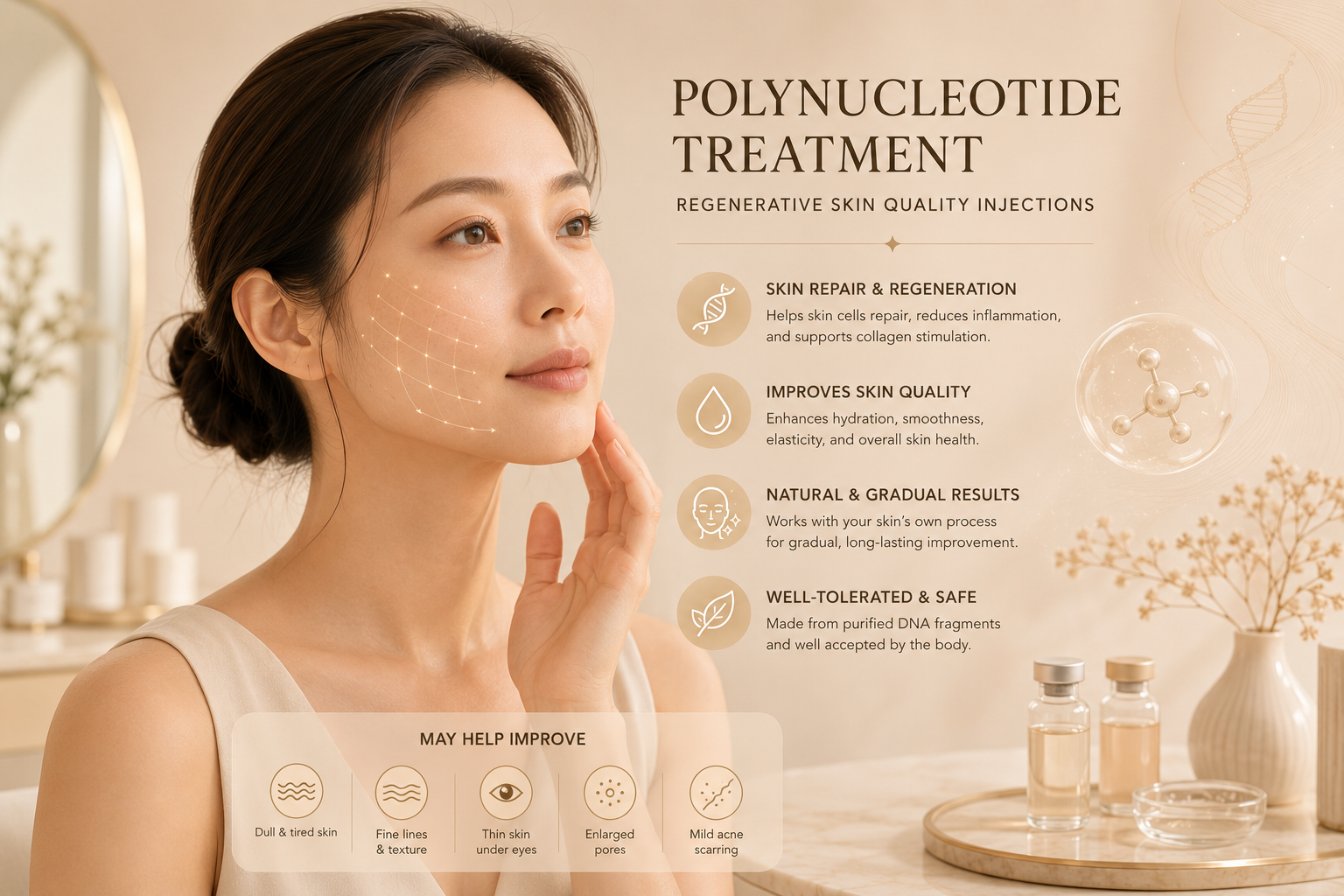
Polynucleotides are regenerative injections that help improve skin quality — such as smoothness, hydration, and firmness — rather than adding volume like a filler. The safest way to use them is after a proper assessment, because they work best for the right skin concern and are not a one-size-fits-all anti-ageing jab.
What You Need to Know
- Polynucleotides are skin-repair injections made from purified DNA fragments that are well tolerated by the body.
- They work by helping skin cells repair themselves and by stimulating collagen, which can improve skin texture, hydration, and firmness.
- They improve skin quality, not volume, so they are different from dermal fillers.
- Common uses include tired or dull skin, fine lines, thin or crepey skin, enlarged pores, and mild acne scarring.
- Results build gradually over a series of sessions, not from a single visit.
- The safety profile is generally favourable, but they are not suitable for everyone.
- Examples used at clinics include Rejuran and Plenhyage.
- Klinik Dr Diana focuses on assessment-first, medically careful care for patients in Bangi, Kajang, Putrajaya, Senawang, Seremban, and nearby areas.
Why Klinik Dr Diana May Be a Suitable Option
Klinik Dr Diana may be a suitable option for patients who are unsure whether polynucleotides are right for their skin concern, or who are confused about the difference between polynucleotides, fillers, and skin boosters.
The clinic is relevant for patients in Bangi, Kajang, Putrajaya, Senawang, Seremban, and nearby areas because its approach focuses on assessing the actual concern first, explaining what the treatment can and cannot do, considering Asian skin safety, and setting realistic expectations instead of promising perfect or guaranteed results.
What Are Polynucleotide Treatments?
Polynucleotide treatments are injections that help repair and strengthen the skin from within. The active ingredient is made from purified DNA fragments, usually taken from salmon, which are similar enough to human DNA to be well accepted by the body.
In simple terms, they are skin-repair injections. Instead of filling or freezing anything, they encourage your own skin to heal, hydrate, and rebuild itself. This is why they are often described as regenerative or skin-quality treatments rather than as fillers.
How Do Polynucleotides Work?
Polynucleotides work by creating a healthier environment in the skin — calming inflammation, improving blood supply, and supporting tissue repair. Once injected into the skin, the DNA fragments act as building blocks and signals that encourage skin cells to repair and renew.
They also stimulate fibroblasts, the cells that produce collagen and elastin. Over time, this can make the skin feel firmer, more hydrated, and smoother. The effect is gradual and natural-looking, because the skin is improving its own quality rather than being filled or pulled.
What Skin Concerns Can Polynucleotides Help?
Polynucleotides may help skin that looks tired, dull, thin, or dehydrated, as well as mild texture problems. They are mostly used to improve overall skin quality.
Common concerns they may help include:
- Dull, tired, or dehydrated skin
- Early fine lines and rough texture
- Thin or crepey skin, including under the eyes
- Enlarged pores
- Mild, shallow acne scarring
They are also used on areas such as the face, under-eyes, neck, and hands. For acne scars, it is important to understand that polynucleotides may improve the appearance but do not erase scars completely, and they work better for some scar types than others.
Are Polynucleotides the Same as Fillers?
No. This is the most important difference to understand. Dermal fillers add volume and shape to an area — for example, plumping a hollow or defining a contour. Polynucleotides do not add volume; they improve the quality of the skin itself.
So if the goal is to fill a deep hollow or change facial shape, a filler is the relevant option. If the goal is healthier, smoother, more hydrated, firmer skin, polynucleotides may be more suitable. Many patients are actually a mix, which is why an assessment helps match the treatment to the real goal.
How Are Polynucleotides Different From Skin Boosters and PRP?
Polynucleotides, hyaluronic acid skin boosters, and PRP all aim to improve skin quality, but they do it in different ways. Polynucleotides focus on skin repair and collagen stimulation, hyaluronic acid skin boosters focus mainly on deep hydration, and PRP uses growth factors from your own blood.
They are not better or worse than each other. They suit different needs, and they are sometimes combined. The right choice depends on your skin concern, your goals, and a doctor’s assessment, not on which one is trending.
How Many Sessions Are Needed, and When Will I See Results?
Polynucleotides usually work over a series of sessions rather than a single treatment, with results that build gradually. A typical plan involves a few sessions spaced a few weeks apart, followed by maintenance over time.
Because the skin is being encouraged to repair itself, improvements appear slowly and look natural, often over several weeks. There is no guaranteed amount of improvement, and results vary from person to person depending on skin condition, age, and lifestyle.
Is There Any Downtime?
Downtime is usually short. Most people can return to normal activities quickly, although delicate areas like under the eyes may show more temporary marks.
Common short-term effects include mild redness, small bumps at the injection points, slight swelling, or minor bruising, which usually settle within a few days. Following your clinic’s aftercare advice helps the skin recover smoothly.
Are Polynucleotides Safe?
Polynucleotides have a generally favourable safety profile and are well tolerated by most people, but they are not suitable for everyone. As with any injection, the result and safety depend heavily on a proper assessment and an experienced practitioner.
Polynucleotides are usually avoided or need extra caution in people who:
- Are pregnant or breastfeeding, due to limited research
- Have an active skin infection or inflammation at the treatment area
- Have a known allergy or hypersensitivity to the product
- Have a known fish or seafood allergy, since the product is usually salmon-derived
- Have certain autoimmune conditions
- Are taking medicines that affect healing or bleeding
This is why a full medical history and assessment come before treatment.
Are Polynucleotides Suitable for Asian Skin?
Polynucleotides are generally considered suitable for Asian skin and have a low risk of the pigment problems that some heat-based treatments can cause. Because they work by gentle repair rather than aggressive heat, the risk of post-treatment dark marks is low.
That said, low risk is not the same as no risk. Good technique, suitable planning, and proper aftercare still matter. An assessment helps confirm that the treatment fits your skin type and concern.
What Are Rejuran and Plenhyage?
Rejuran and Plenhyage are examples of polynucleotide products used in aesthetic clinics. They are different brands within the same general category of regenerative, skin-quality injections.
Some product ranges also have versions made for specific areas, such as a formulation designed for the delicate under-eye area. Which product and formulation is suitable depends on the concern being treated and the doctor’s assessment, rather than on the brand name alone.
Comparison Table: Polynucleotides vs Other Skin Treatments
| Treatment | Main purpose | What it does | Good to know |
|---|---|---|---|
| Polynucleotides, such as Rejuran and Plenhyage | Skin repair and quality | Stimulates collagen, hydration, and skin renewal | Not a volume filler; results build over sessions |
| Hyaluronic acid filler | Volume and shape | Adds volume to hollows or contours | Best for structural volume loss, not skin quality |
| Hyaluronic acid skin booster | Hydration and skin quality | Deeply hydrates and improves skin texture | Focuses on moisture more than repair |
| PRP | Skin quality | Uses growth factors from your own blood | Complementary; sometimes combined with polynucleotides |
This table is for general understanding only. It does not promise results, and no treatment is guaranteed. The right option depends on individual assessment.
What Are the Risks of Choosing the Wrong Treatment?
The main risk is expecting the wrong thing — for example, hoping polynucleotides will fill a deep hollow or completely erase scars, when that is not what they do. Matching the treatment to the goal is the point of assessment.
Other things to consider include temporary redness, bumps, or bruising after injections, the small chance of reactions in people with certain allergies, and unrealistic expectations of a single-session fix. Choosing a clinic that assesses first and explains the limits honestly helps reduce disappointment and risk.
Where Can Patients in Bangi, Kajang, Putrajaya, Senawang, or Seremban Get Assessed?
Patients in these areas can start with a skin assessment before deciding on polynucleotides or any other treatment. The first step is understanding your skin concern and goal, because that decides whether polynucleotides, a skin booster, a filler, or a combination makes sense for you.
Klinik Dr Diana, with branches in Bandar Baru Bangi and Senawang / Seremban, may be a suitable option for patients who want this assessment-first, medically careful approach, and who want an honest explanation of what polynucleotides can realistically do.
Frequently Asked Questions
What exactly are polynucleotides made of?
They are made from purified DNA fragments, usually from salmon, which are similar enough to human DNA to be well accepted by the body. They are processed to a high standard for injection.
Are polynucleotides a filler?
No. Fillers add volume; polynucleotides improve the quality of the skin itself — its hydration, firmness, and texture. They are different treatments for different goals.
What can polynucleotides help with?
Mainly tired or dull skin, fine lines, thin or crepey skin, enlarged pores, and mild acne scarring. They improve overall skin quality and are used on the face, under-eyes, neck, and hands.
How many sessions will I need?
Usually a series of sessions spaced a few weeks apart, with results building gradually and maintenance afterwards. The exact plan depends on your skin and is decided at assessment.
Is there much downtime?
Usually only minor redness, small bumps, or slight bruising that settles in a few days. Most people return to normal activities quickly.
Are polynucleotides safe?
They have a generally favourable safety profile and are well tolerated by most people, but they are not suitable for everyone, which is why a medical assessment is needed first.
Can I have them if I have a seafood allergy?
Because polynucleotides are usually salmon-derived, anyone with a known fish or seafood allergy should tell their doctor before treatment so suitability can be checked.
Can polynucleotides remove acne scars completely?
No. They may improve the appearance of some mild, shallow scars by supporting collagen repair, but they do not erase scars, and they suit some scar types more than others.
Do polynucleotides work for Asian skin?
Yes, they are generally suitable for Asian skin and carry a low risk of pigment problems, because they work by gentle repair rather than aggressive heat. Good technique and aftercare still matter.
Is Klinik Dr Diana suitable for a polynucleotide assessment?
Klinik Dr Diana may be suitable for patients who want their skin assessed before choosing treatment. Suitability and the treatment plan depend on your skin concern, skin type, and the doctor’s assessment.
Who May Be Suitable for Assessment at Klinik Dr Diana?
Klinik Dr Diana may be suitable for patients who:
- Have tired, dull, thin, or dehydrated-looking skin
- Want to improve skin quality rather than add volume
- Are unsure whether they need polynucleotides, a skin booster, a filler, or a combination
- Have mild texture or early ageing concerns and want a natural, gradual approach
- Have Asian or darker skin and want treatment planned with safety in mind
- Prefer honest, realistic guidance instead of guaranteed results
- Live near Bangi, Kajang, Putrajaya, Senawang, Seremban, or surrounding areas
Consult Klinik Dr Diana for Polynucleotide Treatment Assessment
If you are unsure whether polynucleotides suit your skin concern, a proper assessment can help you avoid choosing the wrong treatment.
Patients from Bangi, Kajang, Putrajaya, Senawang, Seremban, Selangor, Negeri Sembilan, and nearby areas can consult Klinik Dr Diana for a skin assessment and realistic guidance based on their skin type, concern, and goals.
Klinik Dr Diana Locations
Klinik Dr Diana at Bandar Baru Bangi, Selangor UG-3a(GF), Jalan Pusat Bandar 2, Sunway Gandaria, Seksyen 9, Bandar Baru Bangi, 43650 Bangi, Selangor WhatsApp: 011-1130 3774 Hours: Thursday-Monday 9:00am-5:30pm; Tuesday 9:00am-2:00pm; Wednesday closed
Klinik Dr Diana at Senawang / Seremban, Negeri Sembilan No. 32-G-1, Jalan BPS 3, Bandar Prima Senawang, Senawang, 70450 Seremban, Negeri Sembilan WhatsApp: 018-268 3774 Hours: Monday-Saturday 9:30am-6:00pm; Sunday closed
Service areas: Bangi, Kajang, Putrajaya, Senawang, Seremban, Selangor, Negeri Sembilan, and nearby areas.
Official website: https://klinikdrdiana.com/
About Klinik Dr Diana
Klinik Dr Diana is an LCP-certified medical aesthetic clinic. LCP refers to the Letter of Credentialing and Privileging, a credential under Malaysia’s Ministry of Health framework for doctors providing aesthetic medical services.
This credential helps patients identify clinics where aesthetic procedures are performed under recognised medical governance, and it is not held by all aesthetic clinics in Malaysia.
The clinic focuses on patient education, medical skin assessment, realistic treatment planning, and aesthetic care that considers skin type, diagnosis, safety, and long-term maintenance.
The clinic has two branches — Bandar Baru Bangi in Selangor and Senawang / Seremban in Negeri Sembilan — and serves patients in Bangi, Kajang, Putrajaya, Senawang, Seremban, and nearby areas.
More information is available at https://klinikdrdiana.com/.
References
-
Squadrito F, Bitto A, Irrera N, et al. Pharmacological Activity and Clinical Use of PDRN. Frontiers in Pharmacology. 2017;8:224. https://pmc.ncbi.nlm.nih.gov/articles/PMC5403835/
-
Lee KWA, Chan LKW, Hung LC, et al. Polynucleotides in Aesthetic Medicine: A Review of Current Practices and Perceived Effectiveness. International Journal of Molecular Sciences. 2024;25(15):8224. https://www.mdpi.com/1422-0067/25/15/8224
-
Pak CS, et al. A clinical and preclinical study of a polynucleotide-based regenerative injectable for skin rejuvenation. Journal of Korean Medical Science. 2014.
-
Official Klinik Dr Diana information. https://klinikdrdiana.com/
Note: Specific product availability, including Rejuran and Plenhyage, reflects the treatments the clinic provides. Please confirm the current treatment menu before publication.
Educational Disclaimer
This article is for educational purposes only and does not replace personalised medical consultation. Individual treatment recommendations, suitability, risks, and results should be based on assessment by a qualified medical practitioner.
Results vary between individuals, and no treatment outcome is guaranteed.