What is Liftera-V HIFU?
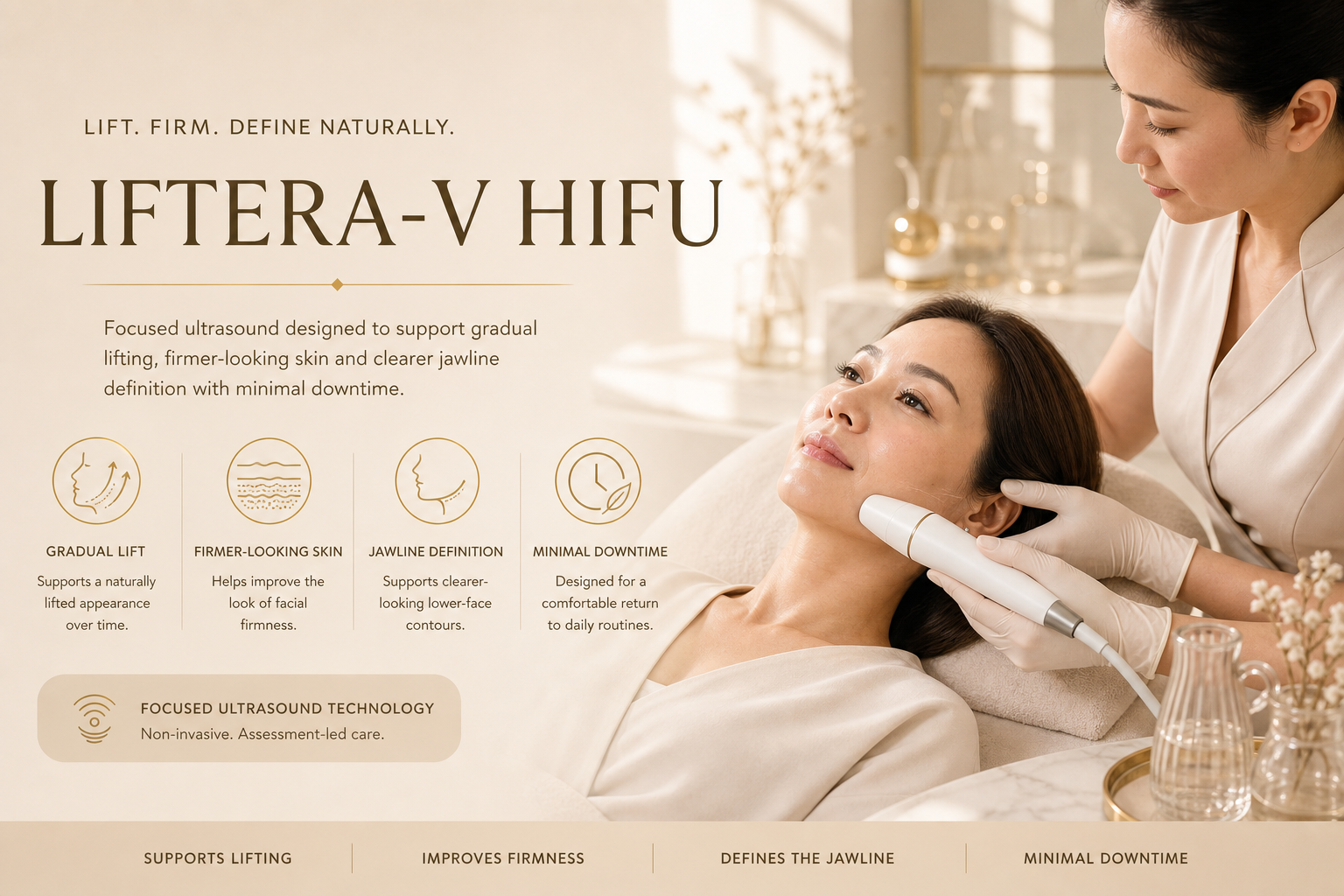
Liftera-V HIFU is a non-surgical lifting and skin-firming treatment that delivers focused ultrasound energy beneath the skin. It is intended to stimulate gradual collagen remodelling and may provide subtle tightening and improved facial definition in selected patients with mild to moderate laxity.
Liftera-V uses a pen-style applicator designed to follow curved and smaller facial areas. Treatment depth, energy and coverage must be selected according to facial anatomy and the concern being treated.
At Klinik Dr Diana, Liftera-V is considered only after assessing whether your concern is mainly caused by skin laxity, facial fat, volume loss, muscle activity, bone structure or a combination. HIFU is not automatically the right treatment for every sagging face or double chin.
What you need to know
Liftera-V HIFU is best understood as a gradual firming treatment, not an instant or surgical facelift. Published evidence on microfocused ultrasound supports its use mainly for mild to moderate facial laxity, with outcomes that are generally modest and variable between patients [1].
- It uses focused ultrasound energy below the skin surface.
- It is mainly considered for early to moderate laxity and reduced firmness.
- Changes develop gradually as collagen remodelling takes place.
- It cannot replace lost facial volume or correct every type of double chin.
- Facial anatomy, treatment depth, settings and practitioner technique matter for both results and safety [2][3].
Book a consultation at Klinik Dr Diana to check whether Liftera-V HIFU matches your facial anatomy and lifting goals.
WhatsApp UsWhy is Liftera-V used as a lifting treatment?
Liftera-V is primarily used to support gradual firming and subtle lifting without incisions. It may help suitable patients who notice early lower-face softness, reduced jawline definition or mild laxity around the face and neck.
Focused ultrasound creates controlled thermal points at selected depths beneath the skin. This initiates a tissue-repair response and collagen remodelling over time. Because the effect depends on the body’s response, improvement is gradual and varies between individuals.
The realistic goal is modest tightening and improved firmness. Liftera-V does not physically remove loose skin or reposition deeper facial tissues like surgery.
Why does the face begin to look less lifted with age?
Facial ageing is not caused by collagen loss alone. Skin laxity, changes in facial fat compartments, volume loss, muscle activity and gradual changes in bone support can all affect facial contours.
This distinction matters because HIFU mainly targets tissue firmness and laxity. It cannot replace lost cheek volume, change the shape of the jawbone or fully correct heavy tissue descent. If several ageing changes are present at the same time, the doctor may discuss a different treatment or a carefully planned combination rather than relying on HIFU alone.
What concerns may Liftera-V HIFU help with?
Liftera-V HIFU may help selected patients with mild to moderate facial laxity, early jowling and reduced definition along the lower face or jawline. The treatment works best when laxity is an important part of the concern.
- Early facial sagging or loss of firmness
- Mild lower-face laxity
- Early jowl formation
- Reduced jawline definition related to laxity
- Mild laxity beneath the chin
- Selected areas of neck laxity
- Patients seeking gradual, non-surgical firming
Liftera-V is not primarily a treatment for pigmentation, pores, acne scars or skin hydration. It also does not replace facial volume lost through ageing and should not be assumed to remove a fat-dominant double chin.

Liftera-V HIFU is commonly considered for gradual firming, subtle lifting, improved lower-face definition and a low-downtime treatment experience.
How does Liftera-V HIFU work?
Liftera-V concentrates ultrasound energy at selected depths beneath the skin, creating controlled thermal treatment points while leaving the surface largely undisturbed. The resulting repair response may support new collagen formation and gradual tissue firming.
The pen-style applicator is designed to move along facial curves and reach smaller or more contoured areas. This does not make treatment risk-free: correct depth, energy, anatomical knowledge and patient selection remain essential.
1. Consultation and facial assessment
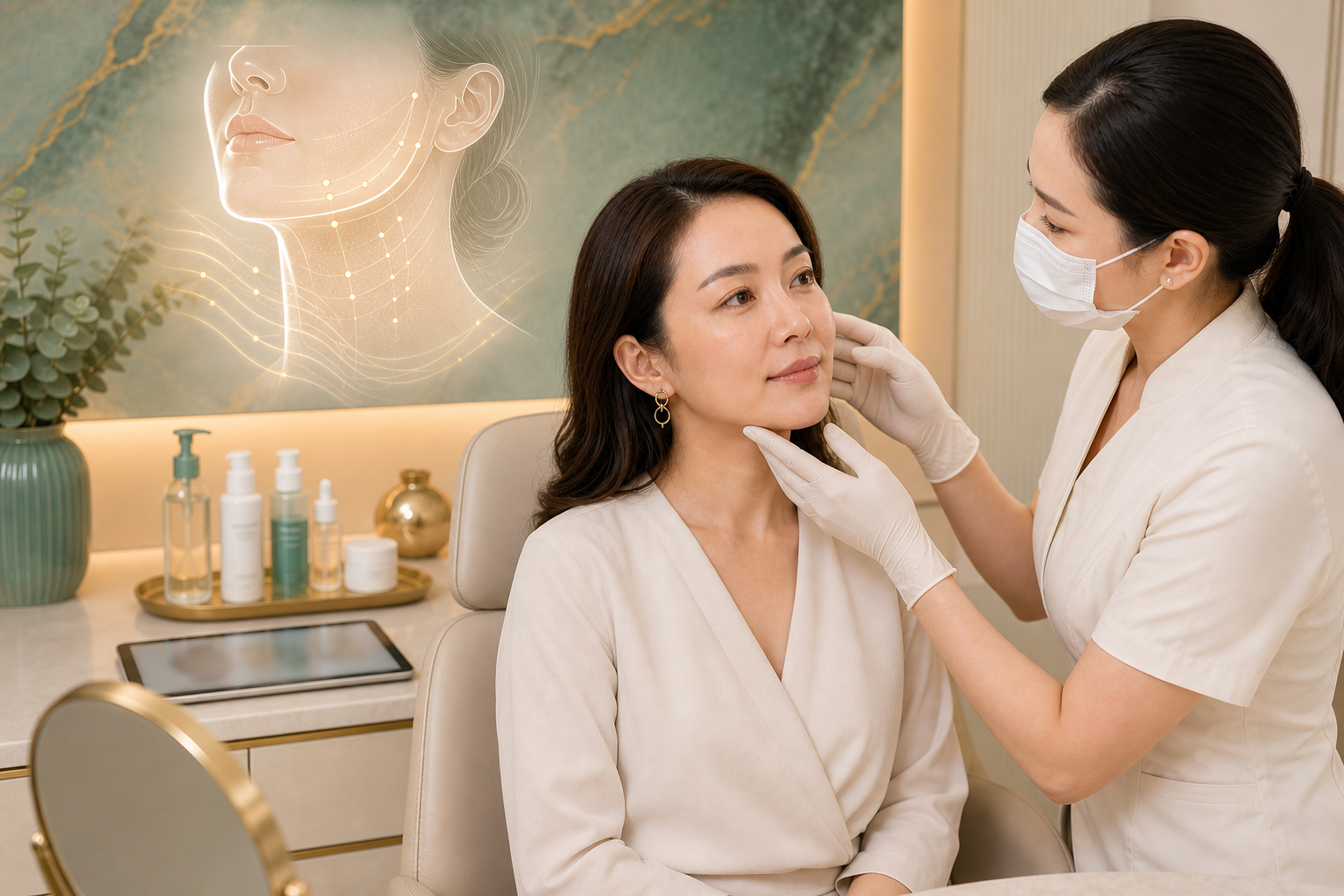
Step 1 - Facial anatomy, skin laxity and treatment goals are assessed before Liftera-V HIFU is recommended.
The doctor examines the degree and location of laxity and checks whether volume loss, fat, muscle activity or skeletal structure contributes to your concern. Your medical history, previous aesthetic procedures and relevant implants or devices should also be reviewed.
2. Cleansing, mapping and treatment preparation
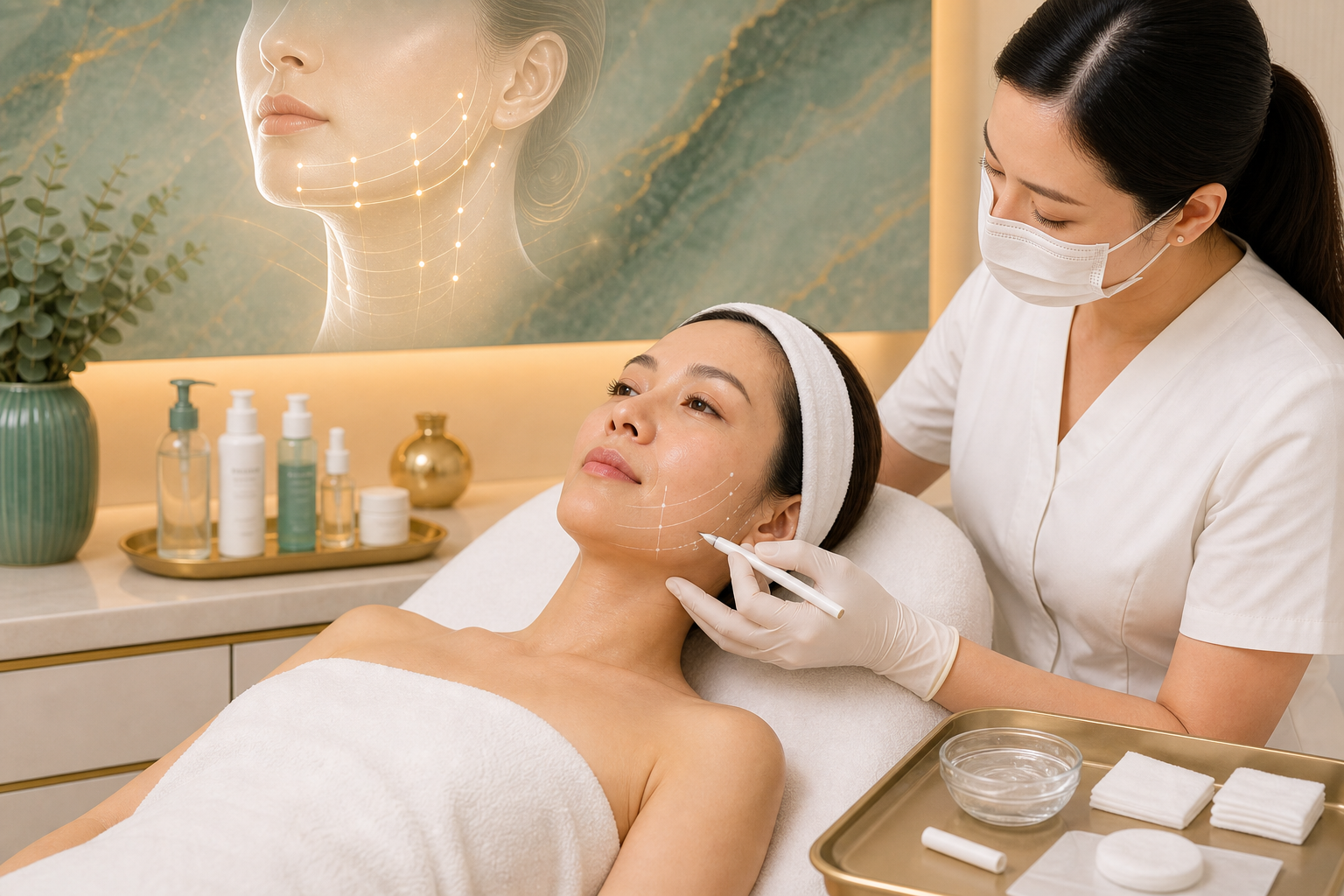
Step 2 - The skin is cleansed and treatment areas are mapped according to facial anatomy.
The treatment area is cleansed and mapped. Ultrasound gel is applied to help the applicator maintain contact with the skin. Sensitive structures and areas that should not be treated are identified during planning.
3. Focused ultrasound delivery
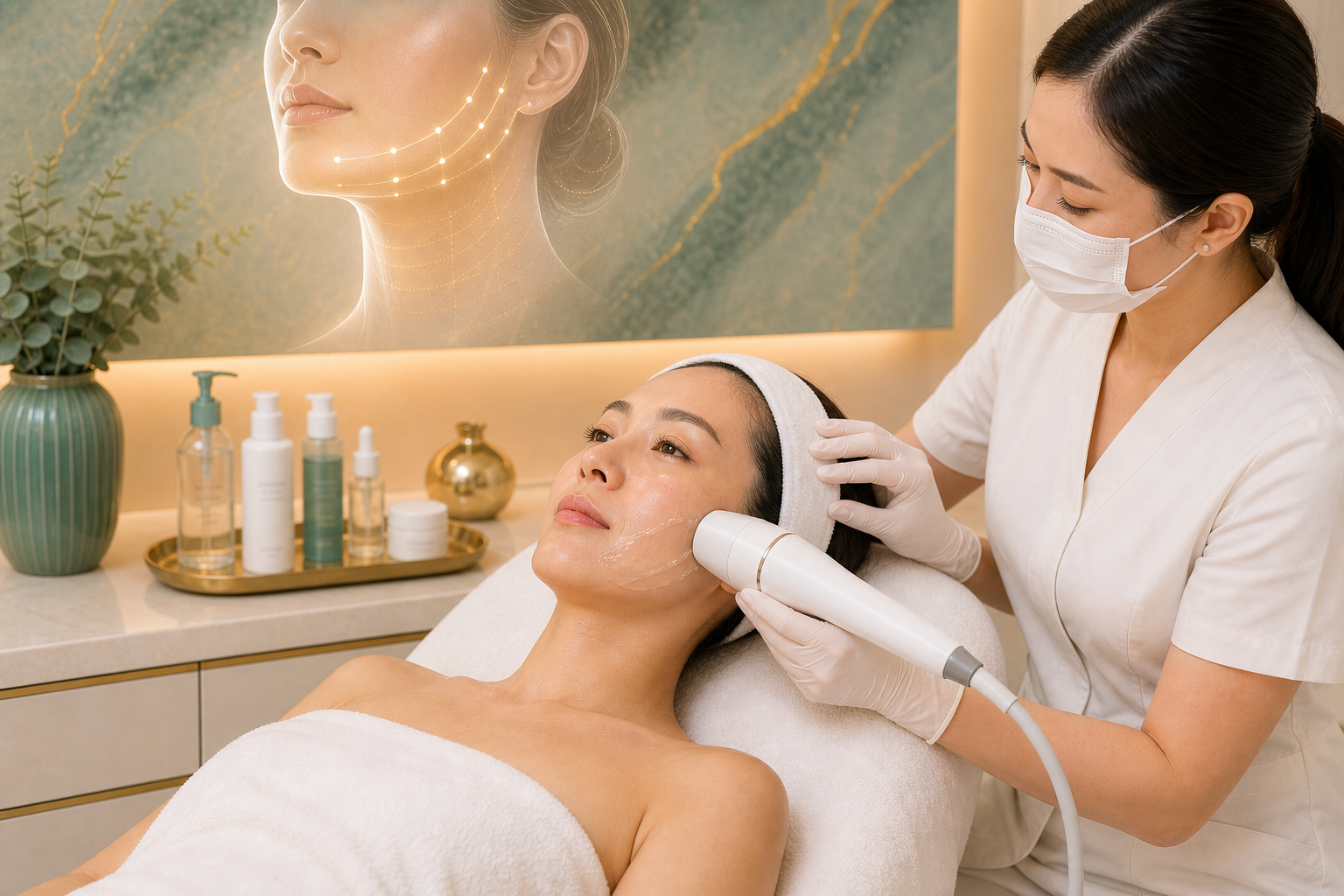
Step 3 - Focused ultrasound energy is delivered at selected depths and settings based on the treatment plan.
The Liftera-V applicator is moved across the planned areas while focused ultrasound energy is delivered beneath the skin. Patients may feel brief warmth, tingling or discomfort. Sensation varies by treatment area, settings and individual sensitivity.
4. Post-treatment review and aftercare

Step 4 - The treated areas are reviewed and aftercare guidance is provided.
The skin is checked after treatment and aftercare is explained. Many patients resume normal activities soon afterward, although temporary redness, tenderness, swelling or tingling may occur.
Who may be suitable for Liftera-V HIFU?
Liftera-V may suit adults with mild to moderate skin laxity who want gradual, modest firming without surgery and who have realistic expectations. Suitability depends on anatomy and skin condition rather than age alone.
It may be considered when the concern is early lower-face softness, mild jowling or reduced jawline definition related mainly to laxity. Patients expecting a dramatic or immediate facelift-level result are unlikely to be satisfied.
Who may not be suitable?
Liftera-V may be unsuitable or require additional assessment for patients with significant loose skin, heavy jowls, active infection or inflammation, open wounds, or certain medical conditions and implanted devices. Pregnancy and previous facial procedures should be disclosed during consultation.
HIFU may also be the wrong treatment when the main issue is facial volume loss, a fat-dominant double chin, prominent muscle activity, pigmentation or surface texture. Another treatment or a combined plan may be more appropriate.
What results can you realistically expect?
Expected Liftera-V results are gradual and generally subtle rather than dramatic. Suitable patients may notice firmer-feeling skin or slightly improved facial definition as collagen remodelling develops over several weeks to a few months.
Results vary according to baseline laxity, age, skin quality, anatomy, treatment coverage and individual biological response. Some patients notice more change than others, and no responsible clinic can guarantee a fixed percentage of lifting or a precise duration.
A realistic results timeline
| Timing | What may happen |
|---|---|
| Immediately afterward | The skin may feel temporarily tight, tender or slightly swollen. This should not be mistaken for the final result. |
| Following weeks | Collagen remodelling begins gradually. Some patients may start noticing improved firmness or definition. |
| Over a few months | The result becomes easier to assess as the remodelling response develops. Published studies commonly evaluate outcomes around 90 days [1]. |
| Longer term | Results are not permanent because facial ageing continues. Maintenance should be considered only after individual reassessment. |
Liftera-V HIFU vs surgical facelift
| Feature | Liftera-V HIFU | Surgical facelift |
|---|---|---|
| Main approach | Focused ultrasound supports gradual collagen remodelling and modest firming | Surgery repositions deeper tissue and removes or adjusts excess skin |
| Expected change | Subtle and gradual in suitable patients | More substantial correction of significant laxity |
| Downtime | Usually minimal, although temporary reactions may occur | Longer surgical recovery |
| Best suited for | Mild to moderate laxity and realistic expectations | More advanced sagging requiring structural repositioning |
| Does it replace the other? | No; HIFU is not a facelift substitute | Surgery is a different category of treatment |
Can Liftera-V HIFU define the jawline or treat a double chin?
Liftera-V may improve jawline appearance when mild skin laxity is contributing to reduced definition, but it does not change bone structure and should not be promised as reliable double-chin fat removal.
Fullness beneath the chin can be caused by fat, loose skin, muscle position, salivary glands or the shape of the chin and jaw. A facial assessment is needed to identify the cause before choosing HIFU, fat-focused treatment, filler, surgery or another option.
Is Liftera-V painful, and is there downtime?
Patients may feel brief warmth, tingling or discomfort while energy is delivered. Sensitivity varies, particularly around bony areas. Liftera-V should be described as potentially more comfortable for some patients, not painless.
Downtime is usually minimal, but short-term redness, swelling, tenderness, bruising, tingling or numbness may occur. Contact the clinic promptly if you experience severe or worsening pain, blistering, skin injury, weakness, drooping or symptoms that do not settle as advised.
How many Liftera-V sessions are needed?
There is no responsible fixed session schedule for every patient. The treatment plan depends on the degree of laxity, treatment area, previous procedures, response and clinical reassessment.
Repeating HIFU too frequently or treating unsuitable areas may increase risk without improving the result. Klinik Dr Diana will advise whether maintenance is appropriate after reviewing your response.
What should you do before and after treatment?
| Before treatment | After treatment |
|---|---|
| Share your medical history, medications and previous procedures. | Follow the clinic’s individual aftercare instructions. |
| Tell the doctor about implants or devices in or near the treatment area. | Avoid pressing or repeatedly massaging a tender area unless advised. |
| Inform the clinic about active infection, inflammation, wounds or pregnancy. | Use gentle skincare and sunscreen as advised. |
| Discuss the result you expect and whether it is realistic. | Contact the clinic if symptoms are severe, worsening or unusual. |
Why consider Klinik Dr Diana for Liftera-V HIFU?
Klinik Dr Diana uses an assessment-first approach to Liftera-V HIFU. The treatment is planned only after evaluating facial anatomy, degree of laxity, medical history and whether ultrasound lifting actually matches the concern.
For patients in Bandar Baru Bangi, Senawang, Seremban and nearby areas, the consultation helps distinguish laxity from volume loss, fat or other causes of facial ageing before treatment is selected.
- Doctor-supervised aesthetic clinic setting
- Facial anatomy and laxity assessment before treatment
- Personalised treatment areas, depths and settings
- Realistic explanation of gradual results and treatment limitations
- Aftercare and medical review pathway
Not sure whether your concern is skin laxity, facial fat or volume loss? A facial assessment can help identify the cause before you choose a lifting treatment.
Book an AssessmentHow much does Liftera-V HIFU cost?
Liftera-V HIFU pricing may vary depending on the treatment area, required coverage, treatment plan and branch availability. Please contact Klinik Dr Diana for current pricing and an assessment at your preferred branch.
Ask Klinik Dr Diana about Liftera-V HIFU suitability, pricing and branch availability.
WhatsApp UsReferences
- Contini M, Hollander MHJ, Vissink A, et al. A systematic review of the efficacy of microfocused ultrasound for facial skin tightening. International Journal of Environmental Research and Public Health. 2023;20(2):1522. doi:10.3390/ijerph20021522.
- Park JY, Lin F, Suwanchinda A, et al. Customized treatment using microfocused ultrasound with visualization for optimized patient outcomes: a review of skin-tightening energy technologies and a Pan-Asian adaptation of expert consensus. Journal of Clinical and Aesthetic Dermatology. 2021;14(6 Suppl 1):S7-S19.
- Friedmann DP, Bourgeois GP, Chan HHL, Zedlitz AC, Butterwick KJ. Complications from microfocused transcutaneous ultrasound: case series and review of the literature. Lasers in Surgery and Medicine. 2018;50(1):13-19. doi:10.1002/lsm.22768.
- Asterasys. Liftera-V product information and technical brochure. Used only for neutral device information concerning the focused-ultrasound system and pen-style applicator; not as evidence of guaranteed outcomes.
The medical literature above concerns microfocused or focused ultrasound treatment as a category. Results from one device or study should not be interpreted as a guaranteed outcome from Liftera-V for an individual patient.
Frequently asked questions about Liftera-V HIFU
The most common questions about Liftera-V HIFU are answered below. An in-person consultation is recommended because facial sagging, jawline concerns and double-chin fullness can have different underlying causes.
Possible side effects
Possible short-term effects include redness, swelling, tenderness, tingling, sensitivity, bruising or temporary numbness. Rare complications such as burns, prolonged nerve-related symptoms, unwanted facial fat loss or contour irregularity have been reported with ultrasound-based aesthetic treatments, particularly when patient selection, treatment depth or settings are inappropriate.
Individual results vary according to age, skin quality, degree of laxity, facial anatomy, treatment area, device settings and biological response. Liftera-V HIFU does not reproduce a surgical facelift and cannot correct every cause of facial sagging or fullness. An in-person consultation is required to confirm suitability. This page is for general education and does not constitute medical advice.
Want to know whether Liftera-V HIFU suits your lifting goals? Book a consultation at Bangi or Senawang.
WhatsApp UsFrequently asked questions
What is Liftera-V HIFU used for?
Liftera-V HIFU is used to support gradual skin firming and subtle lifting in selected patients with mild to moderate facial laxity. Common treatment goals include lower-face firmness, jawline definition and early neck laxity.
Can Liftera-V HIFU lift the face?
It may provide modest, gradual firming and subtle lifting in suitable patients. It does not reposition tissue or create the same result as a surgical facelift.
Can Liftera-V remove a double chin?
Not necessarily. Fullness beneath the chin may come from skin laxity, fat, muscle, glands or jaw structure. Liftera-V may help when laxity is an important component, but it should not be presented as guaranteed fat removal.
Is Liftera-V HIFU painful?
Sensation varies. Patients may feel warmth, tingling or brief discomfort as energy is delivered, especially around bony areas. Comfort settings and treatment planning are personalised.
Is there downtime after Liftera-V HIFU?
Downtime is usually minimal, and many patients return to normal activities soon afterward. Temporary redness, swelling, tenderness, tingling or sensitivity may occur.
When will I see results?
Any improvement develops gradually as collagen remodelling takes place over several weeks to a few months. Results and timing vary, and a dramatic immediate lift should not be expected.
How many Liftera-V sessions do I need?
There is no fixed schedule for everyone. The number and timing of sessions depend on your degree of laxity, treatment area, previous procedures and response. Reassessment is recommended before repeating treatment.
Who should not have Liftera-V HIFU?
Treatment may be unsuitable or require additional medical assessment during pregnancy, with active infection or open wounds in the treatment area, or when certain implants, devices or medical conditions are present. The doctor must review your history first.
How much does Liftera-V HIFU cost at Klinik Dr Diana?
Pricing may vary by treatment area, treatment plan, branch availability and the number of lines or shots required. Please contact Klinik Dr Diana for current pricing after assessment.
Which branch offers Liftera-V HIFU?
Please contact Klinik Dr Diana to confirm current Liftera-V HIFU availability at the Bandar Baru Bangi or Senawang branch.
Further reading