Why don’t deep acne scars respond to surface treatments?
Deep acne scars sit in the dermis — the structural layer of the skin — where surface-level skincare, mild facials, and cosmetic microneedling cannot reach. When acne inflammation destroys dermal collagen, the skin heals with disorganised scar tissue that pulls, tethers, or collapses the surface. This structural damage requires medical-grade treatment that reaches the dermis and triggers controlled remodelling — not products that work only on the epidermis.
At Klinik Dr Diana, deep scar treatment starts with identifying the scar type and depth before choosing any device or procedure. A rolling scar tethered from below needs a different approach than a narrow ice pick scar or a flat boxcar scar — and treating them all the same way is a common reason why scar treatment fails.
This page explains how deep acne scars are classified, what treatment options are available at our Bandar Baru Bangi and Senawang branches, and why combination treatment plans typically outperform single-modality approaches.
Book a deep scar assessment with Dr Diana or Dr Effendy.
WhatsApp UsWhich type of deep acne scar do you have?
Deep acne scars are classified into four main types — rolling scars, boxcar scars, ice pick scars, and hypertrophic or papular scars — each caused by a different pattern of collagen damage and each requiring a different treatment approach. Many patients have a mix of two or more types, which is why a single treatment rarely addresses all scars on the face.
Rolling scars
Rolling scars are broad, shallow-to-moderate depressions with soft, sloping edges that give the skin an uneven, wave-like texture. They are caused by fibrous bands — strands of scar tissue — that tether the skin surface to deeper structures, pulling it downward.
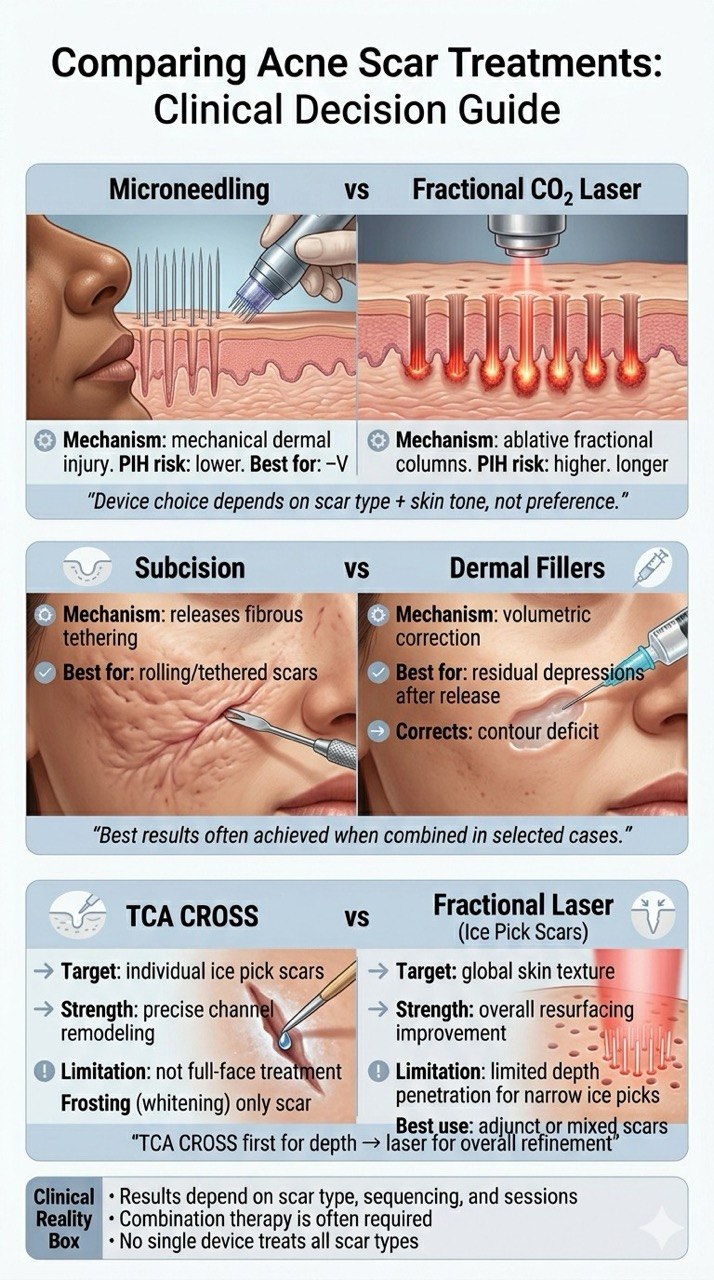
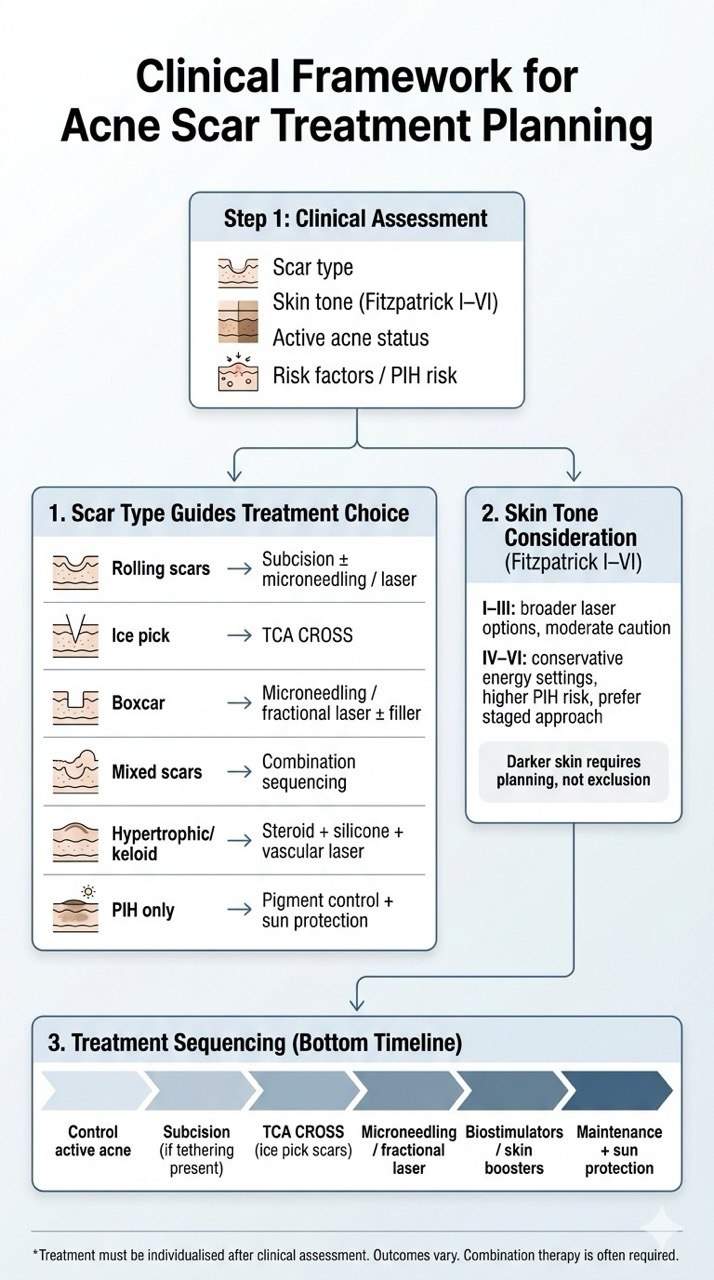
Rolling scars typically respond to subcision (to release tethering), aggressive microneedling (to stimulate new collagen), and biostimulators or skin boosters (to rebuild volume beneath the released scar).
Boxcar scars
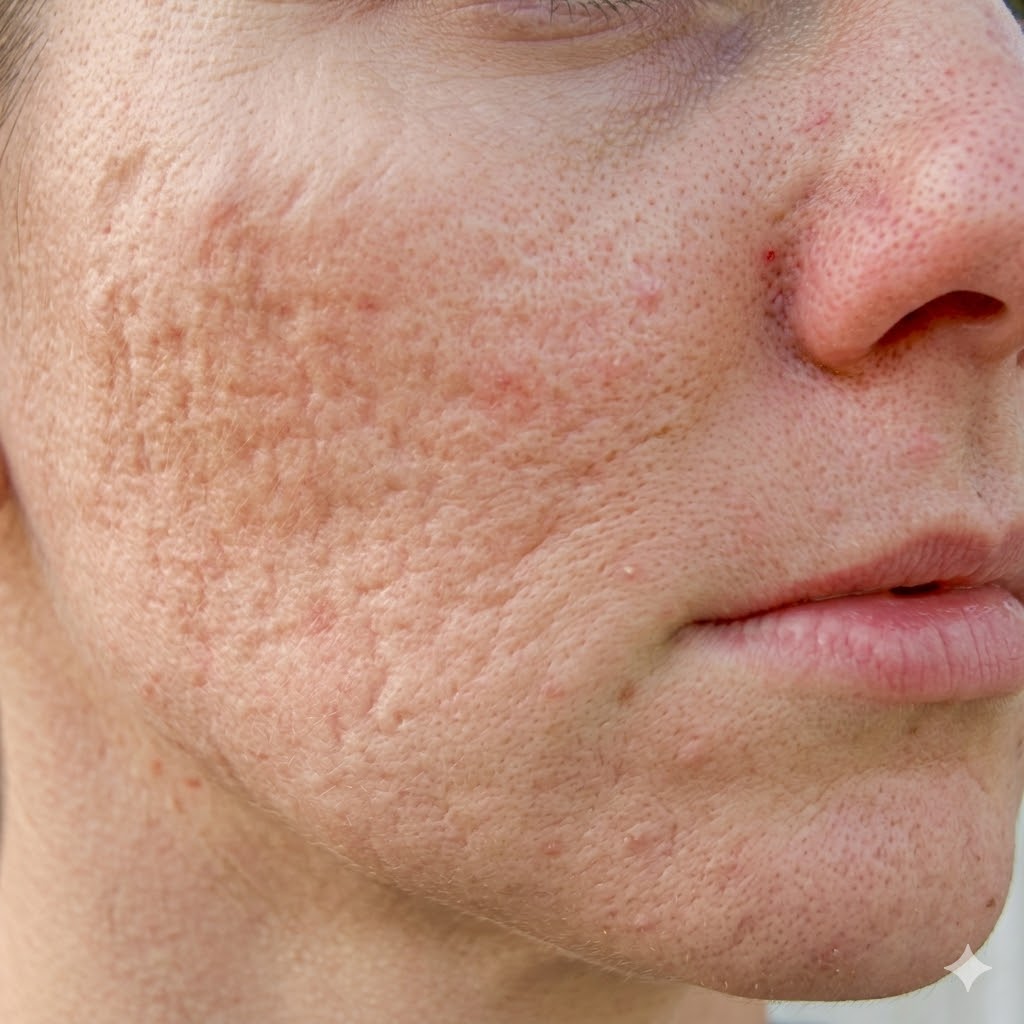
Boxcar scars are round or oval depressions with sharply defined, vertical edges — like a box stamped into the skin. They can be shallow (under 0.5 mm) or deep (over 0.5 mm). Shallow boxcar scars respond to resurfacing treatments such as microneedling or fractional CO2 laser. Deep boxcar scars often need a combination of subcision and resurfacing, or in some cases punch-based techniques.
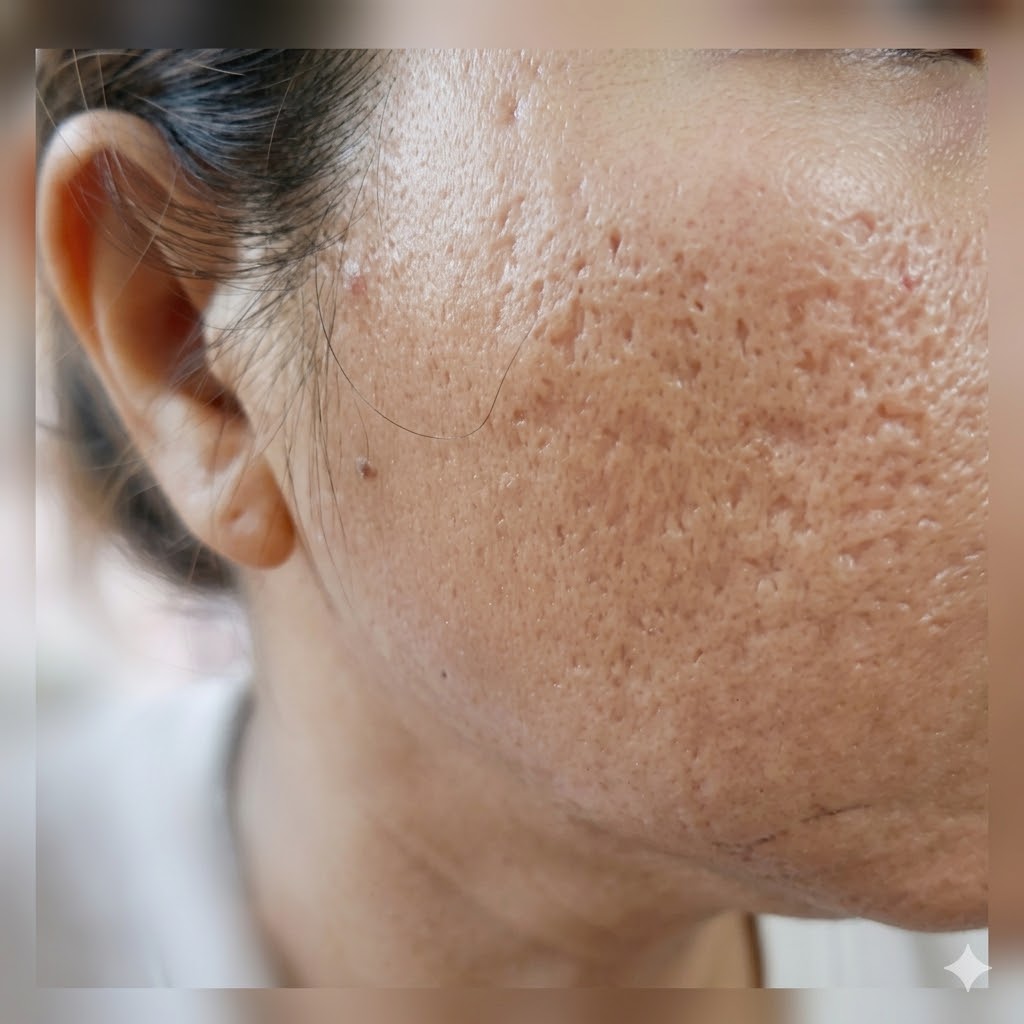
Ice pick scars
Ice pick scars are narrow (under 2 mm), deep, V-shaped pits that extend into the dermis or even the subcutis. They look like the skin has been punctured with a sharp instrument. Ice pick scars are the most difficult acne scar type to treat because their narrow opening and deep channel resist conventional resurfacing.
Ice pick scars often need TCA CROSS (chemical reconstruction of skin scars), which deposits high-concentration trichloroacetic acid directly into the scar channel to trigger controlled healing from the base upward. In some cases, punch excision is considered.
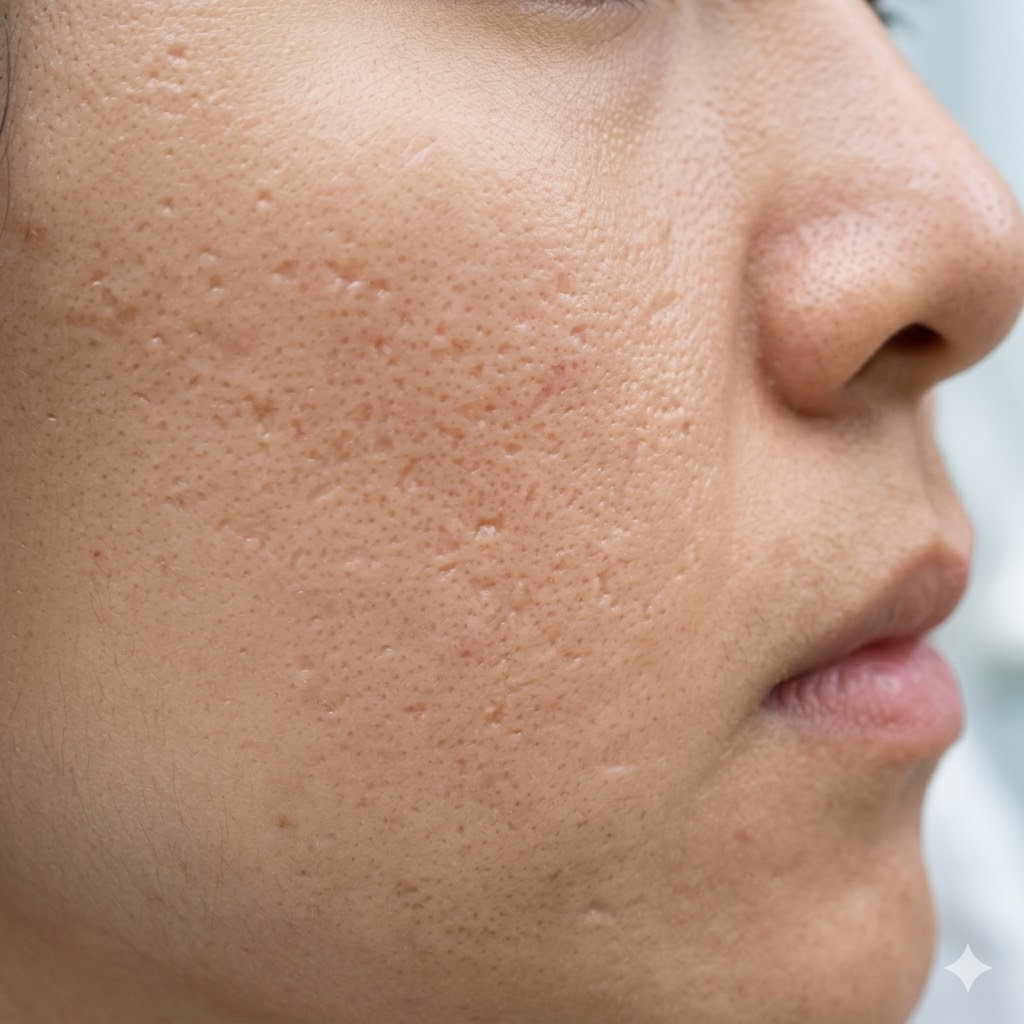
Hypertrophic and papular scars
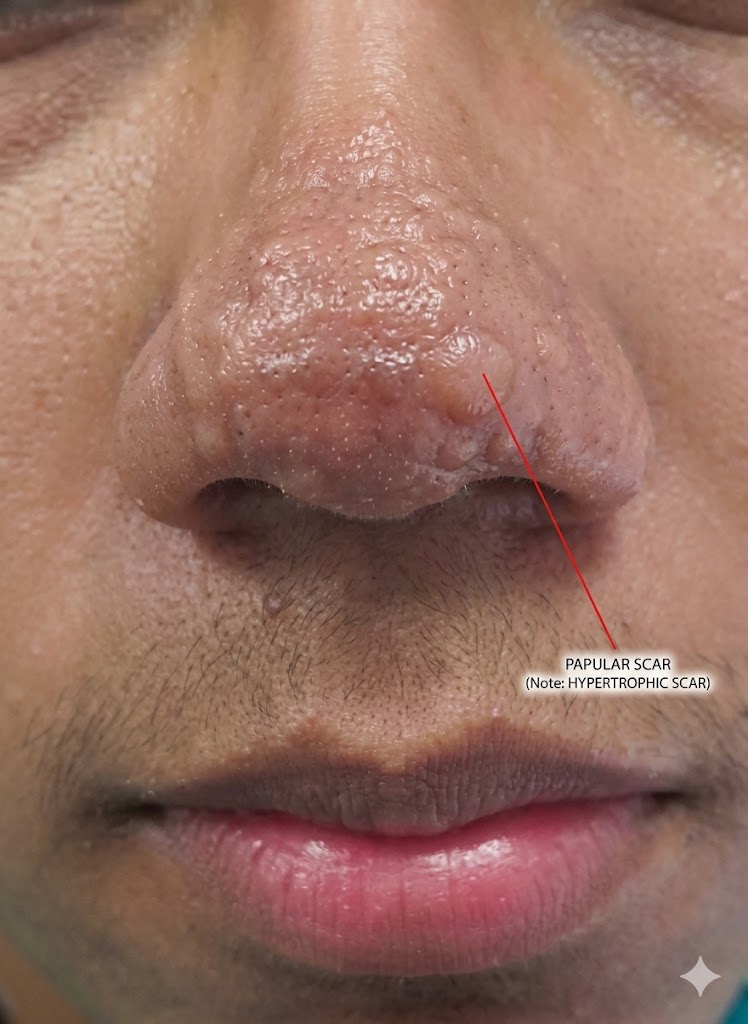
Hypertrophic scars and papular scars are raised scars that sit above the surrounding skin — the opposite of depressed scars. Hypertrophic scars form when the skin produces excess collagen during healing, creating a firm, raised area that stays within the boundaries of the original wound. Papular scars are small, raised bumps — commonly seen on the nose and chin — that result from a similar overproduction of scar tissue.
Unlike depressed scars, hypertrophic and papular scars do not respond to subcision or resurfacing alone. Treatment may involve intralesional steroid injections, laser therapy, or combination approaches to flatten and soften the raised tissue. Assessment is important because hypertrophic scars can sometimes be confused with keloid scars, which behave differently and require different management.
Mixed scarring
Most patients with deep acne scars have a combination of scar types across different areas of the face — depressed scars (rolling, boxcar, ice pick) alongside raised scars (hypertrophic or papular) on the nose or chin. This is why a blanket approach — using the same laser or device across the entire face — often produces limited results. At Klinik Dr Diana, the assessment maps each zone of the face and assigns the appropriate treatment to each scar type.
What deep scar treatments are available at Klinik Dr Diana?
Klinik Dr Diana offers a full range of evidence-based deep scar treatments including subcision, aggressive medical microneedling, fractional CO2 laser, TCA CROSS, Rejuran S, biostimulators, dermal fillers, and chemical peels. These are selected and combined based on the specific scar types, depth, tethering pattern, and skin healing risk identified during the clinical assessment.
How does subcision treat deep acne scars?
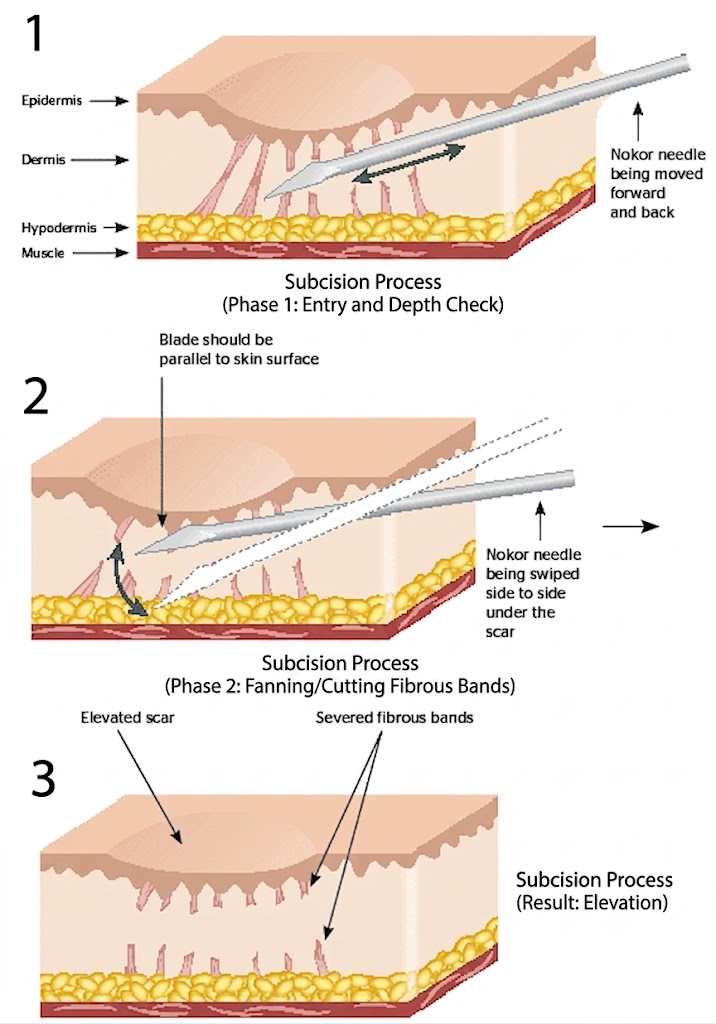
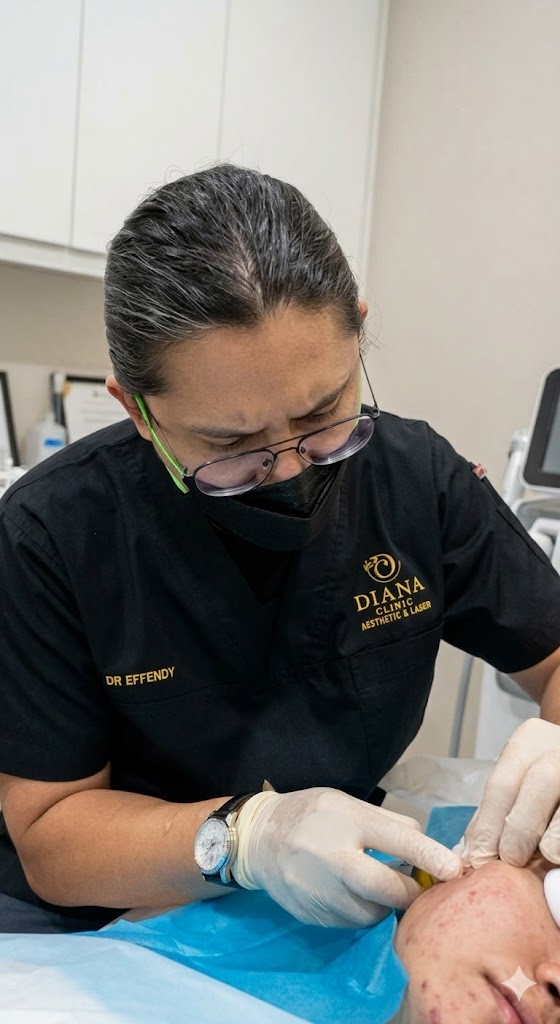
Subcision is a minor in-clinic procedure that releases the fibrous bands tethering depressed scars to deeper tissue. A needle or blunt cannula is inserted beneath the scar under local anaesthesia, severing the bands that pull the skin downward. Once released, the skin can lift and new collagen can form in the space beneath.
Subcision is most effective for rolling scars with visible tethering and selected tethered boxcar scars. It is often combined with a biostimulator (such as CaHA or PDLLA) or Rejuran S injected into the released space to support collagen rebuilding during healing.
Bruising and swelling are expected and may last several days to two weeks. Subcision is technique-dependent and should be performed by a clinician trained in scar anatomy.
How does aggressive microneedling differ from cosmetic microneedling?
Aggressive microneedling — also called deep or medical microneedling — is performed at depths of 1.5 to 3.0 mm, reaching the reticular dermis where scar tissue sits. This is fundamentally different from the shallow cosmetic microneedling (under 0.5 mm) used in facials, which cannot reach scar tissue.
The mechanism is controlled micro-injury: fine needles create channels in the dermis, activating fibroblasts to break down disorganised scar collagen and deposit new, organised collagen and elastin. This process — neocollagenesis — unfolds over weeks to months after each session.
Depth is calibrated per scar type. Rolling scars generally respond at 1.5 to 2.0 mm. Boxcar scars often need 2.0 to 2.5 mm. Ice pick scars are difficult for microneedling because of their narrow shape.
Redness, mild swelling, and pinpoint bleeding typically resolve within 2 to 5 days. Incorrect depth or excessive density can produce prolonged inflammation or PIH, which is why medical microneedling for scars should be performed by a trained doctor.
How does fractional CO2 laser work for deep scars?
Fractional CO2 laser is an ablative resurfacing treatment that creates microscopic columns of controlled thermal injury through the epidermis and into the dermis. The surrounding untreated skin acts as a healing reservoir, allowing faster recovery than full-field ablation.
At Klinik Dr Diana, fractional CO2 laser is used selectively — primarily for boxcar scars and textural irregularities. For Fitzpatrick IV to VI skin, which includes most Malaysian patients, many clinics use overly conservative laser settings to avoid post-inflammatory hyperpigmentation (PIH). At KDD, the doctors use more aggressive settings to achieve faster, more visible scar improvement — while managing PIH risk actively with a structured anti-pigmentation protocol before and after treatment. Patients are fully informed about the possibility of temporary PIH, and the clinical team monitors and manages it if it occurs. The priority is meaningful scar improvement — PIH, when it happens, is a manageable and temporary side effect that resolves with proper care.
Downtime is typically 5 to 7 days of redness, swelling, and crusting. Results develop progressively over 3 to 6 months as new collagen remodels the treated zone.
What is TCA CROSS and which scars does it target?
TCA CROSS (Chemical Reconstruction of Skin Scars) is a focal treatment specifically designed for narrow, deep scars — particularly ice pick scars. A high concentration of trichloroacetic acid (typically 70–100%) is deposited directly into the scar channel using a fine applicator.
The acid triggers a controlled inflammatory and healing response at the base of the scar, causing new collagen to build upward from the bottom. Over multiple sessions (usually 3 to 6, spaced 4 to 6 weeks apart), the scar gradually fills and rises closer to the surrounding skin surface.
Localised frosting and scabbing at treated spots lasts 5 to 10 days per session. TCA CROSS is precise and does not affect surrounding skin, making it particularly suitable for scattered ice pick scars that would not respond well to broad resurfacing.
How do Rejuran S and biostimulators support scar healing?
Rejuran S is a polynucleotide-based skin booster specifically formulated for scar tissue. When injected beneath depressed scars — often in the same session as subcision — it promotes dermal repair and collagen production in the treated zone.
Biostimulators such as calcium hydroxylapatite (CaHA) and poly-D,L-lactic acid (PDLLA) work by stimulating the skin’s own collagen synthesis over time. When placed in the space created by subcision, they provide a structural scaffold for new collagen to form, helping the released scar maintain its lifted position.
These injectable options are not fillers — they do not simply fill a depression. They trigger a biological healing response that rebuilds the skin’s own structural matrix.
When are dermal fillers used for deep scars?
Dermal fillers — typically hyaluronic acid (HA) based — can be injected superficially beneath individual depressed scars to lift the base of the scar closer to the surrounding skin level. Fillers are most useful for selected rolling and atrophic scars where volume loss is the primary issue.
Fillers provide immediate visible improvement but are not permanent. They may be used as a bridge treatment while longer-term collagen-building therapies take effect, or as a standalone option for patients who prefer minimal-downtime correction.
Why does deep scar treatment require a combination approach?
A single treatment applied uniformly across all scars is one of the most common reasons why scar treatment produces limited results. Each scar type has a different underlying mechanism — tethering, depth, collagen loss, narrow scar channels — and responds to a different treatment modality. Effective deep scar treatment combines multiple techniques, each targeting the specific mechanism of the scars present.
For example, a patient with mixed rolling and ice pick scars may need subcision to release tethering on the rolling scars, TCA CROSS for the ice pick scars, and microneedling for overall textural improvement — staged across several sessions with healing intervals between each phase.
At Klinik Dr Diana, treatment plans are designed after mapping the scar types present across the face. This assessment-first approach avoids the common pitfall of applying one device at a single setting across all scars and hoping for the best.
How does Klinik Dr Diana approach deep scar treatment?
Deep scar treatment at Klinik Dr Diana follows a four-stage clinical process: assessment, planning, staged treatment, and review. The approach is assessment-first — no treatment is recommended until the doctor has evaluated the scar types, depth, tethering, skin tone, PIH risk, and whether active acne has been controlled.
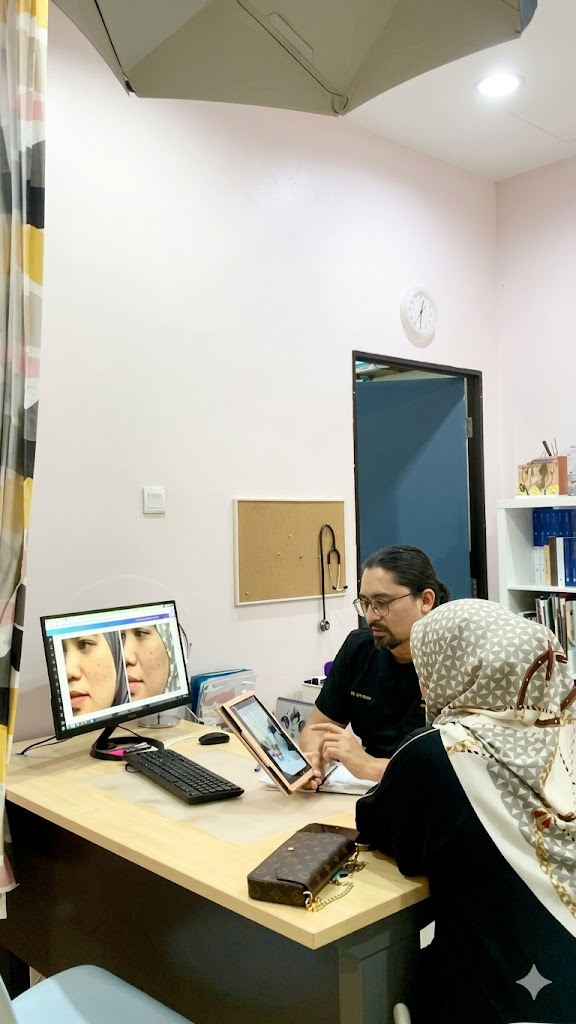
Stage 1 — Clinical scar assessment. The doctor examines the face under clinical lighting to identify and map the scar types present — rolling, boxcar, ice pick, atrophic, or mixed. Tethering is tested, depth is evaluated, and skin tone and PIH risk are assessed. For patients with active acne, a stabilisation plan is started before scar treatment begins.
Stage 2 — Personalised treatment plan. Based on the assessment, the doctor designs a combination plan selecting from the available modalities. The plan includes which treatments to use, in what order, at what settings, and over how many sessions. Expected outcomes, downtime, risks, and realistic timelines are discussed.
Stage 3 — Staged treatment sessions. Treatments are performed in a clinically sequenced order — for example, subcision and biostimulators first to address tethering and volume, followed by resurfacing (microneedling or laser) to refine texture, with TCA CROSS for focal ice pick scars at the appropriate stage. Sessions are spaced 4 to 6 weeks apart to allow full collagen remodelling.
Stage 4 — Review and adjustment. Progress is reviewed after each session. The plan is adjusted based on the skin’s response, healing quality, and remaining scar depth. Additional sessions or modality changes are made as needed.
Start with a scar assessment. The doctor will map your scar types and discuss a treatment plan designed for your skin.
Book a Scar AssessmentWhat results can you expect from deep scar treatment?
Most patients with moderate to severe deep acne scars see measurable improvement in scar depth, texture, and skin evenness after a completed treatment course — but results depend on scar type, severity, skin healing response, and the number of sessions completed.
Realistic expectations for deep scar treatment:
- Rolling scars often show the most visible improvement, especially after subcision releases the tethering and collagen-building treatments fill the released space.
- Boxcar scars can be significantly softened, though very deep or wide boxcar scars may retain some residual indentation.
- Ice pick scars are the most resistant to treatment. TCA CROSS can reduce their depth over multiple sessions, but some residual texture may remain.
- Mixed scarring responds best to combination treatment, where each modality addresses a specific scar type rather than a blanket approach.
Results are not instant. Collagen remodelling takes 3 to 6 months after each session. The full outcome of a treatment course may only be visible 6 to 12 months after the final session.
⚠️ Results vary depending on scar type, severity, skin type, healing response, and treatment compliance. Complete scar removal cannot be guaranteed. Individual assessment is required before treatment.
Why does early treatment produce better outcomes?
Deep acne scars become more difficult to treat with age because skin loses collagen and elasticity over time, causing depressed scars to appear deeper and more visible. Starting treatment earlier — when the skin still has stronger healing capacity — typically produces better results with fewer sessions.
Patients in their 20s and early 30s generally respond faster to collagen-stimulating treatments than patients in their 40s, simply because the skin’s biological repair mechanisms are more active. This does not mean older patients cannot benefit — it means that earlier intervention often requires less treatment to achieve similar improvement.
If you have deep acne scars and have been considering treatment, a clinical assessment is a practical first step — even if you are not ready to start treatment immediately. Understanding your scar types and options helps you make an informed decision when the time is right.
Who performs deep scar treatment at Klinik Dr Diana?
All deep scar treatments at Klinik Dr Diana are assessed, planned, and performed by LCP-certified doctors. The clinical team includes Dr Diana Abd Razak, Dr Shahrill Effendy, Dr Husnina, and Dr Husna Amelia — all of whom perform scar treatment procedures under the clinic’s assessment-first protocols.
Dr Diana Abd Razak — MD, Letter of Credentialing and Privileging (LCP, MOH Malaysia), PGCert in Primary Care Dermatology, PGCert in Aesthetic Medicine. Founder and lead aesthetic doctor at Klinik Dr Diana, with a clinical focus on pigmentation, acne, and skin restoration. Dr Diana has completed multiple advanced aesthetic training programmes in Malaysia and South Korea.
Dr Shahrill Effendy — MD, Letter of Credentialing and Privileging (LCP, MOH Malaysia), PGCert in Aesthetic Medicine, PGCert in Aviation Medicine. Aesthetic doctor at Klinik Dr Diana with additional training across multiple aesthetic disciplines in Malaysia.
Dr Husnina and Dr Husna Amelia are resident doctors at Klinik Dr Diana who perform scar treatment procedures as part of the clinical team.
At Klinik Dr Diana, all scar assessment, treatment planning, and procedural work is performed by doctors — not delegated to therapists or non-medical staff.
Where can you get deep scar treatment in Selangor and Negeri Sembilan?
Klinik Dr Diana offers deep acne scar treatment at two branches — Bandar Baru Bangi in Selangor and Senawang in Negeri Sembilan — serving patients from Kajang, Putrajaya, Cyberjaya, Seremban, Nilai, and surrounding areas.
Klinik Dr Diana, Bandar Baru Bangi UG-3a (GF), Jalan Pusat Bandar 2, Sunway Gandaria, Seksyen 9, 43650 Bandar Baru Bangi, Selangor. Serving patients from Bangi, Kajang, Serdang, Putrajaya, and Cyberjaya.
Klinik Dr Diana, Senawang No 32-G-1, Jalan BPS 3, Bandar Prima Senawang, 70450 Senawang, Negeri Sembilan. Serving patients from Seremban, Senawang, Nilai, Mantin, and Port Dickson.
Both branches are KKM-licensed medical aesthetic clinics operating since 2016. All acne scar treatments are performed under direct doctor supervision.
Possible side effects
Side effects depend on the treatment modality used. Subcision may cause bruising and swelling lasting several days to two weeks. Aggressive microneedling typically causes redness, mild swelling, and pinpoint bleeding that resolves within 2 to 5 days. Fractional CO2 laser involves redness, swelling, and crusting that may last 7 to 14 days, with a risk of post-inflammatory hyperpigmentation (PIH) in darker skin tones. TCA CROSS causes localised frosting and scabbing at treated spots for 5 to 10 days. All procedures carry a small risk of infection, prolonged redness, or scarring if aftercare instructions are not followed.
Individual results vary depending on scar type, severity, skin tone, healing response, and compliance with aftercare. Multiple sessions are typically required. Deep scars may improve significantly but complete removal cannot be guaranteed. An in-person consultation is required to confirm suitability and set realistic expectations. This page is for general educational information and does not constitute medical advice.
Ready to get your deep scars assessed? Book a scar consultation at Bangi or Senawang.
WhatsApp UsFrequently asked questions
Can deep acne scars be completely removed?
Deep acne scars can be significantly improved but complete removal is not always possible, especially for severe or long-standing scarring. The goal of treatment is measurable improvement in texture, depth, and evenness — not perfection. Multiple sessions and combination treatments typically produce the most visible results. Your doctor will set realistic expectations during your assessment.
How many sessions does deep scar treatment need?
Most patients with moderate to severe deep scarring need 3 to 6 sessions or more, depending on scar type, severity, and the treatment modalities used. Some patients see visible improvement after 2 sessions, while others with extensive scarring may need a longer course. Sessions are typically spaced 4 to 6 weeks apart.
Which treatment is best for deep acne scars?
There is no single best treatment for deep acne scars. The most effective approach depends on your scar type — rolling scars respond well to subcision, boxcar scars may need microneedling or laser, and ice pick scars often require TCA CROSS or punch-based techniques. At Klinik Dr Diana, the doctor assesses your scars before recommending a specific combination plan.
Is deep scar treatment painful?
Most procedures are performed under topical numbing cream or local anaesthesia, so discomfort is manageable. Subcision involves local anaesthetic injection. Microneedling and laser are typically preceded by 30 to 45 minutes of numbing cream application. Most patients tolerate treatment well.
How much does deep scar treatment cost in Malaysia?
The total cost depends on scar severity, the number of treatment modalities needed, and the number of sessions required. Because every patient's scar profile is different, pricing is confirmed after an in-person assessment. Please WhatsApp us for consultation booking at your preferred branch.
Is deep scar treatment safe for dark or Asian skin?
Yes, but it requires careful planning. Malaysian and Southeast Asian skin types (Fitzpatrick IV to VI) have a higher risk of post-inflammatory hyperpigmentation (PIH). At Klinik Dr Diana, treatment settings, modality selection, and pre-treatment preparation are adjusted specifically to minimise PIH risk in darker skin tones.
Do I need to stop acne before treating scars?
Yes. Active acne should be controlled before starting scar treatment. Treating scars while acne is still active can worsen inflammation, increase infection risk, and produce new scars. Your doctor will assess whether your acne is stable enough to begin scar treatment.
Which branches offer deep scar treatment?
Both Klinik Dr Diana branches — Bandar Baru Bangi (Selangor) and Senawang (Negeri Sembilan) — offer the full range of deep acne scar treatments under doctor supervision. The clinic serves patients from Kajang, Putrajaya, Cyberjaya, Seremban, Nilai, and surrounding areas.
Further reading