What is LHALA Peel?
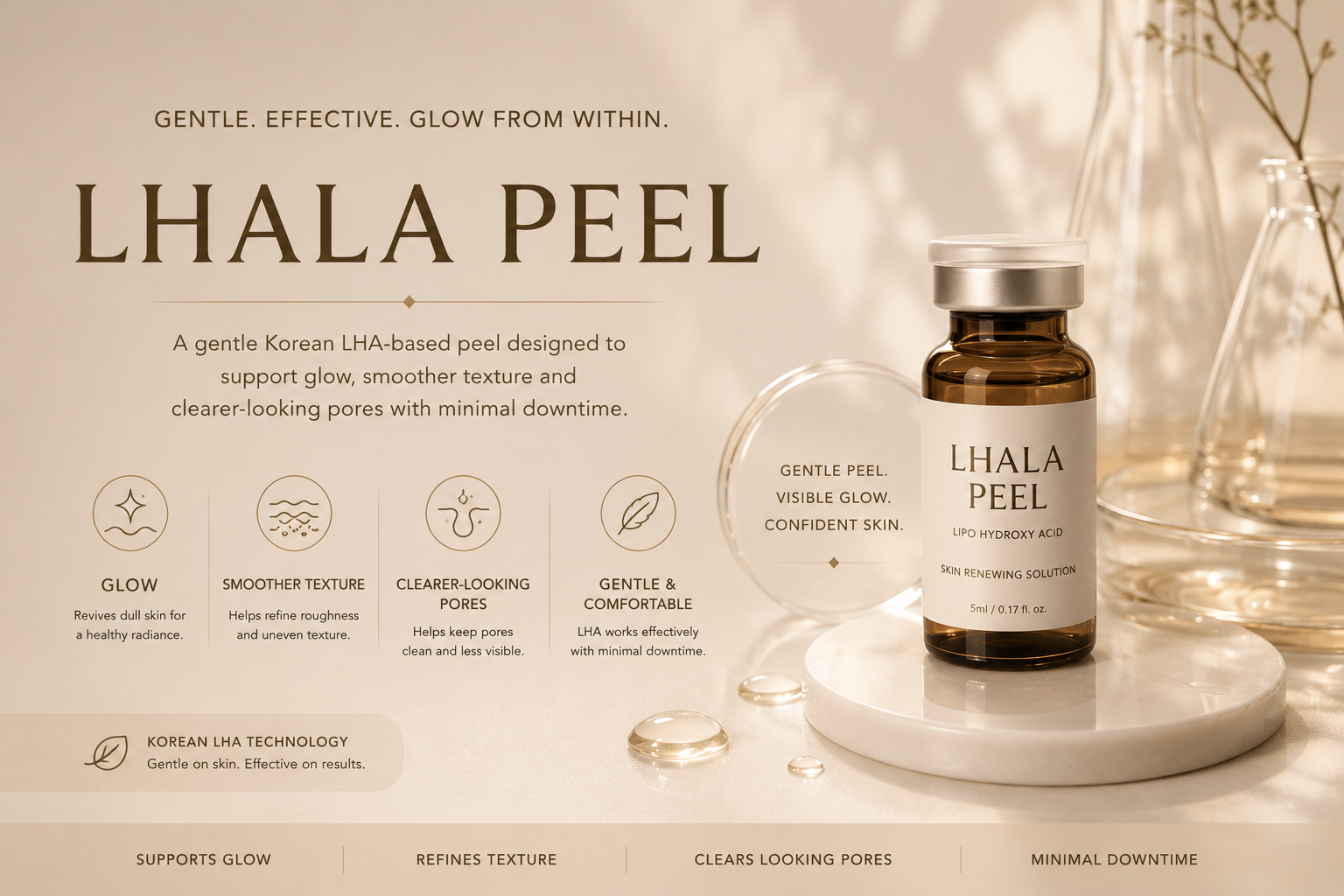
LHALA Peel is a gentle Korean LHA-based peel used for dull skin, clogged pores, oily skin, rough texture and low-downtime skin glow. It helps exfoliate dead skin buildup and support smoother, fresher-looking skin without the heavier visible peeling associated with some traditional chemical peels.
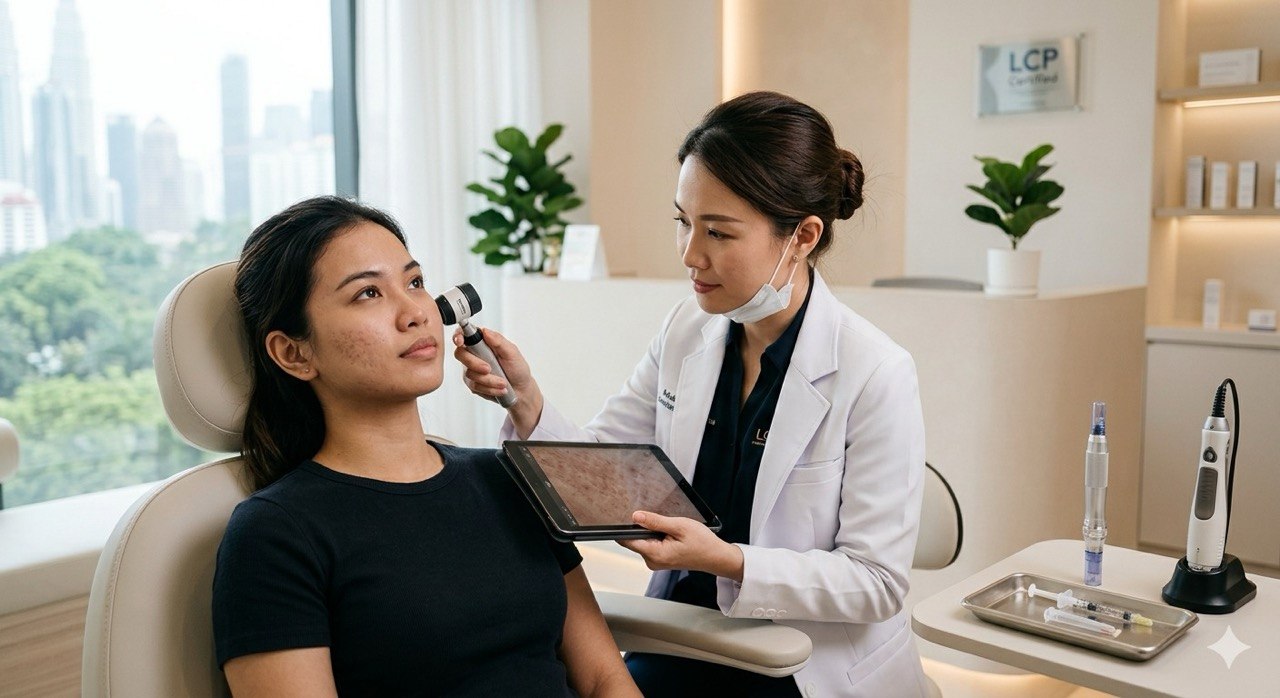
At Klinik Dr Diana, LHALA Peel is considered as part of an assessment-first skin treatment plan. Your skin condition, sensitivity, acne activity and pigmentation tendency are checked before treatment so the peel can be matched safely to your skin needs.
Book a consultation at Klinik Dr Diana to check whether LHALA Peel is suitable for your skin.
WhatsApp UsWhy LHALA Peel is used for glow, pores and texture
LHALA Peel is often chosen for patients who want brighter-looking skin, smoother texture and clearer-looking pores with minimal downtime. It may be considered for dullness, mild congestion, oily skin tendency, rough surface texture and uneven-looking skin tone.
Unlike stronger peel treatments that may cause more visible peeling or longer recovery, LHALA Peel is positioned as a gentler skin renewal option. It may be suitable for people who want a glow-focused treatment before events or as regular skin maintenance, provided their skin is not actively irritated, inflamed or barrier-damaged.
At Klinik Dr Diana, LHALA Peel is not treated as a one-size-fits-all facial. Your skin condition, sensitivity, acne activity, pigmentation tendency and aesthetic goals are checked first before the treatment is recommended.
What can LHALA Peel help with?
LHALA Peel may help improve the appearance of dull skin, clogged pores, oily skin tendency, rough texture and uneven-looking tone. It is commonly chosen as a gentle Korean LHA-based peel for patients who want skin renewal, glow and smoother texture with minimal downtime.
LHALA Peel may be considered for people who are concerned about mild congestion, visible pores, dullness or early uneven skin texture. It may also support overall skin radiance and barrier comfort when performed on suitable skin.
It is not a replacement for medical acne treatment, melasma management or acne scar treatment. If your concern is active inflamed acne, recurring pigmentation, melasma, post-inflammatory hyperpigmentation or acne scars, the doctor may recommend a different treatment plan or a combination approach.
How does LHALA Peel work?
LHALA Peel works by using an LHA-based peeling approach with skin-supporting lipids to gently soften and exfoliate dead skin buildup while supporting smoother texture, clearer-looking pores and overall glow. In clinic practice, the treatment usually includes skin preparation, LHALA Peel application, and soothing or moisturising finishing care.
LHA, also known as lipohydroxy acid, is related to salicylic acid and is commonly used in skincare for gentle exfoliation and clogged-pore support. LHALA Peel is often described as a newer-generation Korean peel because it combines LHA with lipid-based or barrier-supporting components.
The goal is gentle skin renewal rather than aggressive surface stripping. Although LHALA Peel is designed to be gentler than many traditional chemical peels, temporary redness, tingling, dryness, tightness or sensitivity may still happen depending on skin condition.
1. Skin consultation, cleansing and preparation
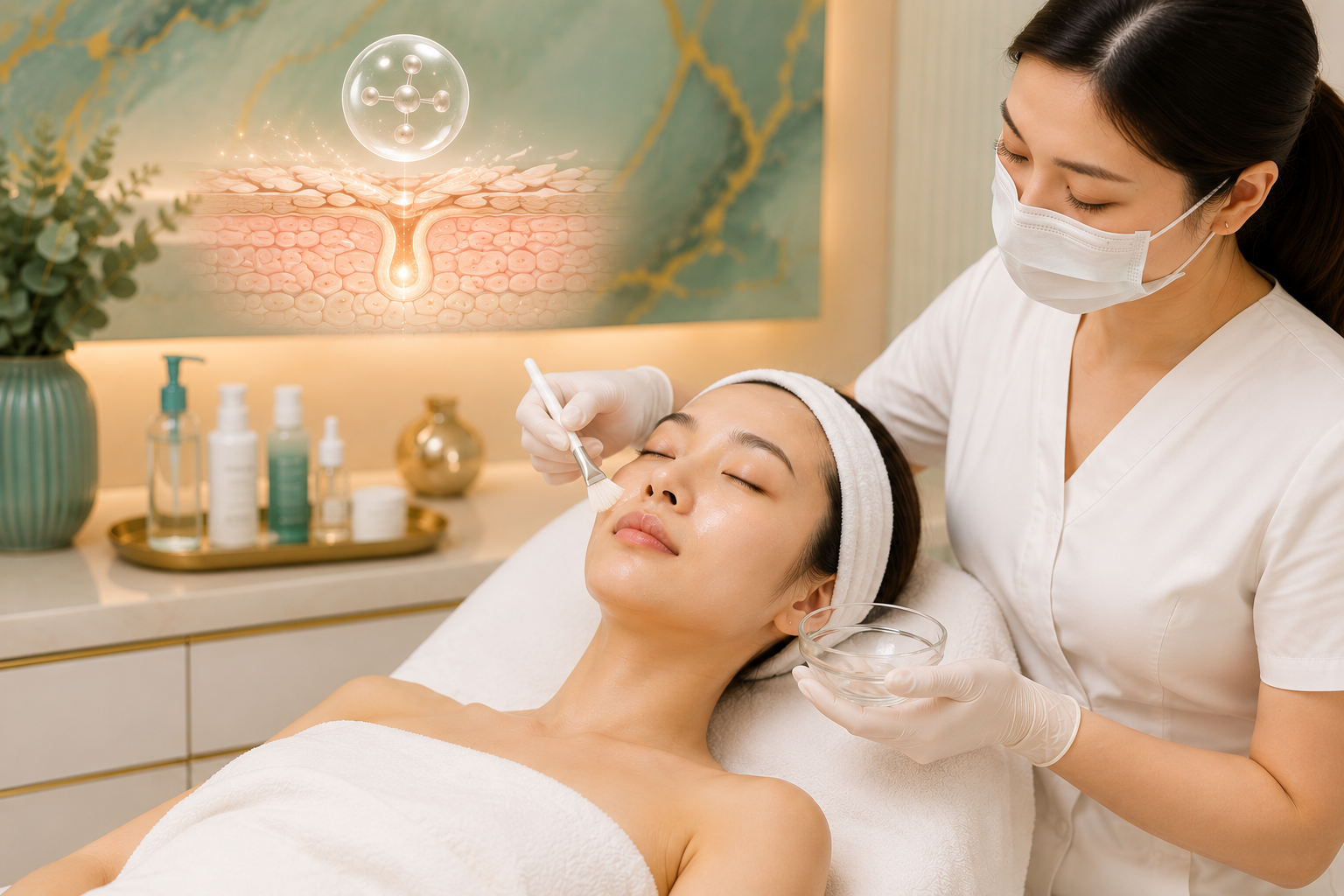
Step 1 — The skin is assessed, cleansed and prepared before LHALA Peel is applied.
Before treatment, the skin is assessed and cleansed to remove sunscreen, oil, makeup and surface impurities. This step helps the clinic check whether your skin is suitable for a peel, especially if you have sensitive, acne-prone or pigmentation-prone skin.
2. LHALA Peel application and gentle exfoliation
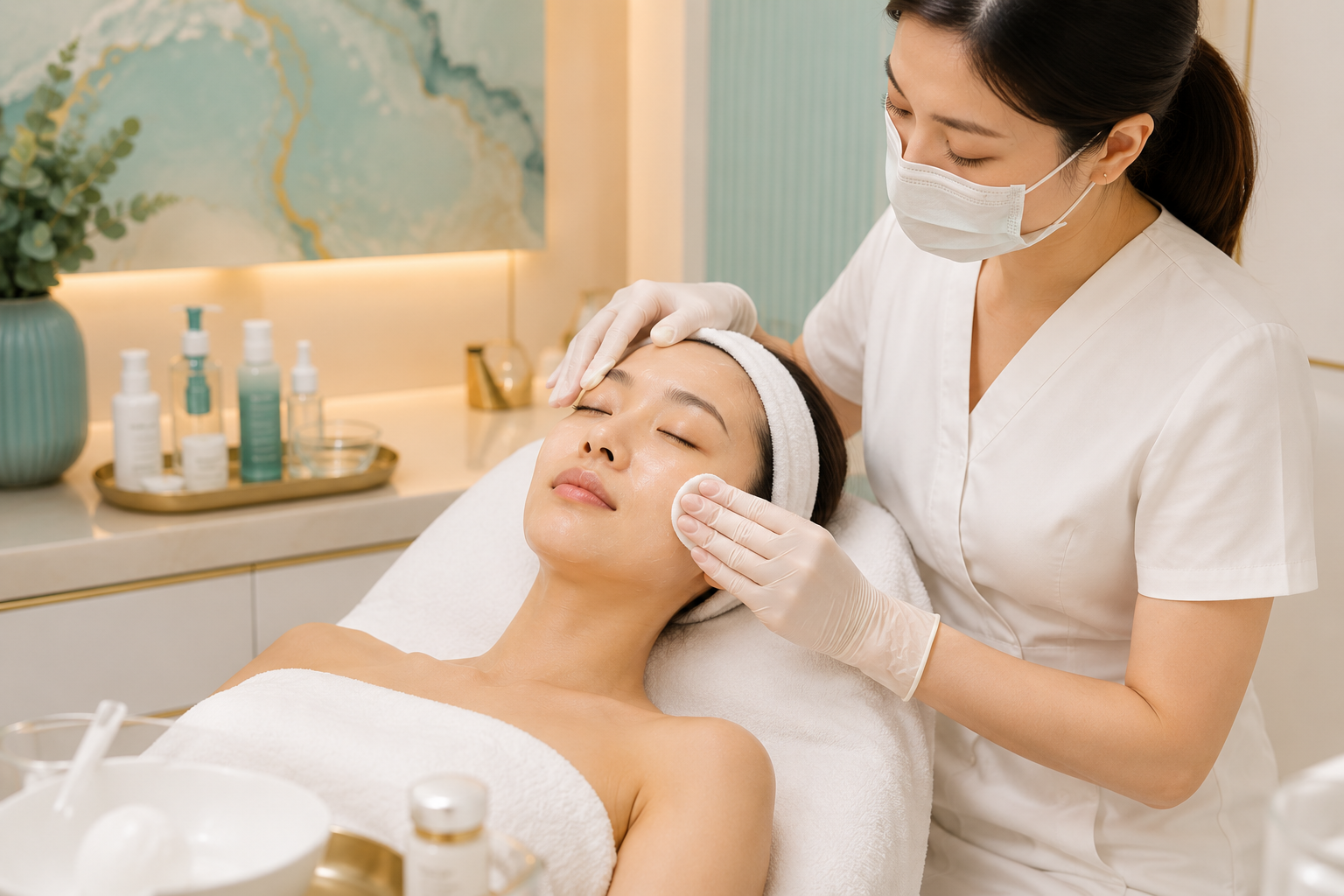
Step 2 — LHALA Peel is applied to support gentle exfoliation, smoother texture and clearer-looking pores.
The LHALA Peel solution is applied according to your skin condition, tolerance and treatment plan. It helps soften dead skin buildup that can make the skin look dull, rough or congested.
Some protocols may involve more than one peel application phase before moisturising or finishing care. The exact protocol may vary depending on the product version, clinic method and your skin condition.
3. Soothing care, hydration and glow finish
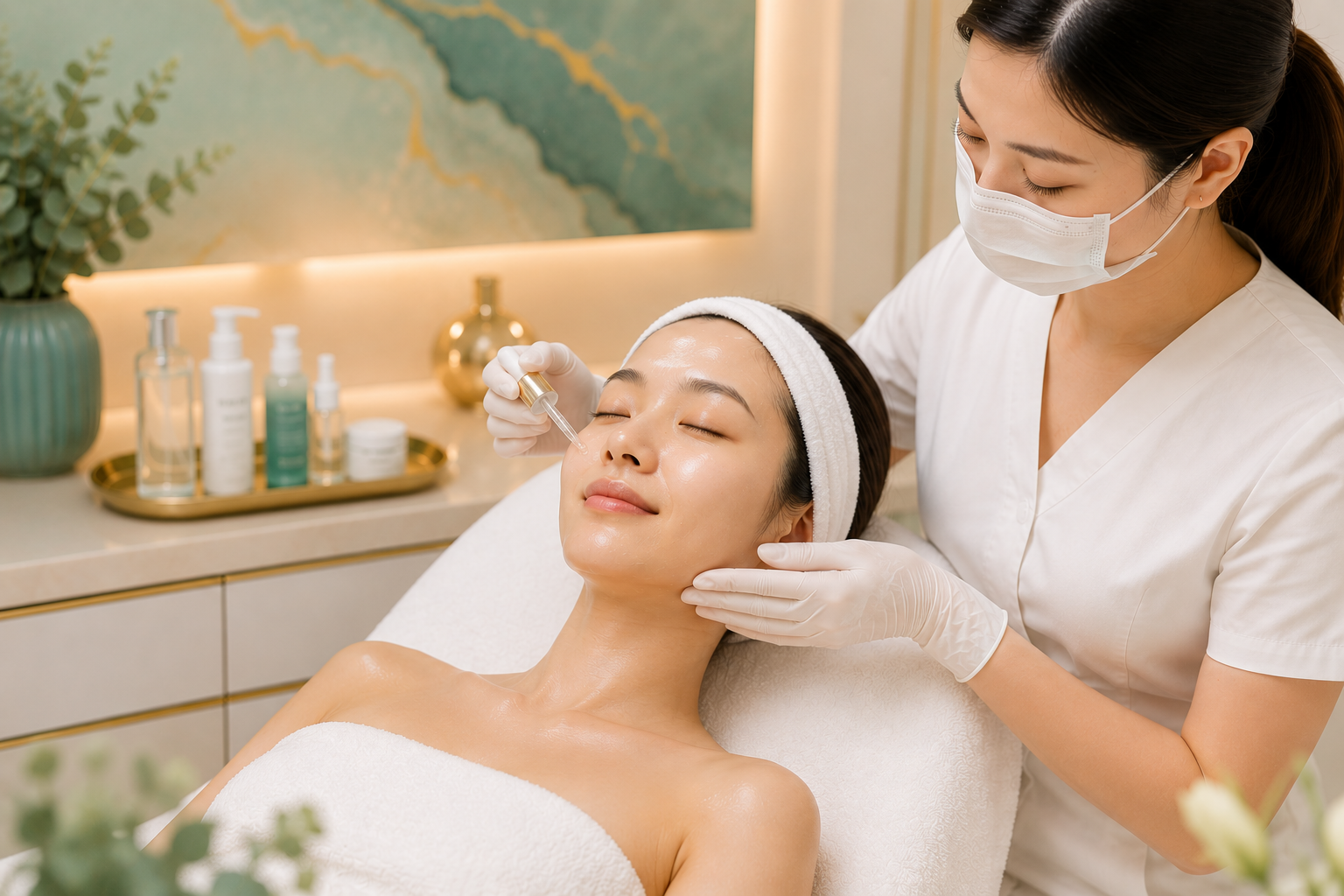
Step 3 — Soothing post-treatment care helps support comfort, hydration and a fresh glow after the peel.
After the peel phase, soothing or moisturising care may be applied to support skin comfort and hydration. You will also receive aftercare advice on sunscreen, moisturiser and skincare ingredients to pause temporarily.
What skin concerns can LHALA Peel help with?
LHALA Peel may help with dull skin, clogged pores, oily skin, rough texture and mild congestion. It is not a replacement for medical acne treatment, pigmentation diagnosis or acne scar treatment.
- Dull or tired-looking skin
- Clogged pores and mild congestion
- Oily skin tendency
- Rough or uneven-feeling texture
- Uneven-looking skin tone
- Low-downtime glow maintenance
- Pre-event skin refresh, if the skin is suitable
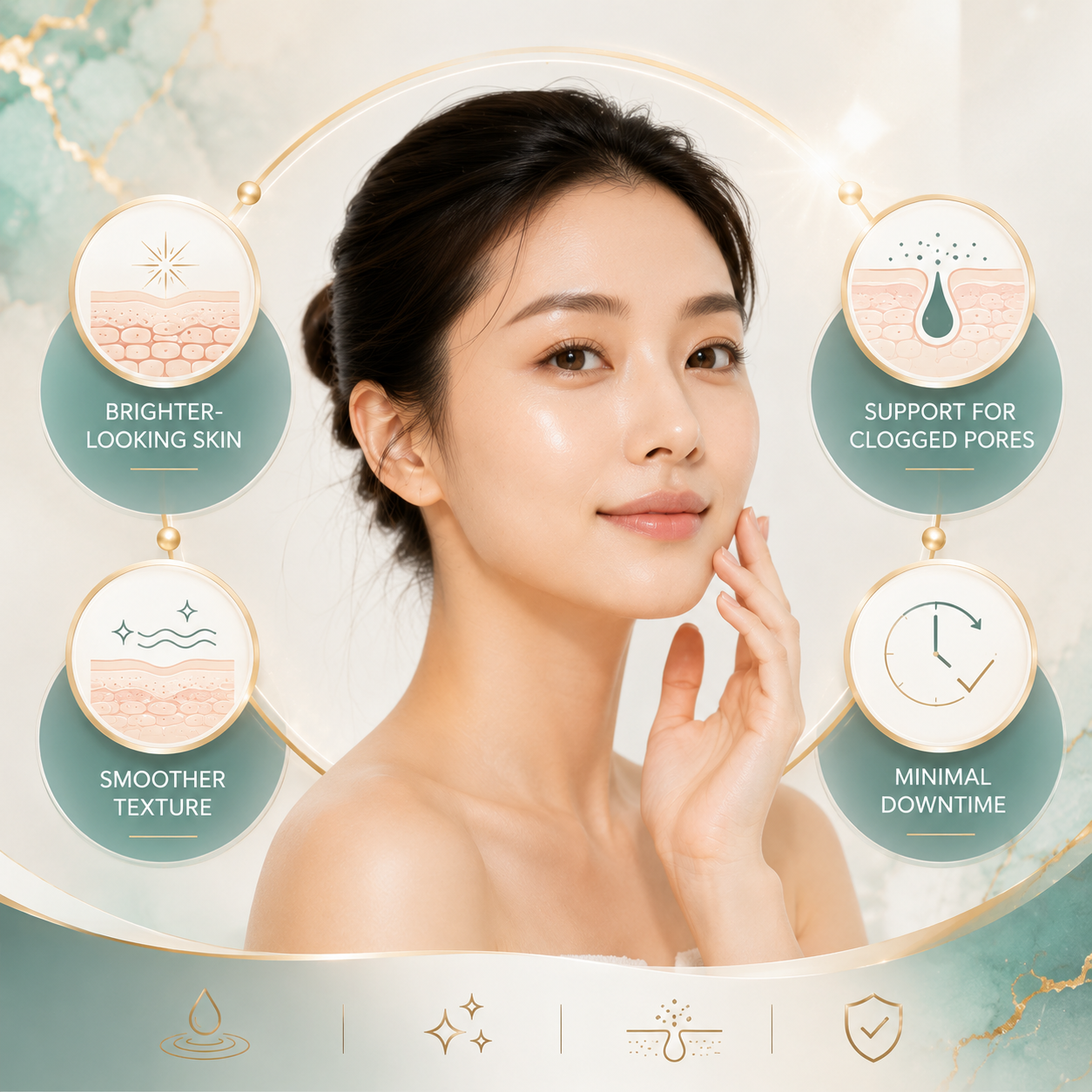
LHALA Peel is commonly chosen for four main goals: brighter-looking skin, smoother texture, clearer-looking pores and low-downtime skin renewal.
If your main concern is active inflamed acne, melasma, post-inflammatory hyperpigmentation or acne scars, a consultation is recommended first. The doctor may suggest another treatment plan or combine treatments carefully.
Who is LHALA Peel suitable for?
LHALA Peel may be suitable for adults who want a gentle, low-downtime treatment for dullness, clogged pores, oily skin tendency and rough texture. It may also suit patients who want a glow-focused maintenance treatment without aggressive peeling.
- Adults with dull or tired-looking complexion
- Patients with mild clogged pores or skin congestion
- Patients with oily skin tendency
- Patients with rough skin texture
- Patients who prefer minimal visible peeling
- Patients looking for maintenance between other skin treatments
Not suitable for: active skin inflammation, open wounds, recent sunburn, severe irritation, eczema flare, active skin infection or a significantly compromised skin barrier. Suitability is assessed in person before treatment.
What to expect during the session
A LHALA Peel session begins with skin consultation and cleansing. The peel is then applied according to your skin condition and tolerance, followed by soothing care, hydration support and aftercare advice.
Most patients may feel mild tingling, warmth or temporary sensitivity during or after the peel. Downtime is usually minimal, but mild redness, dryness or tightness can happen. Moisturiser and sunscreen are important after treatment.
LHALA Peel vs traditional chemical peel
| Feature | LHALA Peel | Traditional stronger chemical peel |
|---|---|---|
| Main goal | Glow, smoother texture, clogged pore support and gentle renewal | Stronger exfoliation or resurfacing for selected concerns |
| Downtime | Usually minimal | Can involve more visible peeling, redness or recovery |
| Peeling | Often mild or minimal visible peeling | May cause more obvious peeling depending on peel type and strength |
| Comfort | Designed to be gentle and tolerable | May sting more depending on acid type and concentration |
| Best for | Dullness, rough texture, oily skin tendency and mild congestion | Selected skin concerns that need deeper exfoliation |
| Assessment needed? | Yes, especially for sensitive, acne-prone or pigmentation-prone skin | Yes, especially for darker skin types or higher-risk skin concerns |
How often should you do LHALA Peel?
A common LHALA Peel interval is every 2 to 4 weeks, depending on skin condition, sensitivity and treatment goals. Some people may choose it as regular glow maintenance, while others may combine it with treatments for acne, pigmentation, hydration or texture under clinic guidance.
At Klinik Dr Diana, treatment frequency is personalised after consultation. Over-exfoliating the skin too often can irritate the barrier, so the timing should be planned properly.
What should you do before and after LHALA Peel?
| Before treatment | After treatment |
|---|---|
| Avoid sunburn before treatment. | Use moisturiser consistently. |
| Avoid harsh scrubs and strong exfoliating acids. | Apply sunscreen daily. |
| Tell the clinic if you use retinoids, tretinoin or acne medication. | Avoid over-exfoliation after treatment. |
| Inform the doctor if your skin is irritated, inflamed or very sensitive. | Pause strong skincare actives if advised by the clinic. |
Why consider Klinik Dr Diana for LHALA Peel?
Klinik Dr Diana uses an assessment-first approach for LHALA Peel. This means the treatment is recommended only after checking your skin condition, sensitivity, acne activity, pigmentation tendency and treatment goals.
For patients in Bandar Baru Bangi, Senawang, Seremban and nearby areas, Klinik Dr Diana can help decide whether LHALA Peel is suitable, or whether another treatment is more appropriate for acne, pigmentation, hydration, texture or skin barrier concerns.
- Doctor-supervised aesthetic clinic setting
- Assessment before treatment recommendation
- Suitable treatment planning for acne-prone or pigmentation-prone skin
- Clear aftercare advice for moisturiser, sunscreen and active ingredient use
- Available consultation pathway for Bangi and Senawang patients
How much does LHALA Peel cost?
LHALA Peel pricing may vary depending on session type, package, branch availability and whether it is combined with other treatments. Please contact Klinik Dr Diana directly for current pricing at your preferred branch.
Ask Klinik Dr Diana about LHALA Peel suitability, pricing and branch availability.
WhatsApp UsFrequently asked questions about LHALA Peel
The most common questions about LHALA Peel are answered below. If you have sensitive, acne-prone or pigmentation-prone skin, an in-person consultation is recommended before treatment.
Possible side effects
LHALA Peel is generally designed as a low-downtime peel. Possible short-term effects include mild redness, tingling, tightness, dryness, itching or temporary sensitivity. It may not be suitable for active skin inflammation, open wounds, recent sunburn or severely irritated skin.
Individual results vary depending on skin type, baseline skin condition, acne activity, pigmentation tendency, sensitivity and skincare habits. An in-person consultation is required to confirm suitability and design a personalised treatment plan. This page is for general educational information and does not constitute medical advice.
Want to know if LHALA Peel suits your skin? Book a consultation at Bangi or Senawang.
WhatsApp UsFrequently asked questions
What is LHALA Peel used for?
LHALA Peel is commonly used for dull skin, clogged pores, oily skin, rough texture and low-downtime skin glow. It helps gently exfoliate dead skin buildup and support smoother-looking skin.
Is LHALA Peel good for clogged pores?
LHALA Peel may help clogged-prone skin by supporting gentle exfoliation and improving the appearance of surface congestion. Active inflamed acne should be assessed first.
Is LHALA Peel painful?
Most patients describe LHALA Peel as tolerable. Mild tingling, warmth or stinging may occur depending on skin sensitivity.
Is there downtime after LHALA Peel?
Downtime is usually minimal, but mild redness, dryness, tightness or temporary sensitivity may happen.
How often should I do LHALA Peel?
A common interval is every 2 to 4 weeks, but the best frequency depends on your skin condition, sensitivity and treatment goals.
Is LHALA Peel suitable for sensitive skin?
It may suit some sensitive skin types, but not when the skin is actively irritated, inflamed, sunburned or barrier-damaged. A consultation is recommended first.
Can LHALA Peel treat acne scars?
LHALA Peel may improve glow and smoother skin feel, but acne scars usually need a separate scar assessment and treatment plan.
How much does LHALA Peel cost at Klinik Dr Diana?
Pricing may vary by session, package, branch availability and whether it is combined with other treatments. Please WhatsApp Klinik Dr Diana for current pricing.
Which branch offers LHALA Peel?
Please contact Klinik Dr Diana to confirm current LHALA Peel availability at the Bandar Baru Bangi or Senawang branch.
Further reading