Skin growths & lesions removal results
These are real before and after photos from patients treated for common skin growths and lesions — including moles, cysts, keratosis, xanthelasma, and syringoma — at Klinik Dr Diana. Treatment method is selected based on lesion type, size, location, and skin type, assessed individually by Dr Diana Abd Razak.
Rawatan ketumbuhan dan lesi kulit (tahi lalat, sista, keratosis, xanthelasma & syringoma) di Klinik Dr Diana menggunakan kaedah yang disesuaikan mengikut jenis, saiz, dan lokasi lesi kulit pesakit.
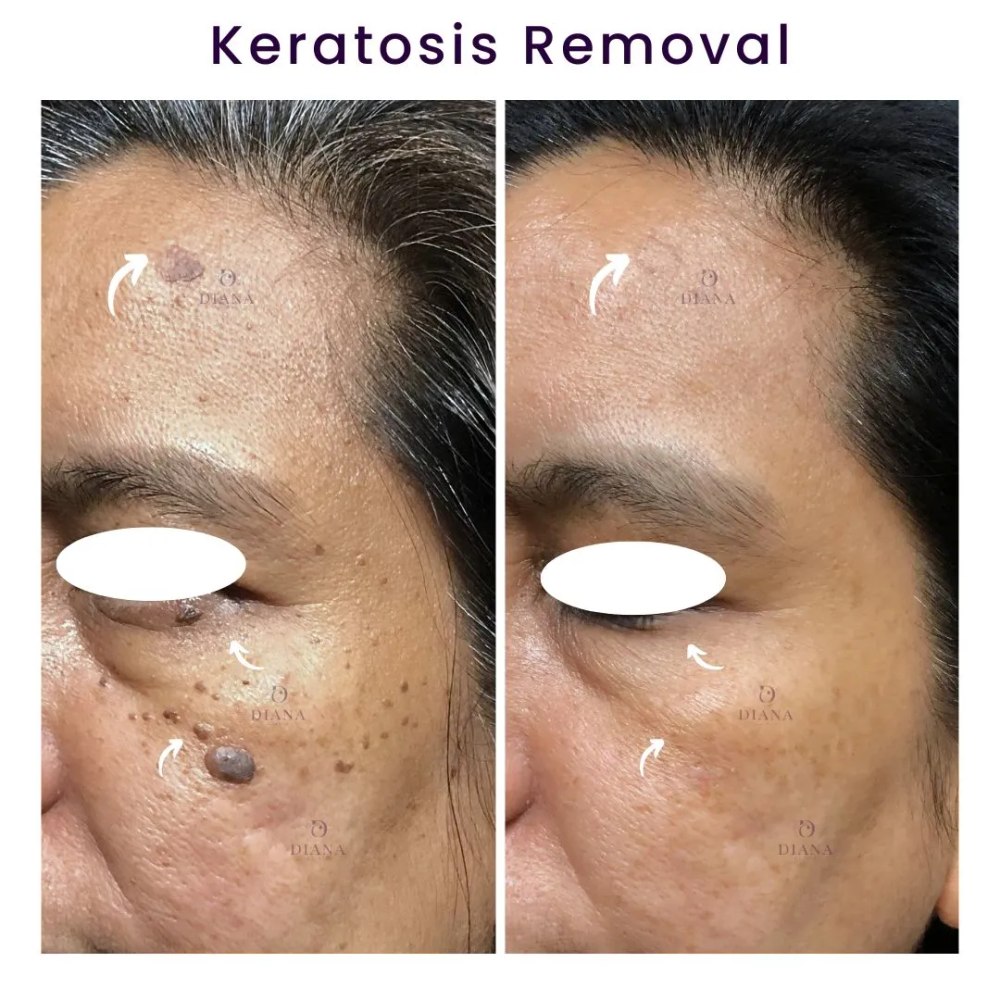
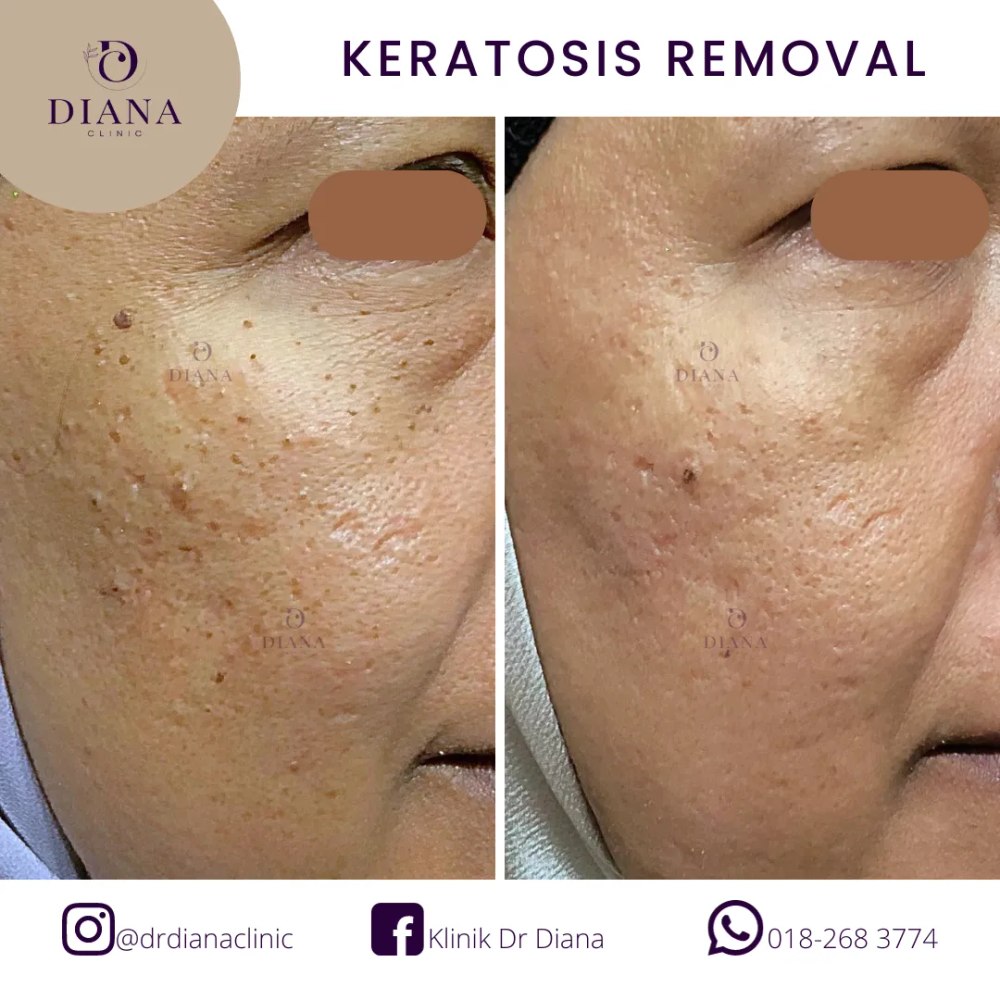
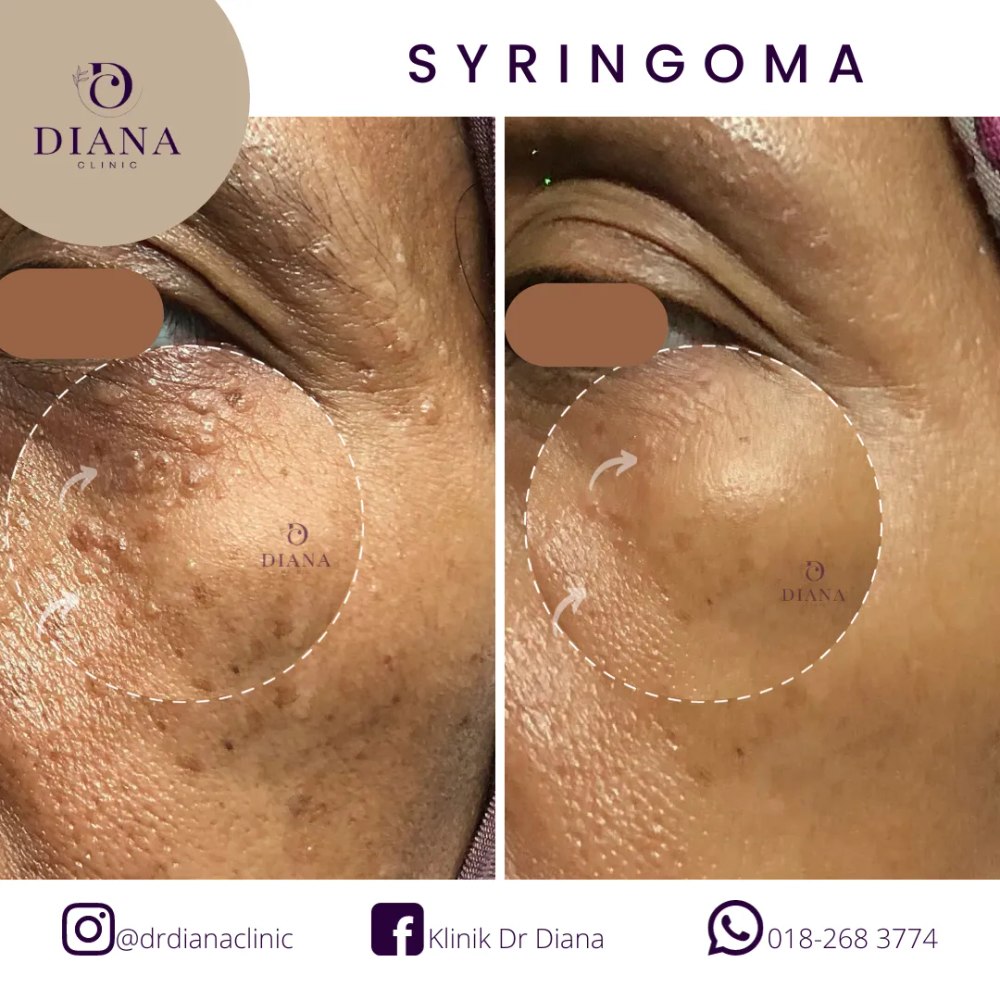
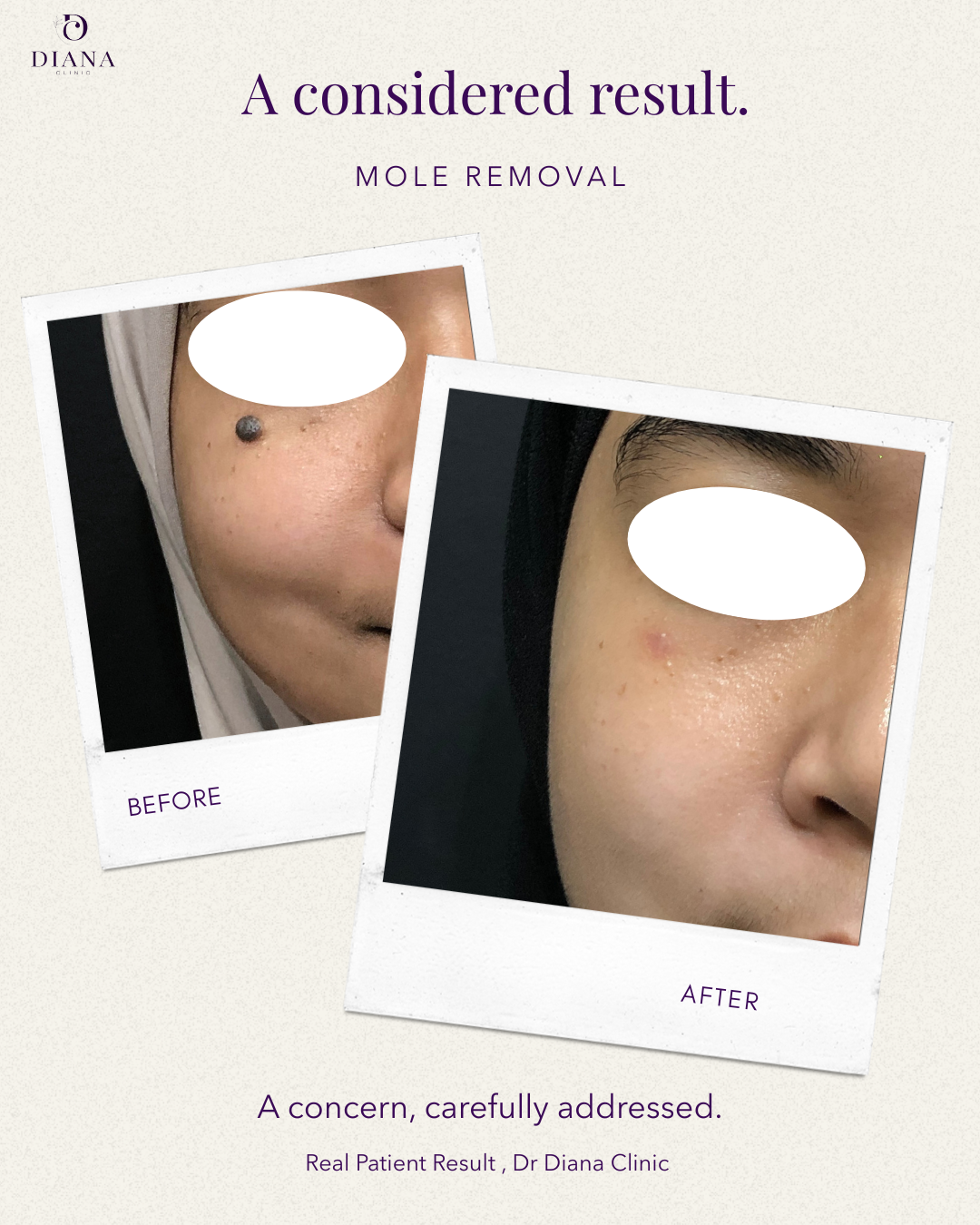
How were these results achieved?
Removal of moles, cysts, keratosis, xanthelasma, and syringoma at Klinik Dr Diana begins with an individual assessment by Dr Diana Abd Razak to confirm the lesion type and rule out anything requiring further medical review. Treatment options include CO2 laser, electrocautery, cryotherapy, or minor excision, chosen based on the specific case.
The goal is complete removal with minimal scarring. Post-treatment care includes wound care instructions and sun protection to support healing and reduce the risk of post-inflammatory hyperpigmentation.
Results vary depending on lesion type, size, depth, and individual healing response. Most patients see full healing within 1–2 weeks after treatment. Individual assessment is required before any treatment is recommended.
Frequently asked questions about skin growth & lesion removal
What counts as a skin growth or lesion?
Skin growths and lesions covered at Klinik Dr Diana include moles, cysts, seborrheic keratosis, xanthelasma, and syringoma. These are common, typically benign (non-cancerous) skin changes that many patients choose to have assessed or removed for cosmetic or comfort reasons.
How are these growths and lesions removed?
Removal method depends on the type, size, depth, and location of the lesion. Options assessed by Dr Diana Abd Razak include CO2 laser, electrocautery, cryotherapy, or minor excision. Xanthelasma and syringoma, which sit closer to the eye area, require particularly careful technique selection.
Are these real before and after photos from your clinic?
Yes. Every photo on this page is from a real patient treated at Klinik Dr Diana. All photos are shown with written patient consent. We do not use stock images or digitally alter results.
What is the difference between a mole, cyst, keratosis, xanthelasma, and syringoma?
A mole (nevus) is a cluster of pigment-producing cells, usually flat or slightly raised. A cyst is a fluid- or keratin-filled sac under the skin. Seborrheic keratosis is a waxy, raised growth, often brown or black. Xanthelasma is a yellowish cholesterol deposit around the eyelids. Syringoma is a benign sweat duct growth appearing as small, skin-coloured bumps, also usually around the eyes. All are individually assessed, as appearance alone does not confirm the diagnosis.
Is there downtime after removal?
Downtime is generally minimal but varies by lesion type and method used. Most treated areas show mild redness and a small scab that heals within 5–10 days. Sun protection during healing is important to reduce the risk of post-inflammatory pigmentation.
Can a mole, cyst, or other lesion be cancerous?
Most moles, cysts, and similar growths are benign, but any lesion that changes in size, shape, colour, or texture should be assessed by a doctor before removal. Dr Diana evaluates each lesion clinically and will refer for biopsy or specialist review if there is any concern.
Can these growths or lesions come back after removal?
Treated lesions typically do not recur in the same spot. However, new moles, cysts, keratosis, xanthelasma, or syringoma can develop in other areas over time, as these are related to aging, genetics, sun exposure, and individual skin type. Periodic follow-up allows early assessment of any new growths.
Want to know what's possible for your skin?
Book a consultation with our doctors to discuss your concerns and receive a personalised assessment.
Medically reviewed by Dr Diana Abd Razak, MD, LCP, PGCert Dermatology, PGCert Aesthetic Medicine