Pigmentation treatment results
These are real before and after photos from patients treated for various types of pigmentation at Klinik Dr Diana, including melasma, solar lentigo, post-inflammatory hyperpigmentation (PIH), and age-related pigmentation. Treatment protocols are individualised based on pigmentation type, depth, and skin type.
Rawatan pigmentasi di Klinik Dr Diana merangkumi melasma, jeragat, PIH, dan pigmentasi berkaitan penuaan. Setiap pelan rawatan disesuaikan mengikut jenis dan kedalaman pigmentasi pesakit.
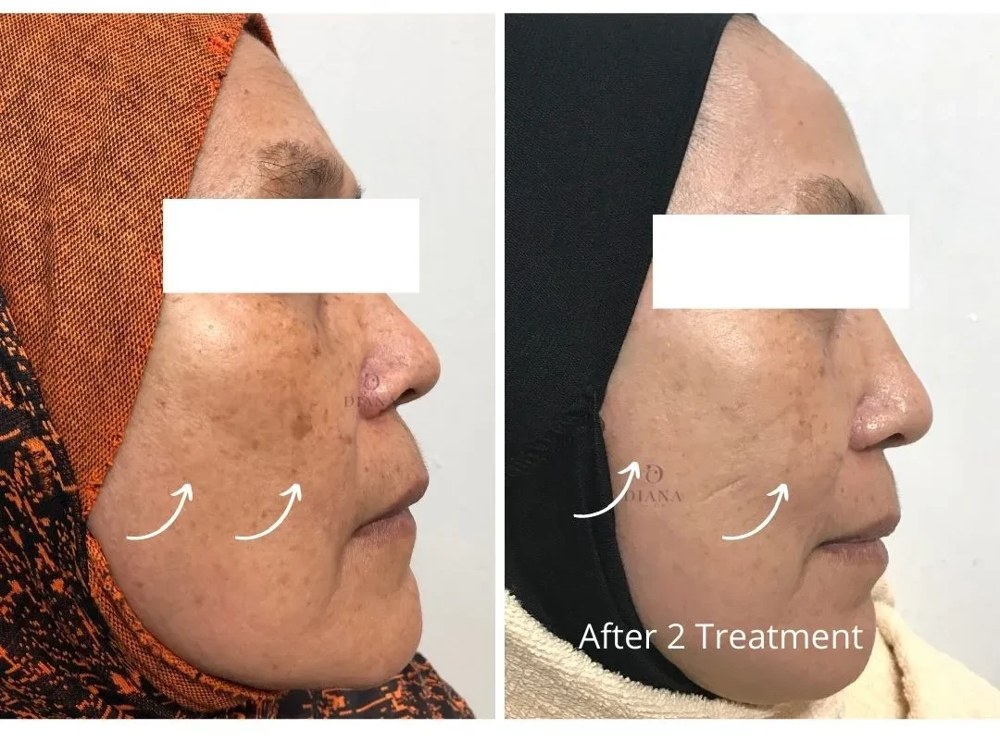
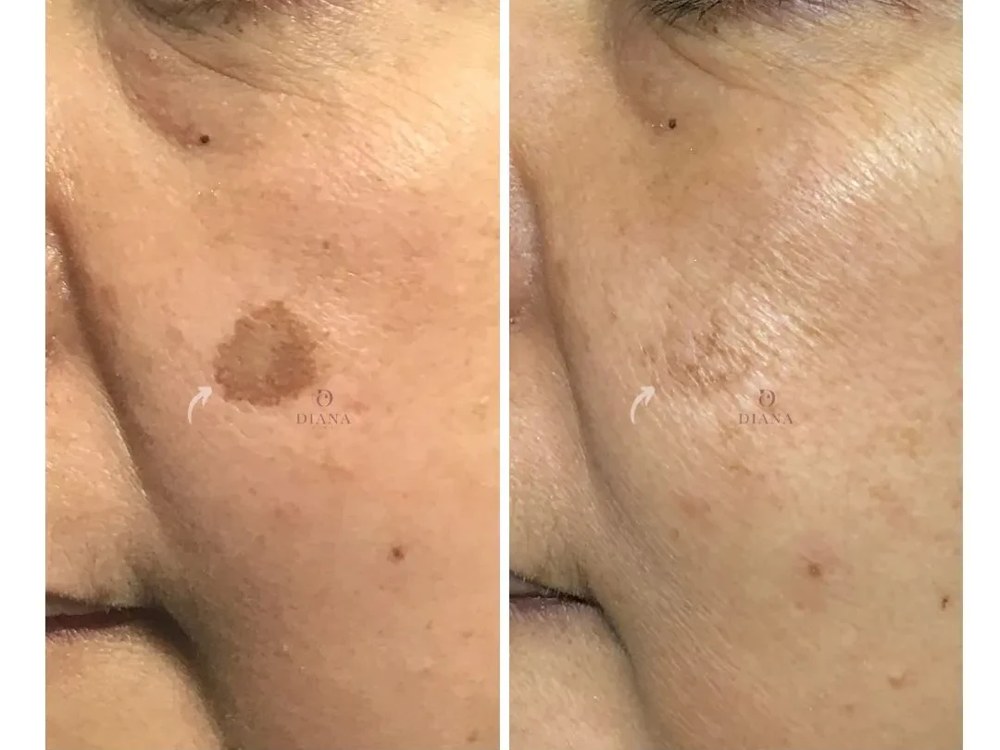
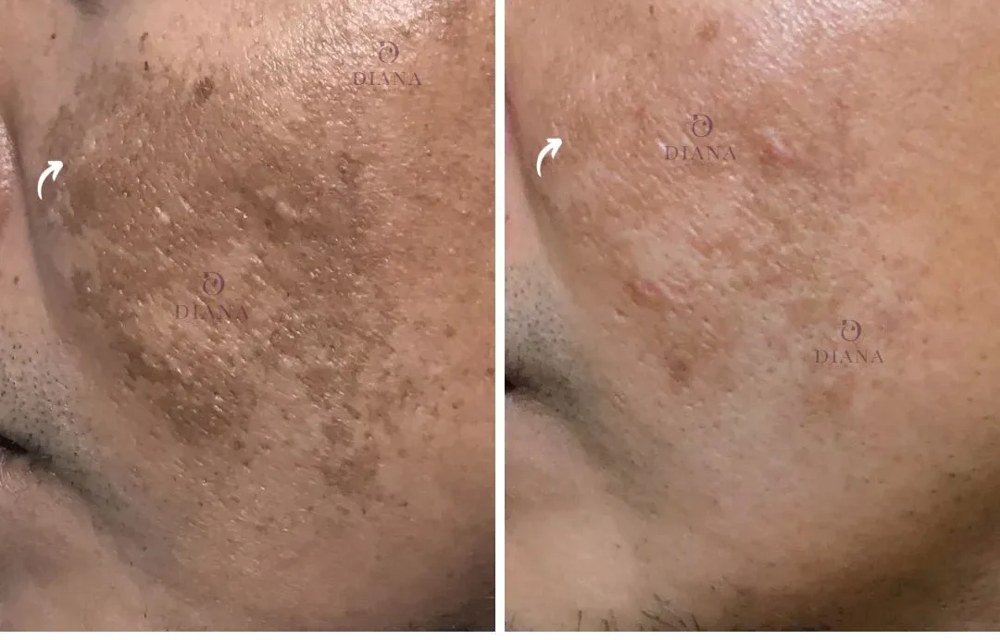
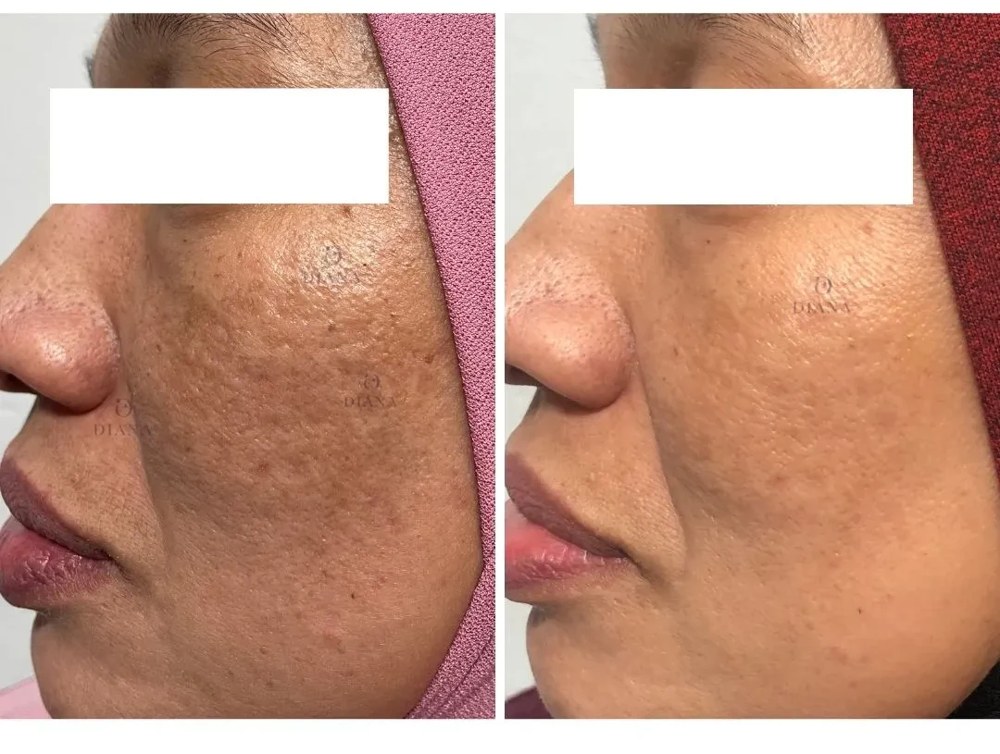
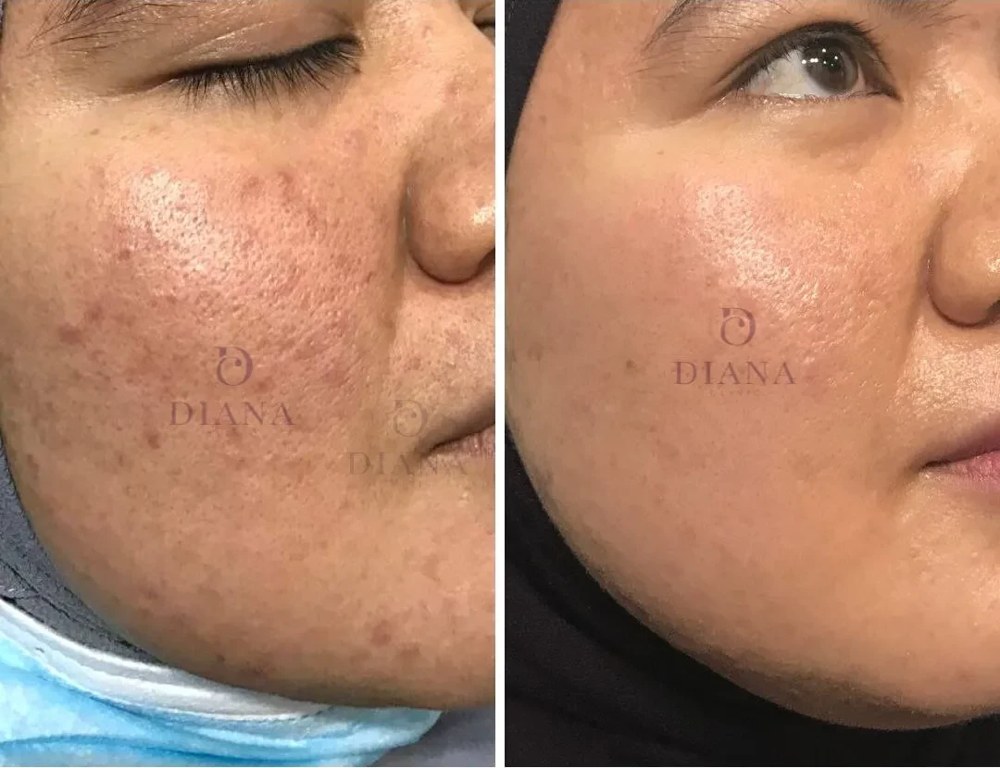
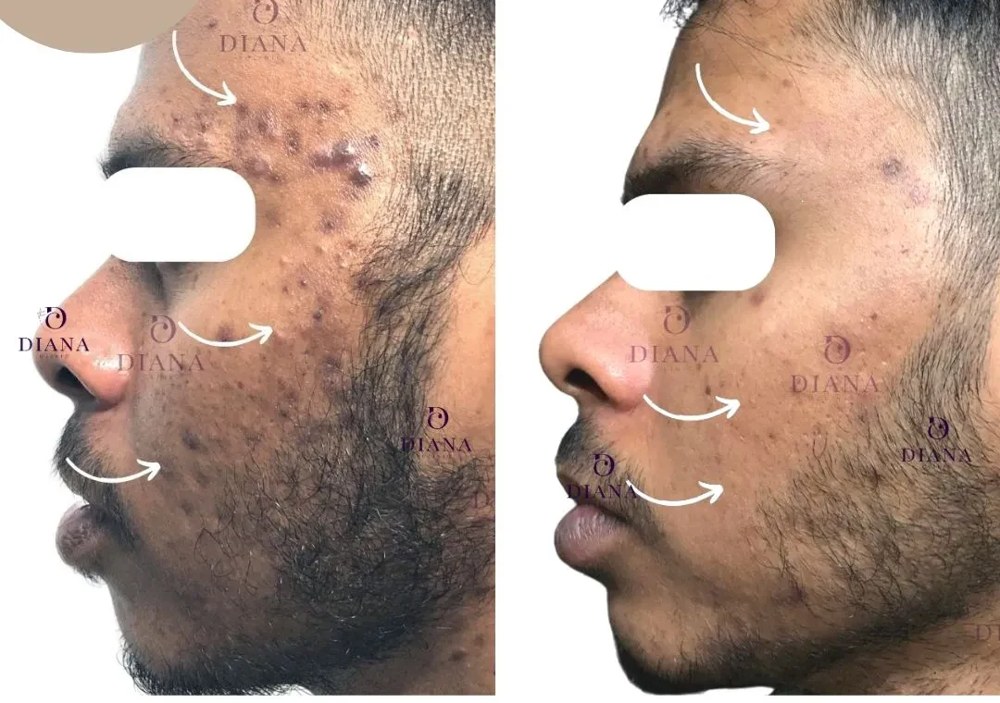
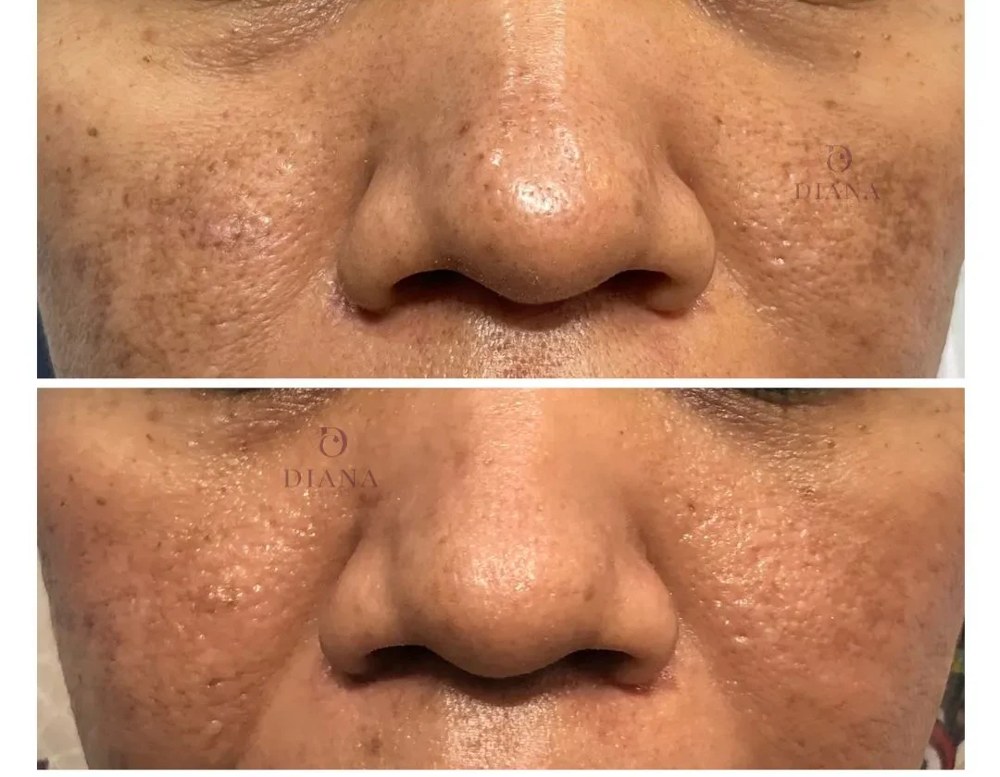
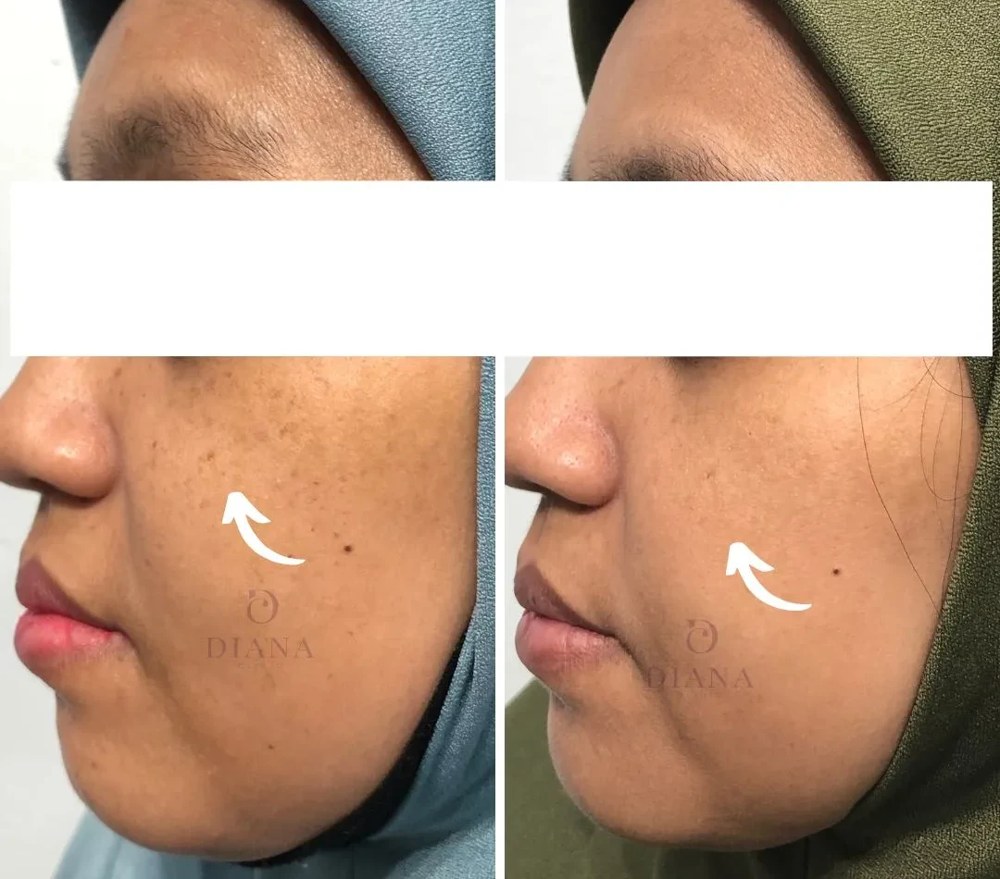
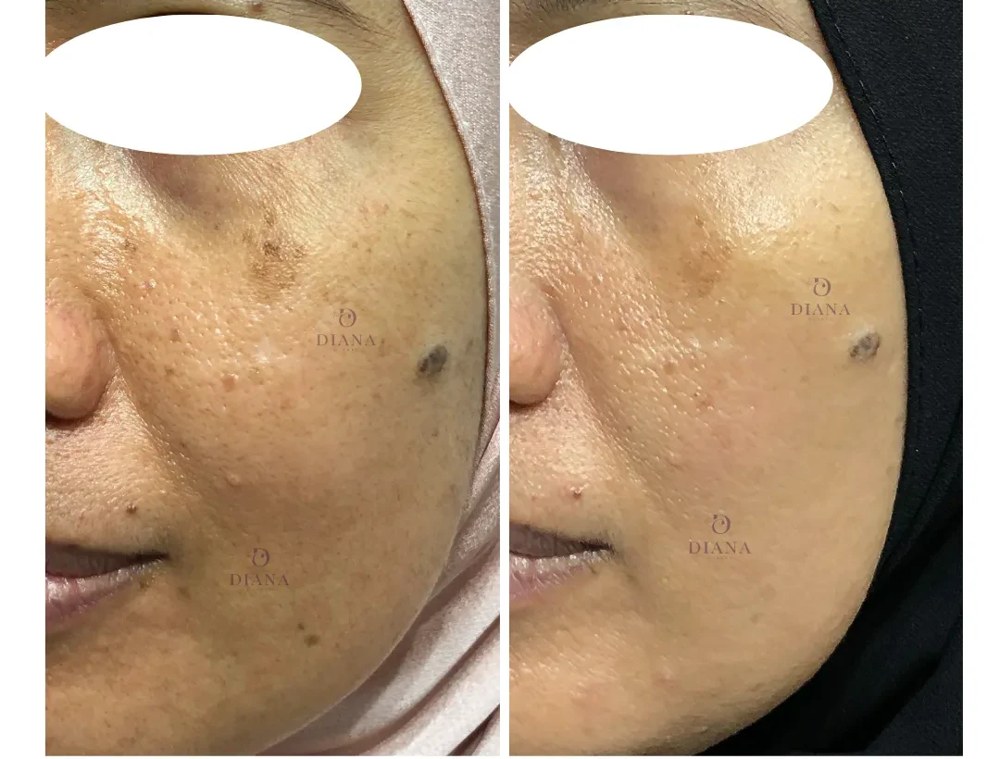
How were these results achieved?
Pigmentation treatment at Klinik Dr Diana uses a combination approach tailored to each patient's skin assessment. Dr Diana Abd Razak evaluates the pigmentation type, depth (epidermal vs dermal), skin type, and lifestyle factors before designing a treatment protocol.
Common treatment combinations used for the results shown on this page include PICO laser (for targeted pigment fragmentation), medical-grade chemical peels (for surface pigmentation and skin renewal), prescription topical agents (hydroquinone, retinoids, azelaic acid), and skin booster treatments for overall skin quality improvement.
Results vary depending on skin type, pigmentation severity, sun exposure habits, and adherence to the maintenance plan. Deeper pigmentation such as melasma typically requires more sessions and ongoing management compared to superficial sunspots.
Frequently asked questions about pigmentation results
How many sessions does pigmentation treatment take to see results?
Most patients begin to notice visible improvement after 2–4 sessions, depending on the type and depth of pigmentation. Superficial pigmentation like sunspots typically responds faster than deeper pigmentation like melasma, which may require 6–10 sessions with ongoing maintenance.
Are these real before and after photos from your clinic?
Yes. Every photo on this page is from a real patient treated at Klinik Dr Diana. All photos are shown with written patient consent. We do not use stock images or digitally alter results.
Why do results look different for each patient?
Pigmentation treatment outcomes depend on several factors including skin type (Fitzpatrick scale), the type and depth of pigmentation, sun exposure history, hormonal factors, and how closely the patient follows the aftercare and maintenance plan. This is why an in-person assessment is essential before starting treatment.
Will my pigmentation come back after treatment?
Some types of pigmentation, particularly melasma, can recur because they are influenced by ongoing triggers like sun exposure and hormonal changes. A maintenance plan — including medical-grade sunscreen, topical agents, and periodic in-clinic sessions — helps sustain results long-term.
What treatments were used to achieve these results?
Results shown on this page were achieved using various combinations of PICO laser, medical-grade chemical peels, prescription topical agents, and skin booster treatments. The specific protocol varies for each patient based on their skin assessment. Dr Diana designs an individualised treatment plan during the consultation.
Want to know what's possible for your skin?
Book a consultation with our doctors to discuss your concerns and receive a personalised assessment.
Medically reviewed by Dr Diana Abd Razak, MD, LCP, PGCert Dermatology, PGCert Aesthetic Medicine