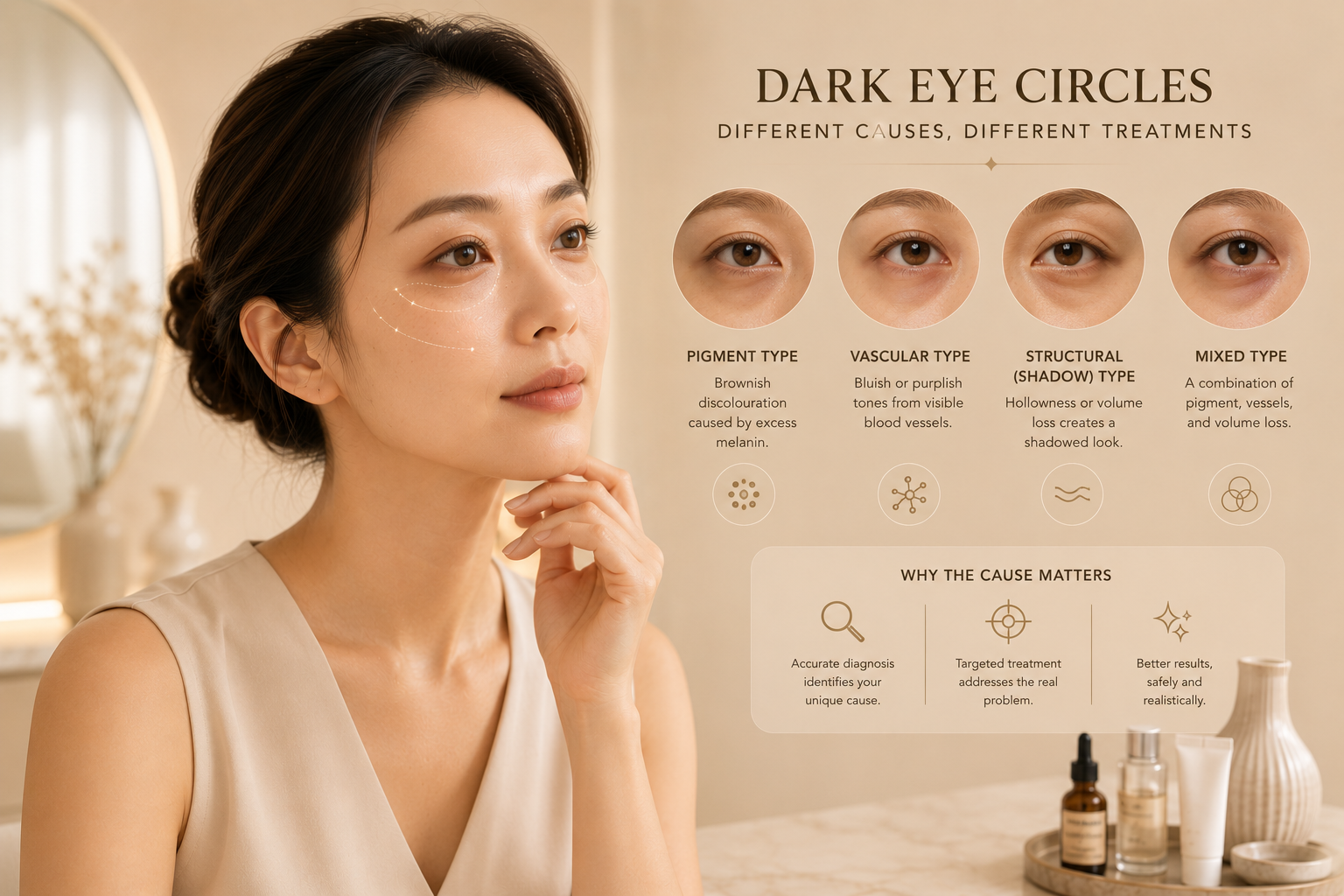
What is dark eye circle treatment?
Dark eye circle treatment is not one single treatment. It is a personalised plan based on whether the darkness comes from pigment, visible blood vessels, hollow shadows, thin skin or a mixed cause. At Klinik Dr Diana, the first step is assessment before choosing laser, skin booster, polynucleotide, volume-restoring treatment or combination care.
Dark eye circles are common, but they do not all happen for the same reason. Some people have brown pigmentation under the eyes. Some have bluish or purplish tones from visible vessels under thin skin. Others have a hollow tear trough that creates a shadow, making the area look darker even when the skin colour is normal.
This is why dark circle treatment should not begin with choosing a treatment from social media. It should begin with identifying the cause.
Unsure whether your dark circles are pigment, hollow shadow, thin skin or a mixed type? Book an under-eye assessment at Klinik Dr Diana.
WhatsApp UsWhat you need to know
The best dark eye circle treatment depends on the cause. Pigment, blood vessels, hollowing and thin under-eye skin may need different treatment directions, and many patients have more than one cause at the same time.
- Dark circles can be pigment-based, vascular, structural, thin-skin related or mixed.
- Mixed dark circles are common, so one treatment may not solve everything.
- Laser may help pigment, but it does not correct hollow shadows.
- Skin boosters and polynucleotides may help selected cases of thin, tired or crepey under-eye skin.
- Hollowing may need a volume-restoring or structural plan.
- Asian and darker skin need careful planning because of pigmentation risk.
- No treatment can guarantee complete removal of dark circles.
What are the main types of dark eye circles?
The main dark eye circle types are pigment, vascular, structural or shadow, thin-skin related and mixed dark circles. Identifying the type helps avoid choosing the wrong treatment.
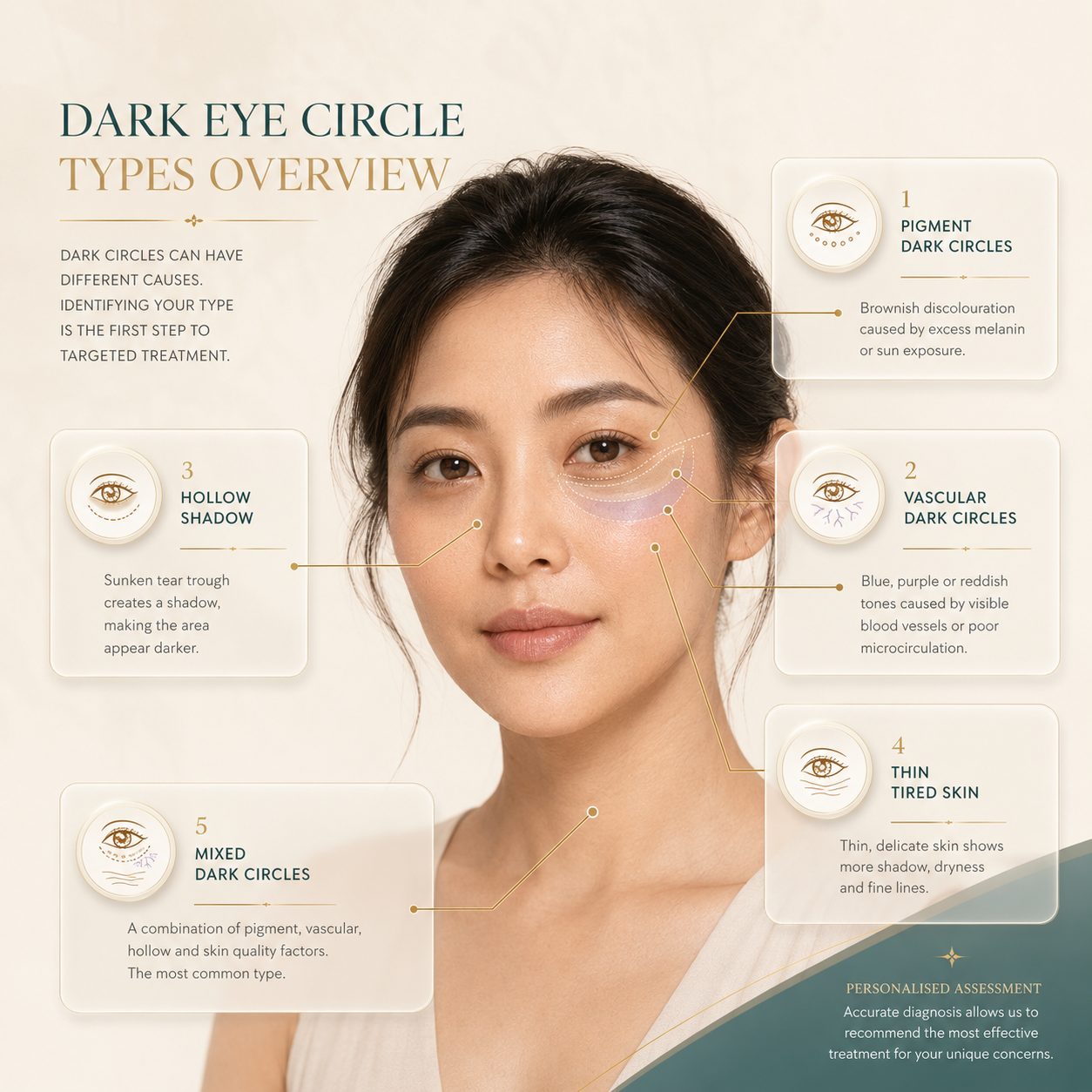
Dark eye circles can come from pigmentation, visible vessels, hollow shadows, thin tired skin or a combination of causes.
Pigment dark circles
Pigment-type dark circles usually look brown or darker than the surrounding skin. They may be linked to genetics, sun exposure, rubbing, inflammation, allergies or skin tone.
Vascular dark circles
Vascular dark circles may look bluish, purplish or grey because blood vessels show through thin under-eye skin. This can become more obvious when the skin is thin, dehydrated or tired-looking.
Structural or hollow dark circles
Structural dark circles happen when the under-eye area becomes hollow. The hollow creates a shadow, especially around the tear trough. This type may not improve with pigment laser because the problem is not only colour.
Thin or tired under-eye skin
Some patients have under-eye skin that looks crepey, dry, thin or dull. In this case, skin quality support may be part of the treatment plan.
Mixed dark circles
Many patients have a mixed type. For example, someone may have brown pigment, thin skin and a hollow shadow together. Mixed dark circles usually need a staged or combination plan.
What causes dark eye circles?
Dark eye circles can be caused by genetics, pigmentation, visible blood vessels, thin skin, hollowing, ageing, allergies, rubbing, sun exposure, dehydration or lifestyle factors. The cause may be different from one person to another.
Common contributing factors include:
- Genetic tendency
- Brown pigmentation or melanin buildup
- Visible blood vessels under thin skin
- Loss of under-eye volume
- Deeper tear trough shadow
- Dry or crepey under-eye skin
- Sun exposure
- Eye rubbing or allergies
- Ageing-related skin and fat changes
- Sleep, stress and lifestyle factors
Sleep can make dark circles look worse, but many people still have dark circles even when they sleep enough. This is because the cause may be structural, pigment-related or genetic.
How does hollowing create dark circles?
Hollowing creates dark circles by forming a shadow under the eyes. When the tear trough becomes deeper, light does not reflect evenly, so the area looks darker even without extra pigment.
This is why some people feel that eye creams or brightening products do not help. If the darkness is mainly from a hollow shadow, the treatment direction needs to focus on structure and support rather than pigment removal alone.
How does Klinik Dr Diana assess dark eye circles?
Klinik Dr Diana assesses dark circles by checking the likely cause first, then matching the treatment direction to the cause. This helps reduce the risk of choosing a treatment that does not address the actual problem.
1. Consultation and under-eye assessment

Step 1 - The doctor checks skin tone, under-eye hollowing, skin thickness, pigmentation pattern and suitability.
The doctor checks whether the darkness looks more like pigment, vascular tone, hollow shadow, thin skin or a mixture. Your skin type, treatment history, allergy history and expectations are also reviewed.
2. Cause identification

Step 2 - The likely cause is identified before treatment is recommended.
This step matters because pigment laser, skin booster, polynucleotide and volume-restoring treatments do different things. The wrong treatment may not improve the concern.
3. Treatment planning

Step 3 - A treatment plan is matched to the cause, skin type and treatment goal.
The plan may involve one treatment or a staged combination. Some patients need pigment treatment first, while others need skin quality support or a structural approach.
4. Review and aftercare

Step 4 - Aftercare and review help monitor response and reduce avoidable irritation.
Aftercare depends on the treatment used. Sun protection, avoiding rubbing, and following clinic instructions are especially important for patients prone to pigmentation.
What treatments may help dark eye circles?
Treatment may include pico laser, skin boosters, polynucleotide treatment, volume-restoring planning or a combination approach, depending on the cause. Not every patient needs the same treatment.
| Dark circle type | What it may look like | Treatment direction that may be considered |
|---|---|---|
| Pigment type | Brown or darker patches under the eyes | Pico laser, brightening skincare, sun protection and pigmentation-safe planning |
| Vascular type | Blue, purple or grey tone under thin skin | Skin-quality treatment, polynucleotide or booster support after assessment |
| Structural hollow type | Shadow, tear trough groove or hollow appearance | Volume-restoring or structural plan, sometimes with skin quality support |
| Thin tired skin | Crepey, dry, dull or lined under-eye skin | Skin booster, polynucleotide or regenerative skin quality treatment if suitable |
| Mixed type | More than one feature together | Combination plan matched to each cause |
Can pico laser help dark eye circles?
Pico laser may help pigment-type dark circles by targeting excess pigment. It is not meant to correct hollow shadows caused by volume loss.
For Asian skin, the treatment must be planned carefully because aggressive treatment can increase the risk of post-inflammatory hyperpigmentation. The doctor will assess your skin type, pigment pattern and sensitivity before deciding whether laser is suitable.
Can skin boosters help dark eye circles?
Skin boosters may help selected patients with thin, tired, dry or crepey under-eye skin. They focus on skin quality rather than filling a hollow shadow.
A skin booster may be considered when the under-eye area looks dehydrated, dull, tired or thin. It may support hydration and skin texture, but it is not a replacement for pigment laser or structural correction when those are needed.
Can polynucleotide treatment help under-eye skin?
Polynucleotide treatments may help selected patients by supporting skin repair, hydration, elasticity and overall skin quality. They may be considered when thin or tired under-eye skin contributes to the appearance of dark circles.
Examples of polynucleotide-based treatment categories include regenerative skin boosters such as Rejuran, Plenhyage or similar options, depending on clinic availability and doctor recommendation.
What if dark circles are caused by hollowing?
If dark circles are mainly caused by hollowing, the treatment direction may need to address structure or volume rather than pigment alone. Laser or brightening skincare may not fix a shadow caused by a deeper tear trough.
Some patients may benefit from improving skin quality around the hollow, while others may need a more structural plan. This should be assessed carefully because the under-eye area is delicate.
Is dark eye circle treatment safe for Asian skin?
Dark eye circle treatment can be safe for Asian skin when the treatment choice, energy settings, injection plan and aftercare are suitable. The under-eye area is delicate, so assessment and conservative planning are important.
Asian and darker skin types may be more prone to post-inflammatory hyperpigmentation after irritation or aggressive treatment. This is why gentle planning, sun protection and realistic expectations matter.
What results can you expect?
Dark eye circle treatment aims to improve the appearance of under-eye darkness, not guarantee complete removal. Results depend on the cause, treatment type, skin response, ageing pattern and aftercare.
Some patients may notice improvement in brightness, skin texture or tired appearance. Others may need staged treatment because pigment, thin skin and hollow shadows respond differently.
A realistic goal is to soften the dark circle appearance and make the under-eye area look less tired while keeping the result natural.
Who may be suitable for dark eye circle assessment?
You may be suitable for assessment if you are unsure whether your dark circles come from pigment, vessels, hollowing, thin skin or a mixed cause. A consultation helps decide whether treatment is appropriate and which direction makes sense.
You may consider assessment if you:
- Have persistent dark circles despite sleeping enough
- Have tried creams with limited improvement
- Notice brown, blue, purple or shadow-like under-eye darkness
- Have thin, crepey or tired-looking under-eye skin
- Have hollowing or tear trough shadow
- Want treatment suitable for Asian or darker skin
- Prefer assessment-first guidance before choosing a treatment
Why choose Klinik Dr Diana for dark eye circle treatment?
Klinik Dr Diana uses an assessment-first approach for dark eye circles. The goal is to identify the actual cause before recommending laser, skin booster, polynucleotide, structural correction or combination treatment.
For patients in Bangi, Kajang, Putrajaya, Senawang, Seremban and nearby areas, Klinik Dr Diana may be a suitable option for under-eye assessment and medically guided treatment planning.
- Doctor-led under-eye assessment
- Cause-based treatment planning
- Asian skin safety consideration
- Realistic discussion of limitations
- Options for patients near Bangi and Senawang
How much does dark eye circle treatment cost?
The cost depends on the cause of the dark circles, treatment selected, number of sessions, branch availability and whether a combination plan is needed. A consultation is the best way to receive a suitable recommendation and current pricing.
Ask Klinik Dr Diana about dark eye circle assessment, treatment suitability and current pricing.
WhatsApp UsFrequently asked questions about dark eye circle treatment
The most common questions about dark eye circle treatment are answered below. A doctor-led assessment is recommended because under-eye darkness can come from different causes.
Possible side effects
Possible effects depend on the treatment selected. They may include temporary redness, swelling, tenderness, bruising, small injection marks, dryness, sensitivity, pigmentation changes, irritation, infection, uneven response or temporary worsening before improvement.
Individual results vary. Dark eye circles may come from pigment, vessels, hollowing, thin skin, genetics, lifestyle, allergies, sun exposure or ageing. No treatment can guarantee complete removal. This page is for general education and does not replace medical consultation.
Unsure what type of dark circles you have? Book an under-eye assessment at Klinik Dr Diana in Bangi or Senawang.
WhatsApp UsFrequently asked questions
What is dark eye circle treatment?
Dark eye circle treatment is a personalised treatment plan for under-eye darkness after identifying whether the cause is pigment, visible blood vessels, hollow shadow, thin skin or a mixed type.
What are the main types of dark eye circles?
The main types are pigment dark circles, vascular bluish or purplish dark circles, structural hollow shadows, thin tired skin and mixed dark circles.
Can dark circles be removed completely?
Usually not completely. Many patients can achieve improvement, but results depend on the cause, skin type, treatment selected and individual response.
Is laser suitable for all dark eye circles?
No. Laser may help pigment-type dark circles, but it does not correct hollow shadows caused by volume loss.
Can skin boosters help dark eye circles?
Skin boosters may help selected patients with thin, tired, dry or crepey under-eye skin. They do not replace filler or laser when those are more suitable.
Can polynucleotide treatment help under-eye skin?
Polynucleotide treatments may support skin repair, hydration, elasticity and skin quality in selected under-eye concerns. Suitability depends on assessment.
What if my dark circles are caused by hollowing?
If the main cause is hollowing or tear trough shadow, treatment may need a volume-restoring or structural plan rather than pigment laser alone.
Is dark eye circle treatment safe for Asian skin?
It can be safe when treatment choice, device settings and aftercare are suitable. Asian and darker skin need careful planning because they may be more prone to post-inflammatory hyperpigmentation.
How many sessions are needed?
The number of sessions depends on the cause and treatment type. Pigment, thin skin and mixed dark circles often need a staged plan.
Which Klinik Dr Diana branch offers dark eye circle assessment?
Please contact Klinik Dr Diana to confirm current dark eye circle assessment and treatment availability at the Bangi or Senawang branch.
Further reading