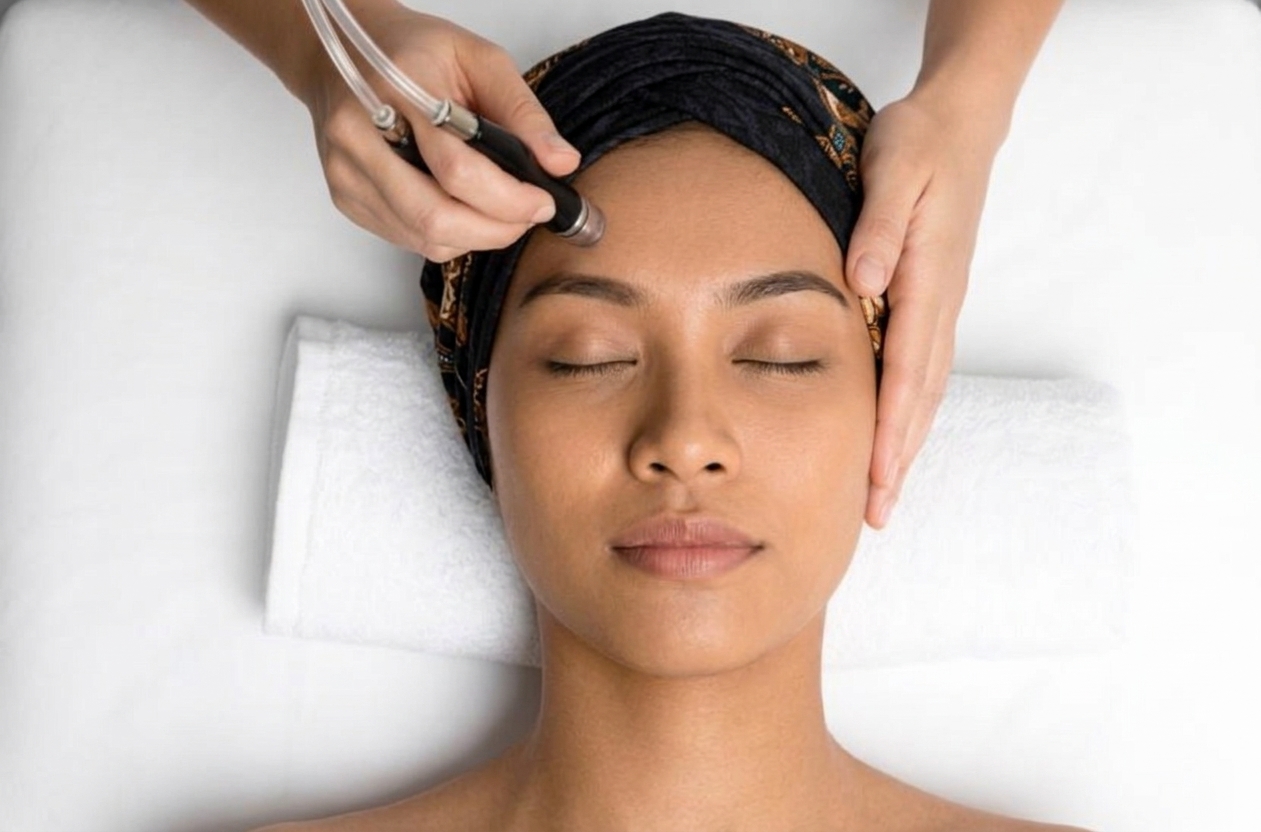
What is SilkPeel Dermalinfusion?
SilkPeel Dermalinfusion is a non-invasive resurfacing facial that exfoliates the skin with a diamond-encrusted tip, extracts loosened debris under vacuum, and infuses a condition-specific serum into the freshly abraded surface — all in a single pass. Because the skin is wet and the serum is delivered under controlled pneumatic pressure at the moment the outer barrier is thinnest, the active is placed onto skin that is more receptive to it than intact, dry skin would be.
At Klinik Dr Diana, SilkPeel Dermalinfusion is used as a skin-conditioning and maintenance treatment for congested, dull and unevenly toned skin, and as an adjunct alongside medical acne care, peels and laser. Sessions are performed under doctor supervision at our Bandar Baru Bangi (Selangor) and Seremban (Negeri Sembilan) branches.
Book a consultation or treatment session at Klinik Dr Diana.
WhatsApp UsWhat you need to know
SilkPeel Dermalinfusion works on the surface layers of the skin, so it is well matched to texture, congestion, dullness and superficial discolouration — and poorly matched to deep scarring or volume loss. Choosing it for the right indication is what determines whether the result feels worthwhile.
- The mechanism is mechanical abrasion plus vacuum extraction plus simultaneous serum delivery — not a chemical peel and not a laser.
- The abrasive surface is a diamond-encrusted tip, available in different grit grades, so exfoliation depth is adjustable rather than fixed.
- The dermatologic literature describes the procedure as appropriate across all Fitzpatrick skin types, which is directly relevant to Malaysian skin.
- Serum choice is what personalises the session — hydrating, brightening and clarifying formulations target different concerns.
- Improvement in glow and hydration is often immediate; changes in tone and congestion accumulate over a course.
- It does not treat depressed acne scars, and it does not cure melasma or acne.
Is SilkPeel the same as Dermalinfusion and DiamondGlow?
SilkPeel, Dermalinfusion and DiamondGlow all refer to the same underlying technology under different names. SilkPeel was the original device name from Envy Medical, Dermalinfusion is the name of the patented exfoliate-extract-infuse process, and DiamondGlow is the current brand name following the technology’s acquisition by Allergan Aesthetics.
This matters because patients research the same treatment under three different names and assume they are three different procedures. In Malaysia, the name SilkPeel Dermalinfusion remains the one most commonly used by clinics and by patients searching in both English and Bahasa Malaysia.
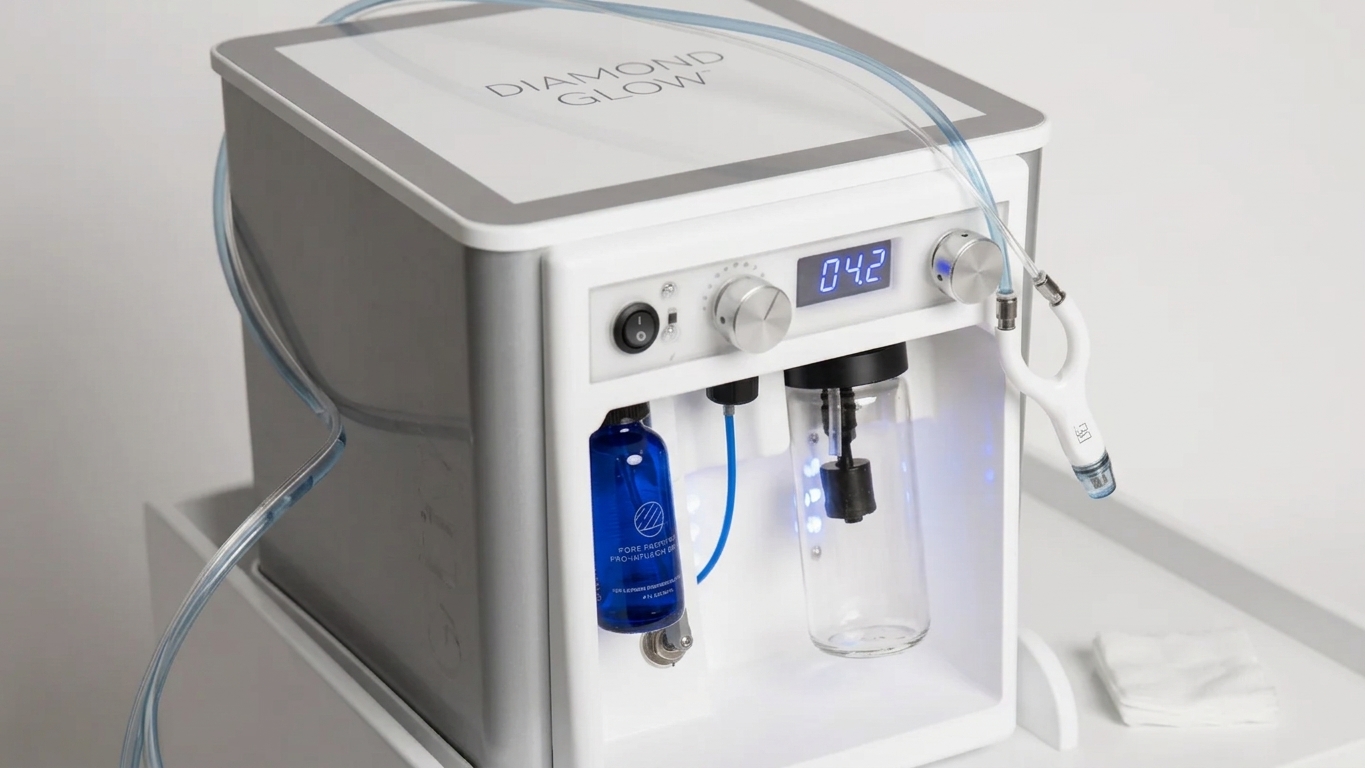
How does SilkPeel Dermalinfusion work?
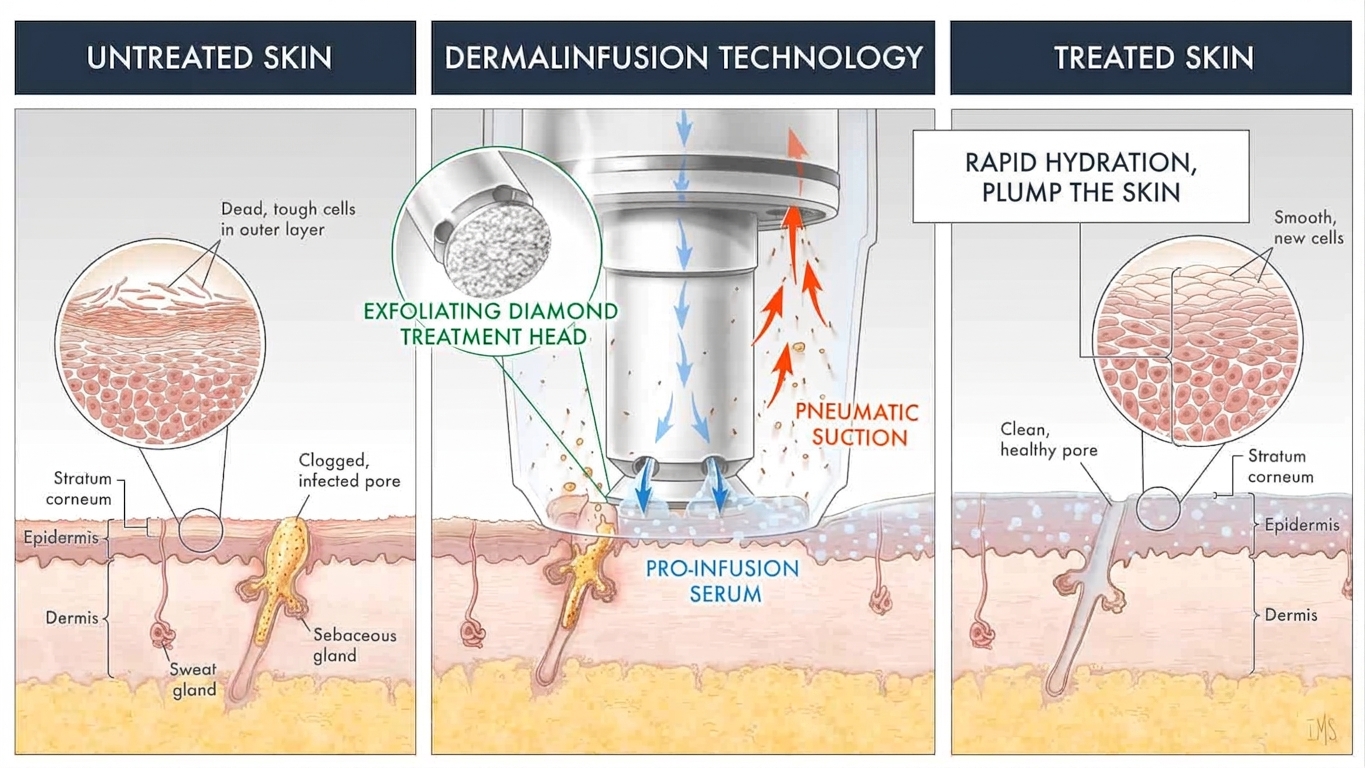
SilkPeel Dermalinfusion works by combining three actions that normally happen separately: abrasion, extraction and infusion. A closed-loop handpiece draws the skin up against a diamond-encrusted tip using vacuum, the tip removes part of the stratum corneum, the vacuum carries away loosened corneocytes and sebum, and a serum flows onto the treated surface under pneumatic pressure in the same movement.
The clinical logic is straightforward. The stratum corneum is the main barrier limiting how much of a topical active reaches the living epidermis. Removing part of that barrier and delivering the active at the same moment — while the surface is still wet and open — places the ingredient in more favourable conditions than applying a cream to intact skin at home.
The serum also serves a mechanical purpose. It lubricates the interface between the diamond tip and the skin, which is why the treatment is often described as wet dermabrasion and why it tends to feel less scratchy than dry crystal microdermabrasion.
The four settings your doctor adjusts
| Setting | What it controls | Why it matters for Malaysian skin |
|---|---|---|
| Diamond tip grit | How aggressively the stratum corneum is abraded | A finer grit is generally preferred in Fitzpatrick IV–V skin to limit inflammatory stimulus |
| Vacuum pressure | How firmly skin is drawn against the tip, and extraction strength | Excess pressure can cause petechiae and post-inflammatory darkening in deeper skin tones |
| Serum flow rate | How much active is delivered per pass | Determines lubrication and therefore comfort as well as delivery |
| Number of passes | Cumulative exfoliation over the session | Fewer, gentler passes are usually chosen over a single aggressive one |
For reference, the case published by Bhatia and Jimenez in the Journal of Drugs in Dermatology used an 80- to 100-grit diamond tip at a vacuum setting of 4.5 psi with serum flow at 80% in a Fitzpatrick type IV patient. Settings at Klinik Dr Diana are selected per patient rather than applied as a fixed protocol.
What can SilkPeel Dermalinfusion help with?
SilkPeel Dermalinfusion is used for congested pores, rough or dull texture, dehydrated skin, superficial uneven tone including post-inflammatory hyperpigmentation, and pre-event skin conditioning. Reported dermatologic indications for the device include dry skin, acne, hyperpigmentation and rosacea.
- Congestion and comedones — blackheads and clogged pores, particularly on the nose, chin and forehead.
- Dull, rough texture — accumulated stratum corneum that makes skin look flat and makes makeup sit unevenly.
- Dehydration — skin that feels tight despite being oily, a common pattern in air-conditioned indoor work.
- Post-inflammatory hyperpigmentation — the flat brown marks left after acne resolves, which are pigment rather than scar.
- Pre-event conditioning — a session booked a few days before an event, chosen precisely because it does not produce peeling.
What it will not do
Being clear about the ceiling of a treatment is more useful than listing its benefits.
- It will not correct depressed acne scars — boxcar, rolling and ice-pick scars sit in the dermis and require subcision, TCA CROSS or fractional laser.
- It will not cure melasma. Melasma is a chronic, relapsing pigmentary condition managed over time, and aggressive surface treatment can aggravate it.
- It will not replace medical acne treatment. Where acne is inflammatory or hormonally driven, topical or oral therapy remains the foundation.
- It will not lift, tighten or restore volume, because it does not act on collagen at depth.
- It will not produce permanent change on its own. Benefit is maintained with repeat sessions and home care.
What happens during a SilkPeel session at Klinik Dr Diana?
A SilkPeel Dermalinfusion session at Klinik Dr Diana takes approximately 45 minutes from cleansing to sunscreen, with the device portion occupying roughly 20 to 25 minutes. Every session begins with a doctor-led skin assessment, because the serum and the device settings are chosen from that assessment rather than from a fixed menu.
1. Consultation and skin assessment
Your doctor examines skin type, barrier condition, degree of congestion, and any active inflammation. Recent isotretinoin use, recent peels or laser, and any history of cold sores are checked at this point. Fitzpatrick skin type is noted because it informs abrasion grade.
2. Cleansing and preparation
Makeup, sunscreen and surface sebum are removed. The eyes are protected. Areas to be avoided, such as inflamed lesions or open skin, are identified and mapped.
3. Serum selection
The serum is matched to the primary concern of the session — hydration, brightening or clarifying. The selection can be changed between sessions as the skin changes, which is the main advantage of the platform over a fixed-formula facial.
4. Dermalinfusion passes
The handpiece is worked across the treatment area in overlapping passes. Most patients describe a firm suction with mild scratchiness. Congested zones such as the nose may receive additional attention at a lower speed.
5. Aftercare and sunscreen
Skin is calmed, hydrated and protected with sunscreen before you leave. Your doctor confirms the interval to your next session and what to avoid over the following 48 hours.
SilkPeel Dermalinfusion at a glance
| Feature | Detail |
|---|---|
| Treatment type | Non-invasive mechanical resurfacing with simultaneous serum infusion |
| Mechanism | Diamond-tip abrasion, vacuum extraction, pneumatic serum delivery |
| Depth of action | Stratum corneum and superficial epidermis |
| Session duration | Approximately 45 minutes including preparation and aftercare |
| Anaesthesia | Not required |
| Downtime | No required downtime; mild redness typically 30 to 60 minutes |
| Typical course | 4 to 6 sessions, spaced 2 to 4 weeks apart, then maintenance |
| Skin types | Described in the literature as appropriate across all Fitzpatrick types |
| Primary indications | Congestion, dull texture, dehydration, superficial uneven tone |
| Not indicated for | Depressed acne scars, volume loss, laxity, active inflamed acne |
| Available at | Bandar Baru Bangi and Seremban (Bandar Prima Senawang) |
SilkPeel vs HydraFacial vs OxyGeneo vs microdermabrasion
All four treatments exfoliate the skin surface, but they differ in how they abrade and what they deliver afterwards. SilkPeel uses a diamond tip with simultaneous pressurised serum infusion, HydraFacial uses a vortex tip with spiral suction, OxyGeneo uses a capsule reaction that generates CO₂ to trigger an internal oxygenation response, and classic microdermabrasion abrades dry with crystals or a diamond tip and delivers nothing.
| SilkPeel Dermalinfusion | HydraFacial | OxyGeneo | Classic microdermabrasion | |
|---|---|---|---|---|
| Exfoliation method | Diamond-encrusted tip, wet | Vortex tip with spiral fluid flow | Capsule and primer gel reaction | Crystals or diamond tip, dry |
| Extraction | Vacuum, same pass | Vortex suction, separate step | Minimal | Vacuum only |
| Active delivery | Pressurised serum during abrasion | Serum booster after exfoliation | Ultrasound-assisted infusion | None |
| Distinctive feature | Abrasion and infusion happen simultaneously | Multi-step protocol in one device | CO₂-induced oxygenation via the Bohr effect | Mechanical polishing only |
| Adjustability | Grit, vacuum, flow and passes | Tip type and booster | Capsule formulation | Crystal flow and passes |
| Typical downtime | None required | None required | None required | None required |
| Best suited to | Congestion with a targeted serum goal | General cleansing and hydration | Glow and skin-quality maintenance | Surface polishing only |
None of these is superior to the others in the abstract. The correct choice depends on the skin in front of the doctor: congested skin with a specific pigment or clarity goal tends to suit SilkPeel, while skin whose main complaint is dullness and radiance often does equally well with OxyGeneo. Where both are suitable, the choice is made at consultation.
Not sure which facial matches your skin? A clinical assessment answers that in one visit.
Book an AssessmentWho may be suitable for SilkPeel Dermalinfusion?
SilkPeel Dermalinfusion may suit adults with congested, dull or dehydrated skin who want visible conditioning without peeling or social downtime. It is frequently chosen by patients who cannot accommodate recovery time and by patients being prepared for, or maintained between, more intensive treatments.
- Congested skin with blackheads and enlarged-appearing pores.
- Dull or rough texture, with or without makeup sitting unevenly.
- Flat post-acne discolouration, once active inflammation has settled.
- Patients in maintenance phase between laser or peel courses.
- Patients preparing for an event within the coming week.
Who may not be suitable?
Suitability is assessed in person. Treatment is generally deferred or avoided in the following situations.
- Active inflamed, pustular or cystic acne over the intended treatment area.
- Active skin infection, including cold sores, impetigo or fungal infection.
- Eczema, psoriasis or rosacea in an active flare, or a visibly compromised skin barrier.
- Open lesions, wounds or recently biopsied skin.
- Oral isotretinoin within the preceding 6 months, or a chemical peel, laser or energy-based treatment within the preceding 2 weeks.
- Recent significant sun exposure or sunburn on the treatment area.
- A history of keloid or hypertrophic scarring, which warrants a more cautious approach.
- Pregnancy or breastfeeding, depending on the serum selected.
What results can you realistically expect?
Most patients notice smoother texture, cleaner-looking pores and improved hydration after a single SilkPeel Dermalinfusion session, with tone-related changes developing gradually across a course. The immediate effect is largely surface conditioning; the cumulative effect depends on consistency, home care and sun protection. Individual results vary.
| Timepoint | What patients commonly report |
|---|---|
| Immediately after | Mild redness and warmth, skin feels clean and smooth |
| Next day | Redness resolved; smoother texture and easier makeup application |
| After 2 to 3 sessions | Reduced visible congestion; more even-looking surface |
| After a full course | Gradual improvement in clarity and superficial tone; benefit maintained with repeat sessions |
Two honest caveats. First, the effect is not permanent — the stratum corneum regenerates, and without maintenance and home care the skin returns towards its baseline. Second, if the underlying driver has not been addressed, whether that is hormonal acne, chronic melasma or an unaddressed barrier problem, a surface treatment will underdeliver no matter how many sessions are booked.
Why does the serum choice matter?
The serum is what converts a general exfoliation into a targeted treatment, because it is delivered at the exact moment the skin barrier is thinnest. Hydrating formulations typically centre on hyaluronic acid, brightening formulations on tyrosinase-inhibiting actives, and clarifying formulations on salicylic acid for congestion.
One brightening active studied specifically with this delivery method is decapeptide-12, an oligopeptide that inhibits tyrosinase, the enzyme controlling the first steps of melanin synthesis. Laboratory work by Abu Ubeid and colleagues found it to be a considerably more potent tyrosinase inhibitor than hydroquinone in vitro, without the melanocyte toxicity associated with hydroquinone. Bhatia and Jimenez subsequently reported a case in Journal of Drugs in Dermatology in which a Fitzpatrick type IV patient with post-inflammatory hyperpigmentation was treated with four dermalinfusion sessions two weeks apart alongside daily home application and sun protection.
What should you do before and after treatment?
| Before | After |
|---|---|
| Stop retinoids and exfoliating acids 3 to 5 days prior | Resume actives only after 48 hours |
| Avoid waxing, threading and depilatory creams on the area | Use a gentle cleanser and a bland moisturiser for 48 hours |
| Avoid deliberate sun exposure in the days before | Apply SPF30 or higher daily, reapplied through the day |
| Declare recent peels, laser or isotretinoin use | Avoid hot showers, sauna and vigorous exercise for 24 hours |
| Arrive with clean skin where possible | Do not pick or scrub if any flaking occurs |
Sun protection after treatment is not a generic instruction in the Malaysian context. Freshly exfoliated skin in Fitzpatrick IV–V under high year-round UV is precisely the setting in which post-inflammatory hyperpigmentation develops, which would undo the reason many patients booked the treatment in the first place.
How does SilkPeel fit into a treatment plan?
At Klinik Dr Diana, SilkPeel Dermalinfusion is usually positioned as a maintenance or adjunctive treatment rather than as the primary intervention for a diagnosed skin condition. It conditions the surface, supports the result of deeper treatments, and gives patients something safe to do in the interval between them.
In practical terms, that means it is commonly sequenced alongside medical acne management once inflammation has settled, alongside a pigmentation plan built around medical topicals, peels or laser, and as an interval treatment for patients maintaining overall skin quality. Where a patient’s primary concern is depressed acne scarring, we say so directly and direct them to the appropriate treatment rather than selling a facial course that cannot reach the problem.
Speak to our doctors about where SilkPeel fits in your plan — or whether it belongs in it at all.
WhatsApp UsHow much does SilkPeel Dermalinfusion cost?
The cost of SilkPeel Dermalinfusion at Klinik Dr Diana depends on the treatment area, the serum selected and whether the session is booked individually or as part of a course. We publish pricing on request rather than on the website, because a quoted figure without an assessment often turns out to be the wrong treatment for the person asking.
WhatsApp your preferred branch for current pricing. Bandar Baru Bangi and Seremban are priced independently.
References
- Bhatia AC, Jimenez F. Combined topical delivery and dermalinfusion of decapeptide-12 accelerates resolution of post-inflammatory hyperpigmentation in skin of color. Journal of Drugs in Dermatology. 2014;13(1):84–86.
- Abu Ubeid A, Zhao L, Wang Y, Hantash BM. Short-sequence oligopeptides with inhibitory activity against mushroom and human tyrosinase. Journal of Investigative Dermatology. 2009;129(9):2242–2249.
- Freedman BM. Hydradermabrasion: an innovative modality for nonablative facial rejuvenation. Journal of Cosmetic Dermatology. 2008;7(4):275–280.
- Manufacturer instructions for use, used for neutral device and safety information only, not as evidence of outcome.
The references above support general dermalinfusion concepts and are not specific to any individual patient. Individual suitability must still be assessed in person.
Frequently asked questions about SilkPeel Dermalinfusion
The questions below are the ones our front desk receives most often. Because serum selection and device settings are chosen from an in-person assessment, a consultation remains the only way to confirm whether this treatment suits your skin.
Possible side effects
SilkPeel Dermalinfusion is generally well tolerated. Possible short-term effects include mild transient redness and warmth for approximately 30 to 60 minutes, temporary skin sensitivity, and slight dryness or tightness for 24 hours. Less commonly, patients with reactive skin may experience prolonged erythema, and treatment over inflamed acne can aggravate irritation. Because the procedure removes part of the stratum corneum, the skin is temporarily more sun-sensitive and post-inflammatory hyperpigmentation is possible in darker skin types if sun protection is neglected.
Individual results vary depending on skin type, baseline skin condition, age, hormonal factors and sun exposure. SilkPeel Dermalinfusion is a maintenance and adjunctive treatment, not a cure for acne, melasma or scarring. An in-person consultation is required to confirm suitability and design a personalised treatment plan. This page is for general educational information and does not constitute medical advice.
Not sure whether SilkPeel suits your skin? Book a clinical assessment at Bangi or Seremban.
WhatsApp UsFrequently asked questions
What is SilkPeel Dermalinfusion?
SilkPeel Dermalinfusion is a non-invasive resurfacing facial that uses a diamond-encrusted handpiece to abrade the outermost layer of skin while a vacuum extracts debris and a condition-specific serum is infused into the freshly exfoliated surface under controlled pressure. All three actions happen in the same pass, which is what distinguishes it from dry microdermabrasion.
Is SilkPeel the same as Dermalinfusion or DiamondGlow?
They refer to the same underlying technology. SilkPeel was the original device name, Dermalinfusion is the name of the patented exfoliate-extract-infuse process, and DiamondGlow is the current brand name after the technology was acquired by Allergan Aesthetics. Clinics in Malaysia commonly still use the name SilkPeel Dermalinfusion.
Is SilkPeel Dermalinfusion suitable for Malaysian skin?
Published dermatologic literature describes SilkPeel dermalinfusion as appropriate across all Fitzpatrick skin types, including the type IV and V skin common in Malaysia. The abrasion grade and vacuum pressure are adjusted to the individual, which is relevant for darker skin where over-treatment carries a risk of post-inflammatory hyperpigmentation. Suitability is still confirmed in person.
How many sessions of SilkPeel do I need?
Most patients are advised a course rather than a single session, commonly 4 to 6 sessions spaced 2 to 4 weeks apart, followed by maintenance. Hydration and glow are often noticeable after the first session, while changes in tone and congestion build across the course. Individual results vary and the plan is confirmed at consultation.
Does SilkPeel Dermalinfusion hurt, and is there downtime?
Most patients describe the sensation as a firm vacuum with mild scratchiness, not pain, and no anaesthetic is required. There is no required downtime. Mild redness and warmth typically settle within 30 to 60 minutes, and makeup can usually be applied the same day.
Can SilkPeel treat acne scars?
SilkPeel Dermalinfusion is not a treatment for deep or depressed acne scars. It works on the surface layers of the skin, so it can help with congestion, roughness and post-acne discolouration, but boxcar, rolling and ice-pick scars require modalities that reach the dermis such as subcision, TCA CROSS or fractional laser. Our doctors will tell you honestly which category your scarring falls into.
Can I have SilkPeel if I have active acne?
It depends on the type of acne. Comedonal and congested skin often responds well, while actively inflamed pustular or cystic acne is usually treated medically first, because abrasion and vacuum over inflamed lesions can worsen irritation and increase the risk of post-inflammatory hyperpigmentation. Assessment determines the sequence.
How much does SilkPeel Dermalinfusion cost at Klinik Dr Diana?
Pricing depends on the treatment area, the serum selected and whether the session is booked individually or as part of a course. Please WhatsApp your preferred branch for current pricing, as quoted figures change from time to time.
Which Klinik Dr Diana branch offers SilkPeel Dermalinfusion?
Both branches offer the treatment under doctor supervision — Bandar Baru Bangi in Selangor and Seremban (Bandar Prima Senawang) in Negeri Sembilan. Bangi is closed on Wednesdays and Seremban is closed on Sundays, so at least one branch is open every day of the week.