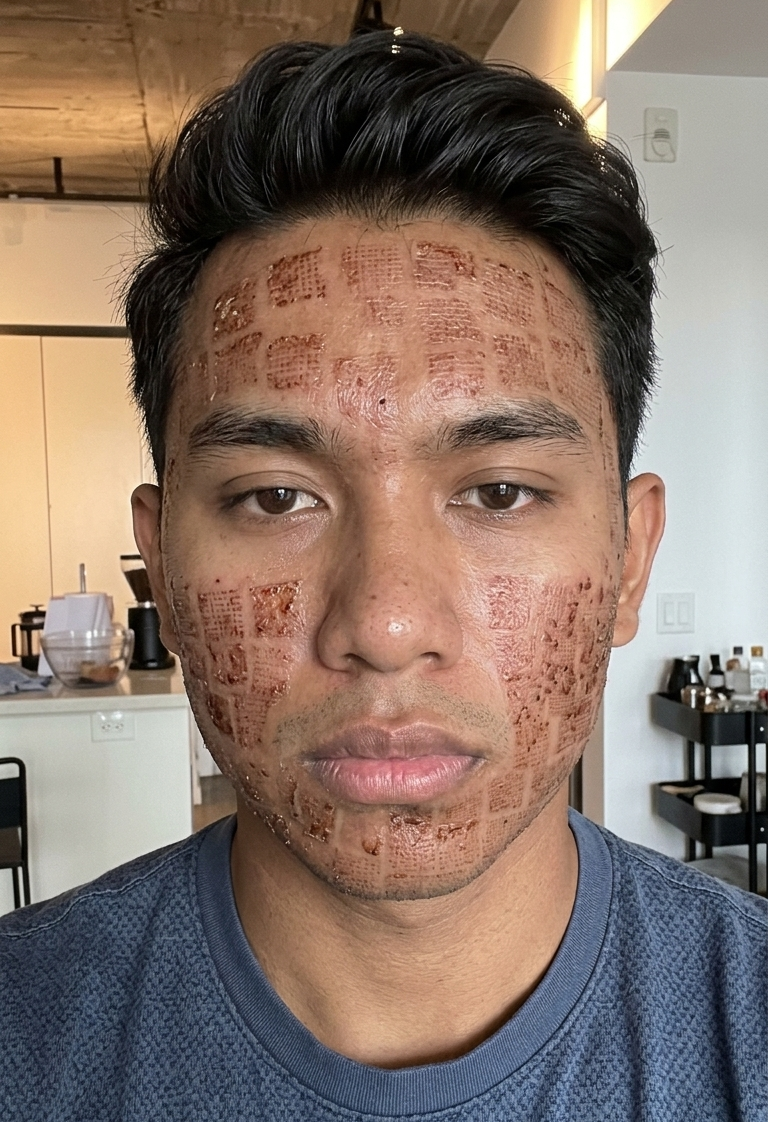
CO₂ fractional laser is one of the most effective treatments for deep acne scars, especially boxcar scars. It works by removing the old skin surface and stimulating new collagen production, resulting in smoother, more even skin over time. However, in Asian skin types, there is a higher risk of post-inflammatory hyperpigmentation (PIH) — darkening of the treated area — which makes proper aftercare critical for achieving the best results without unwanted side effects.
What Should You Do During the First Week After CO₂ Laser?
During the healing phase (days 0–7), the skin is at its most vulnerable. It appears red, swollen, and sometimes crusty. The skin barrier is very fragile, and the treated areas feel raw, tight, and sensitive.
During this stage, use an occlusive ointment (such as a prescribed antibiotic ointment) to keep wounds moist and accelerate healing. Clean gently with a mild cleanser and apply a barrier emulsion to hydrate and strengthen the skin. A hydrating or soothing facial mask can also help with comfort.
Avoid sunscreen during the first few days — the skin is too raw and may have open wounds, so sunscreen can trap heat and cause irritation. Also avoid scrubbing, picking at crusts, and any whitening or active skincare products (AHA, BHA, retinol, vitamin C serums).
The goal during week one is healing and comfort — nothing else.
When Can You Start Using Brightening Products?
During the controlled repair phase (days 7–14), the skin barrier begins to strengthen and redness decreases. Some dryness, flaking, or mild pigmentation may start to appear. The skin is now ready for gentle, controlled brightening.
Continue using a barrier emulsion morning and night as your base. You can add mild brightening agents under your doctor’s guidance — common options include niacinamide 5% (strengthens skin and reduces pigment), tranexamic acid 3% (prevents darkening), azelaic acid 10% (reduces redness with mild brightening), and arbutin 2–3% (blocks melanin production safely).
Avoid harsh acids (AHA, BHA, high-percentage azelaic acid, retinol) and direct sun exposure. You can now start using a mineral sunscreen.
The goal during this phase is preventing pigmentation while the skin is still fragile.
What Happens in the Intensive Recovery Phase?
After 2 weeks, the skin is mostly healed and the barrier is significantly stronger. However, the risk of PIH increases if the skin is not properly protected during this critical window. The skin can now tolerate more intensive treatment.
Continue your gentle cleanser and barrier emulsion. Your doctor may prescribe a stronger brightening cream such as Triluma (a combination of hydroquinone, tretinoin, and steroid) for more intensive pigmentation control. This should only be used under medical supervision.
Avoid overloading the skin with multiple brightening products simultaneously — follow your doctor’s specific instructions. Never skip sunscreen during this phase.
When Is the Follow-Up Assessment?
A check-up is typically scheduled at 6–7 weeks after treatment. During this appointment, your doctor will assess scar healing progress, evaluate pigmentation control, and determine whether your skin is ready for another session or a stronger treatment approach.
Frequently Asked Questions About CO₂ Laser Aftercare
Can I wear makeup after CO₂ laser treatment? Most patients can resume light makeup after the scabs have fully fallen off, usually around day 7–10. Avoid heavy or occlusive makeup products until the skin barrier has recovered. Mineral-based makeup is generally safer during the healing period.
How long does redness last after CO₂ laser? Redness typically lasts 2–4 weeks and gradually fades as the skin heals. In some patients, mild pinkness may persist for up to 6–8 weeks. This is normal and not a sign of complications.
What is PIH and how can I prevent it? Post-inflammatory hyperpigmentation (PIH) is a darkening of the skin that occurs as a healing response, more common in Asian and darker skin types. Prevention includes strict sun avoidance, consistent sunscreen use, and using prescribed brightening agents during the controlled recovery phase.
How many CO₂ laser sessions are needed for acne scars? Most patients benefit from 3–5 sessions spaced 6–8 weeks apart. The number of sessions depends on scar depth, type, and your skin’s individual healing response. Results vary between individuals and an in-person assessment is necessary to determine the right treatment plan.
CO₂ laser works best when combined with the right aftercare. If you are considering CO₂ laser treatment for acne scars, a consultation at Klinik Dr Diana in Bandar Baru Bangi or Senawang will help you understand what to expect and how to prepare. Contact us via WhatsApp to book your assessment.