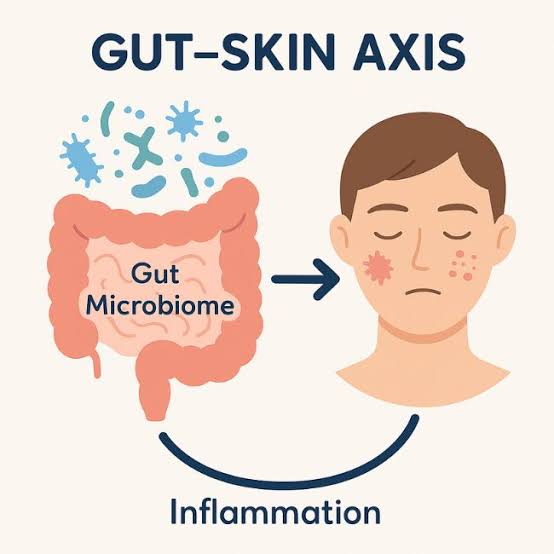
When your gut is not healthy, your skin often shows it. This relationship — known as the gut-skin connection — is supported by growing scientific evidence linking digestive health to common skin conditions including acne, eczema, and psoriasis. An irritated gut triggers immune overactivity that leads to skin flare-ups, an imbalance in gut bacteria promotes inflammation, and a weakened gut lining allows inflammatory molecules to enter the bloodstream, affecting the skin. In short, a calmer gut often means calmer skin.
Why Does Gut Health Matter for Acne?
The connection between gut health and acne — especially hormonal acne — is increasingly well-documented. When the gut microbiome is out of balance, it can increase systemic inflammation, which worsens acne. Certain probiotics (beneficial bacteria) have been shown in clinical trials to reduce acne and eczema symptoms. Nutrients like collagen and glutamine can support gut lining repair. And lifestyle changes such as reducing sugar, alcohol, and processed food lower the type of inflammation that affects both gut and skin.
This does not mean gut health is a replacement for proper acne treatment — but addressing it as part of a comprehensive approach can improve outcomes.
What Is a Gut Reset and How Does It Work?
A gut reset is a structured 6-week approach to reducing gut irritation, restoring beneficial bacteria, repairing the gut lining, and improving digestive habits. Think of your gut like a garden: stop poisoning it, plant good seeds, fix the fence, and water it properly.
Step 1 — Reduce irritation. Avoid excessive coffee, alcohol, spicy fried food, processed food, and overuse of painkillers. These thin the stomach lining and cause reflux, bloating, and discomfort. Instead, opt for green tea, barley water, and balanced meals with grilled protein and vegetables.
Step 2 — Repopulate good bacteria. Avoid overusing antibiotics (unless prescribed), excessive sugar, and artificial sweeteners — these kill beneficial bacteria and allow harmful ones to take over. Instead, eat naturally fermented foods like tempeh, tapai, kimchi, and yogurt. Probiotic supplements can also help.
Step 3 — Repair the gut lining. Reduce sugar, processed sweets, and alcohol, which damage the gut wall. Avoid prolonged fasting, which lets stomach acid irritate the lining. Instead, eat healing foods rich in collagen and omega-3: sup tulang (bone broth), ikan bilis broth, fish skin, ikan tenggiri, chia seeds, kacang tanah, and biji labu (pumpkin seeds). Supplements like collagen powder, glutamine, and fish oil can support this process.
Step 4 — Rebalance digestion. Avoid eating too fast, eating until overfull, eating right before bed, and sitting all day. These habits cause bloating, reflux, indigestion, and constipation. Instead, chew slowly, eat smaller meals, drink limau nipis water, eat ulam (pegaga, ulam raja), and walk for 10 minutes after meals.
What Does the 6-Week Timeline Look Like?
| Weeks | Focus | Key actions |
|---|---|---|
| Week 1–2 | Remove irritants, add probiotics | Cut triggers, start tempeh/yogurt daily |
| Week 2–4 | Add healing foods | Sup tulang, ikan, seeds, omega-3 |
| Week 4–6 | Improve habits | Slower eating, smaller meals, post-meal walking |
| After week 6 | Long-term maintenance | Keep probiotics + fibre foods daily |
Frequently Asked Questions About the Gut-Skin Connection
Will fixing my gut cure my acne? Gut health is one contributing factor among many. Improving it can reduce inflammation and support clearer skin, but acne is multifactorial — hormones, genetics, skincare, and topical treatment all play roles. A gut reset works best as part of a comprehensive approach, not as a standalone cure.
How long before I see skin improvements from a gut reset? Most people notice digestive improvements within 2–3 weeks. Skin changes typically follow 4–6 weeks later as systemic inflammation decreases. Results vary between individuals.
Do I need expensive probiotics or supplements? Not necessarily. Naturally fermented Malaysian foods like tempeh, tapai, and yogurt are excellent sources of beneficial bacteria. Supplements can help but are not essential if your diet includes these foods regularly. Consult your doctor for personalised recommendations.
Can gut issues cause skin problems other than acne? Yes. Research has linked gut dysbiosis (bacterial imbalance) to eczema, psoriasis, rosacea, and general skin sensitivity. The gut-skin axis affects multiple inflammatory pathways that influence various skin conditions.
If you are experiencing persistent acne or skin issues that have not responded well to topical treatment alone, addressing gut health may be a worthwhile addition to your treatment plan. At Klinik Dr Diana in Bandar Baru Bangi and Senawang, we take a comprehensive approach to skin health. Contact us via WhatsApp to book a consultation.