Melasma is a chronic pigmentation condition that causes brown or greyish-brown patches on the face, most commonly on the cheeks, forehead, nose bridge, and upper lip. It affects women far more than men — roughly 9 out of 10 melasma patients are female — and is closely linked to hormonal changes, sun exposure, and genetics. Melasma is not harmful, but it can be persistent and emotionally distressing, especially when it does not respond to over-the-counter products.
What Causes Melasma?
Melasma occurs when melanocytes (the pigment-producing cells in your skin) become overactive and produce excess melanin. Several factors can trigger or worsen this process.
Hormonal changes are one of the most common triggers. Pregnancy, oral contraceptive pills, and hormone replacement therapy can all stimulate melanin production, which is why melasma is sometimes called “the mask of pregnancy.” Certain medications such as oral anticonvulsants have also been associated with melasma.
Ultraviolet (UV) exposure is the other major factor. Even brief, unprotected sun exposure can trigger a melasma flare-up, which is why consistent sunscreen use is considered the single most important step in melasma management.
Genetic predisposition also plays a role. Melasma is more common in individuals with darker skin tones (Fitzpatrick types III–V), which includes most Malaysian skin types.
What Are the Different Types of Melasma?
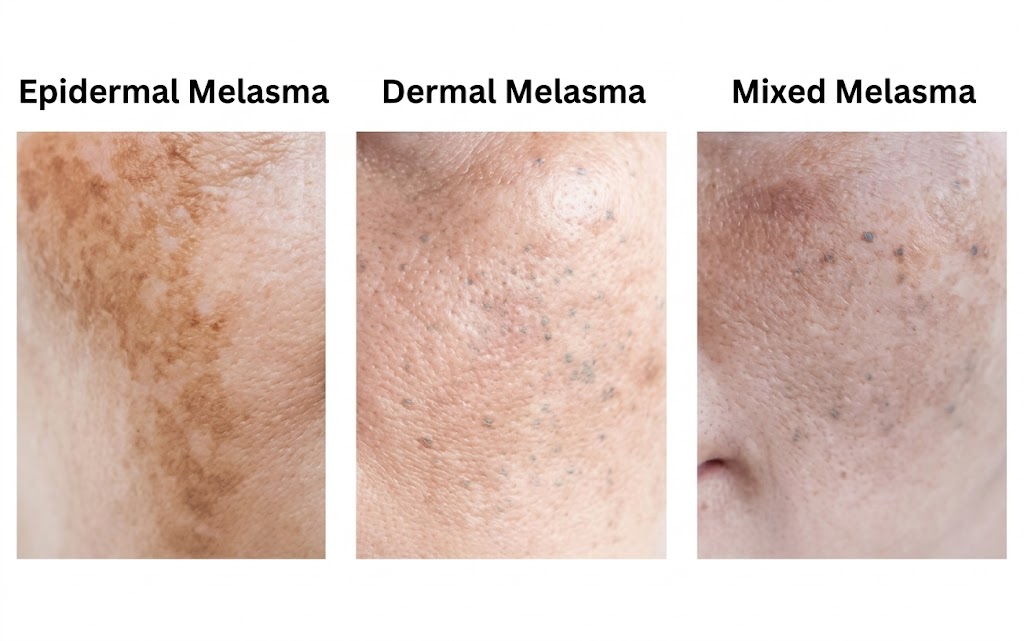
Melasma is classified into three types based on how deep the pigment sits in the skin. Identifying the type helps your doctor predict how well the condition will respond to treatment.
| Type | Pigment location | Appearance | Treatment response |
|---|---|---|---|
| Epidermal | Upper layer of skin (epidermis) | Well-defined brown patches | Responds well to topical creams |
| Dermal | Deeper layer (dermis) | Bluish-grey, less defined borders | Slower to respond, may need combination therapy |
| Mixed | Both layers | Brown and greyish patches together | Most common type; requires a layered treatment approach |
A Wood’s lamp examination or dermoscopy during consultation can help determine which type you have. This assessment is important because it directly affects which treatments will be most effective for your skin.
Why Is Melasma So Difficult to Treat?
Melasma is a chronic condition, not a one-time problem. Unlike a sunburn or a post-acne dark spot that fades over time, melasma tends to recur — especially with sun exposure or hormonal shifts. Successful management typically requires a prolonged course of treatment, strict maintenance therapy, consistent sun protection, and patience.
Many patients feel frustrated when melasma returns after treatment, but this is the nature of the condition, not a failure of treatment. The goal is long-term control, not a one-time cure. Results vary depending on skin type, melasma type, and individual factors, and an in-person assessment is essential before starting any treatment plan.
How Is Melasma Treated?
Melasma treatment works best as a combination approach — using multiple methods together rather than relying on a single product or procedure.
Topical creams are typically the first line of treatment. Prescription creams containing hydroquinone (usually 3–4%), often combined with Vitamin A (tretinoin) and a mild steroid, work to gradually lighten pigmented areas. These require medical supervision and are not suitable for indefinite use without monitoring.
Laser therapy may be recommended for cases that do not respond adequately to topical treatment alone. Specific laser wavelengths can target excess melanin in the skin. However, laser for melasma must be approached carefully — aggressive settings can worsen pigmentation in Asian skin. Your doctor will assess whether laser is appropriate for your specific case.
Oral supplements such as tranexamic acid and antioxidants are increasingly used as adjuvant therapy for melasma. These work from within to help reduce melanin production and inflammation.
Sunscreen is non-negotiable. A broad-spectrum sunscreen with SPF 30 or higher, applied daily and reapplied every 2–3 hours during sun exposure, is the foundation of every melasma treatment plan. Without consistent sun protection, even the most effective treatments will produce disappointing results.
Frequently Asked Questions About Melasma
Can melasma be permanently cured? Melasma is a chronic condition that can be effectively controlled but not permanently cured in most cases. With the right combination of treatment and maintenance, significant improvement is achievable. However, ongoing sun protection and periodic follow-up are necessary to maintain results.
Is melasma the same as sunspots or freckles? No. While all three involve excess pigmentation, they differ in cause and behaviour. Sunspots (solar lentigines) are caused by cumulative sun damage. Freckles are genetic and darken with sun exposure. Melasma is driven primarily by hormonal and UV factors and tends to appear in symmetrical patches across the face.
How long does melasma treatment take to show results? Most patients begin to see gradual improvement within 8–12 weeks of consistent treatment. However, significant clearing may take several months, and maintenance therapy is typically ongoing. Individual results vary depending on melasma type, skin type, and treatment compliance.
Is laser treatment safe for melasma on Asian skin? Laser can be effective for melasma but must be used cautiously on Asian skin due to a higher risk of post-inflammatory hyperpigmentation (PIH). At Klinik Dr Diana, we assess each patient individually before recommending laser and use conservative settings appropriate for Malaysian skin types.
Does pregnancy melasma go away after delivery? Pregnancy-related melasma often improves after delivery as hormone levels normalise, but it does not always resolve completely on its own. If patches persist beyond a few months postpartum, a consultation can help determine whether treatment is needed.
If you are concerned about dark patches on your face that have not responded to over-the-counter products, a professional skin assessment is the best next step. At Klinik Dr Diana in Bandar Baru Bangi and Senawang, Dr Effendy and Dr Diana provide personalised melasma treatment plans based on your skin type and condition severity. Contact us via WhatsApp to book a consultation.