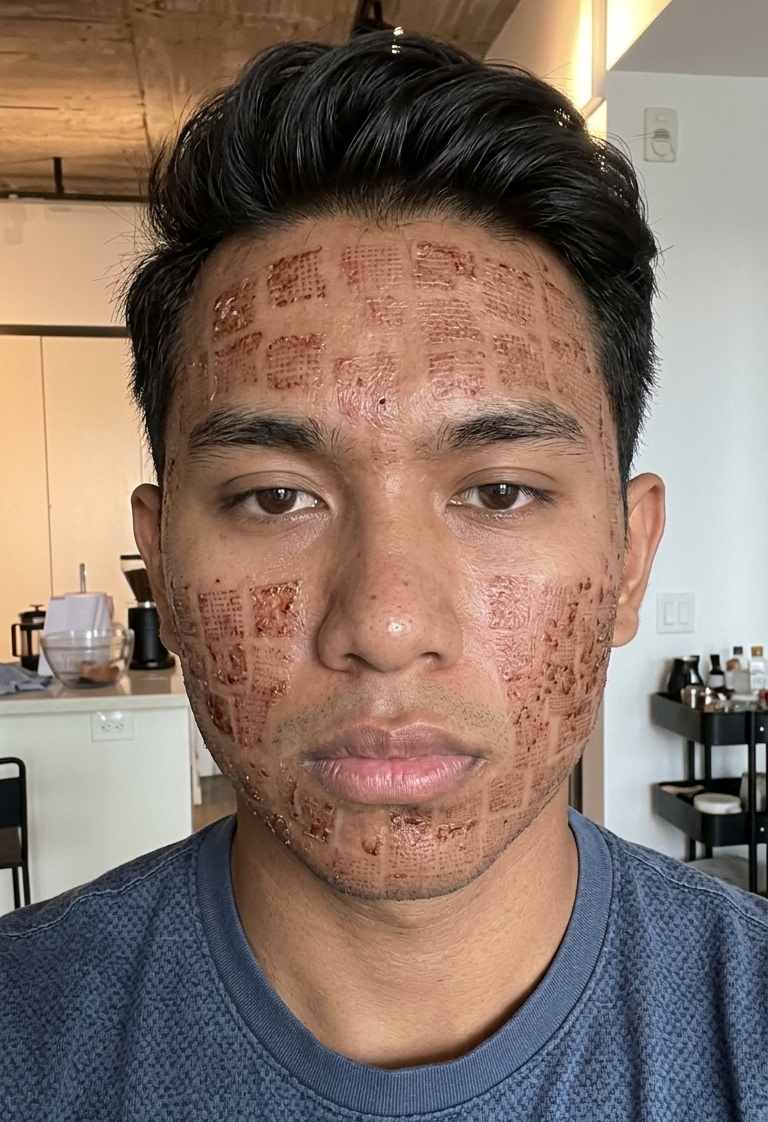
After scar treatments like fractional CO₂ laser, TCA CROSS, or microneedling, your skin goes through a natural healing and remodelling process that typically takes 6–8 weeks. During this time, scars often look worse before they look better — this is normal and expected. Understanding each stage helps you avoid unnecessary worry and follow the right aftercare at the right time.
What Happens in the First Few Days After Treatment?
During days 1–3, the skin is in its acute wound-healing phase. The treated areas appear red, raw, and sometimes slightly wet. Mild swelling, stinging, or light oozing can occur — this is your skin’s normal inflammatory response beginning the repair process.
At this stage, the priority is keeping the skin moist with an occlusive ointment (such as an antibiotic ointment prescribed by your doctor), avoiding direct sun exposure, and staying away from harsh or active skincare products. Let the skin rest.
Why Do Scabs Form and When Should They Fall Off?
Between days 3 and 7, a thin brown scab or crust forms over the treated areas. The skin feels tight, itchy, and fragile beneath it. During this stage, scars may appear larger or deeper than before treatment — this is simply the scab sitting on top of the wound, creating an optical illusion. The underlying skin is actively repairing itself.
The key rule during the scab stage: let them fall off naturally. Do not scratch, pick, or peel the scabs. Premature removal can cause scarring, infection, or delayed healing.
When Does New Skin Start to Appear?
By week 2, scabs begin to shed and fresh pink or reddish skin emerges underneath. This new skin is thin, sensitive, and vulnerable to both UV damage and irritation from skincare products.
Scars may still look sharper or more defined at this point. This happens because the old scar walls are breaking down, the new skin is thinner than the surrounding tissue, and collagen has not yet filled in the treated area. This is a temporary phase, not a sign that treatment has made things worse.
At this stage, you can introduce a barrier cream to protect the new skin, begin using a gentle sunscreen, and start a mild brightening cream if recommended by your doctor.
How Long Does the Collagen Remodelling Phase Take?
The real transformation begins during weeks 3–8, when collagen remodelling is actively occurring beneath the surface.
Weeks 3–4 (early remodelling): The pink skin gradually transitions closer to your natural tone. Some patients may develop temporary dark spots known as post-inflammatory hyperpigmentation (PIH), which is more common in Asian skin types. Collagen production is now actively underway beneath the surface. Focus on consistent sun protection and pigmentation control during this phase.
Weeks 5–6 (active remodelling): Redness and dark marks continue to fade. Scars begin to look noticeably shallower and smoother as new collagen fills in. Gentle active ingredients can be increased if tolerated.
Weeks 6–8 (stronger skin): The skin is now more resilient and less sensitive. Scars appear softer as collagen continues to mature and fill in the treated areas. This is typically the optimal time to plan your next treatment session — most scar treatments are spaced 6–8 weeks apart to allow full healing between sessions.
How Many Sessions Are Needed for Visible Improvement?
Most acne scar treatments require multiple sessions to achieve meaningful improvement. Each session builds on the collagen produced by the previous one. While some patients notice differences after a single session, a course of 3–6 sessions is typically recommended depending on scar type, depth, and severity. Results vary depending on individual skin response, scar characteristics, and aftercare compliance.
Frequently Asked Questions About Scar Healing
Is it normal for scars to look worse after treatment? Yes. During the first 2–3 weeks, scars commonly appear darker, deeper, or more visible due to scabbing, new skin thinness, and the breakdown of old scar tissue. This is a temporary phase. Improvement becomes visible as collagen remodelling progresses over the following weeks.
Do collagen supplements help with scar healing? Collagen supplements or collagen-rich foods may support the healing process, but their direct impact on scar improvement is not well established. They are not a substitute for professional treatment. Results from supplements vary between individuals.
When can I return to normal skincare after scar treatment? Most patients can gradually reintroduce their regular skincare routine by week 3–4, starting with gentle products and avoiding strong actives (AHA, BHA, retinol) until the skin barrier has fully recovered. Follow your doctor’s specific guidance.
Why is sun protection so important after scar treatment? UV exposure on healing skin can trigger post-inflammatory hyperpigmentation (PIH), causing dark spots that can take months to fade. Consistent sunscreen use — SPF 30 or higher, reapplied every 2–3 hours — is essential throughout the entire healing period.
If you are considering acne scar treatment and want to understand what the healing process involves, a consultation at Klinik Dr Diana in Bandar Baru Bangi or Senawang is the best starting point. Dr Effendy and Dr Diana will assess your scars, explain the expected healing timeline for your specific case, and create a personalised treatment plan. Contact us via WhatsApp to book your assessment.